

A custom shirt is the cheapest uniform a small business can buy, and the most visible, because a team in matching shirts looks like a team before anyone reads the logo. The best t-shirt makers for small business split into two kinds, and the split decides the price. Bulk printers quote a per-shirt price at a stated quantity, while print-on-demand tools charge per item when a customer orders, and the wrong kind costs twice as much for the same shirt.
Eleven tools made this list, and they cover both kinds. Printful and Printify sell shirts through a store with no stock. Custom Ink and RushOrderTees quote bulk runs with published prices. Vistaprint and Spreadshirt cover small orders, and Bonfire raises money with no upfront cost. The prices below were checked against vendor pages and October 2026 roundups, and where sources disagreed the draft says so rather than picking the friendlier number.
In this article
- How the Best T-shirt Makers for Small Business Were Compared
- Bulk or Print on Demand, Pick One
- The Whole Market at a Glance
- Every Printer, Priced at the Same Quantities
- The Fabric Decides Whether the Shirt Gets Worn
- Selling Shirts Beats Ordering Shirts
- Best Pick by Job
- The Design Is Half the Shirt
- The Decision in One Paragraph
- Sizes, Shipping and the Hidden Half of the Bill
- Questions About Ordering Custom Shirts
- Before You Place the Order
How the Best T-shirt Makers for Small Business Were Compared
Each tool in this guide was judged on five things that decide whether a shirt order goes well. Per-shirt price is first, measured at the same quantity so the comparison is honest. Speed is second, because an event shirt that arrives after the event is a loss. Quality is third, because a cheap tee that feels cheap is worn once. Selling is fourth, because a tool that also sells the shirt is worth more than a tool that only prints it. Ease is fifth, because a design tool that needs a designer will not get used.
The tools in this guide all print real shirts, and every tool here has a free plan or a free design tool except the ones that say otherwise. The comparison below names the limit of each tool plainly, because a tool bought for the wrong half of the job wastes more than its subscription. It wastes the shirts it was bought to make.
The quality test is also simple, and it costs one shirt. Order a sample from the two cheapest tools on the shortlist, wash each one twice, and wear them for a day. The shirt that still looks good after two washes is the shirt to order in bulk, and the sample cost is the cheapest research in this guide.
Bulk or Print on Demand, Pick One
The best t-shirt makers for small business are chosen by the job, and the job is either a stack of shirts for one event or a shirt sold one at a time through a store. A bulk printer quotes $10 to $17 a shirt at fifty items, which is cheap for a team order and dear for a single sale, while a print-on-demand tool charges per item at fulfilment, which is dear for a team order and perfect for a store that never holds stock.
The mistake is comparing the two kinds on one number, because a per-shirt quote and a fulfilment cost are different kinds of numbers. A bulk printer looks cheap until the store needs one shirt, and a print-on-demand tool looks dear until the order is five hundred shirts. Name the job first, and the shortlist builds itself.
The quantity test is simple. Write down how many shirts are needed and when, then read the price at that quantity only. A printer that looks dear at one shirt can be cheapest at a hundred, and a printer that looks cheap at a hundred can be dear at ten, because the setup cost spreads differently, and the ranking changes with the number.
The Whole Market at a Glance
This table compares the best t-shirt makers for small business on the facts that decide a purchase. Prices are in US dollars and change by fabric and promotion, so check the vendor page before you buy.
| Tool | Price | Free plan | Best for |
|---|---|---|---|
| Printful | Free plan, Growth $24.99 a month | Free plan | Selling branded shirts through a store |
| Printify | Free plan, Premium $24.99 a month | Free plan | Widest print provider network for sellers |
| Custom Ink | $11.85 to $26.20 a shirt at 500 | Free design help | Big uniform orders with a design team on call |
| RushOrderTees | $10.41 to $17.32 a shirt at 50 | Free design studio | Fast bulk shirts without a subscription |
| Adobe Express | Premium $9.99 a month | Free plan | Quick shirt designs with stock and fonts |
| Vistaprint | $4.15 to $8.99 a shirt, budget range | Free design tool | Cheapest budget tees for small orders |
| Spreadshirt | $22.99 to $29.99 for entry tees | Free shop | Single printed garments sold individually |
| Bonfire | Free to launch, per-shirt base cost | Free to launch | Fundraising shirts with no upfront cost |
| Zazzle | Per product, see website | Free storefront | Marketplace printing with endless products |
| Gelato | Per product, see website | Free account | Local printing in 30-plus countries |
| Designhill | Per product, see website | Free to browse | Custom designs from a contest or a studio |
Every Printer, Priced at the Same Quantities
1. Printful
Best for Selling branded shirts through a store. Price Free plan, Growth $24.99 a month. Free plan Free plan.
Printful is built for a small business that sells shirts through an online store, with print on demand, warehousing and fulfilment handled from one dashboard. A design is uploaded once, the store takes the orders, and Printful prints and ships each shirt, so there is no stock to hold and no packing to do.
The Free plan costs nothing, and Growth costs $24.99 a month, becoming free once a store reaches $12,000 a year in sales. Products are charged per item at fulfilment cost on top of the plan, with printed inside labels at $0.99 each and embroidery digitisation from $2.95 to $6.50 per design.
Pick it when shirts are a product to sell rather than a one-off order, because the store integration is the point. Skip it when the order is fifty shirts for one event, because a bulk printer quotes a lower per-shirt price.
Watch out. The per-item cost means the margin depends on the retail price, so price the shirt before choosing the plan.
2. Printify
Best for Widest print provider network for sellers. Price Free plan, Premium $24.99 a month. Free plan Free plan.
Printify connects a store to a network of print providers, so a seller can pick the cheapest printer near each customer and switch providers when quality slips. The catalogue covers shirts, hoodies and more, and the Premium plan cuts the per-item cost, which is where the margin comes from on volume.
The Free plan costs nothing, and Premium costs $39 a month or $24.99 a month billed yearly, with products charged per item on top and fulfilment from $8.77 in the pricing page example. A seller who moves volume will save more on the per-item discount than the plan costs.
Pick it when the store needs provider choice and the lowest per-item cost, because the network is the advantage. Skip it when the order is a single bulk run, because a direct printer is simpler.
Watch out. Quality varies by provider, so order a sample from each printer before routing real orders to it.
3. Custom Ink
Best for Big uniform orders with a design team on call. Price $11.85 to $26.20 a shirt at 500. Free plan Free design help.
Custom Ink is the clearest choice for a large uniform order, with published per-shirt prices at stated quantities and a design team that helps for free. At five hundred items, shirts run $11.85 to $26.20 each, with most mainstream tees between $13.70 and $17.45, which makes budgeting a group order straightforward.
There is no subscription, and the price is per shirt at the quantity ordered, so a hundred shirts cost more per shirt than five hundred. The free design help is a real service rather than a template library, and a buyer who is unsure about artwork gets a human to fix it.
Pick it when the order is large, uniform and deadline-bound, because the published pricing and the support team remove the guesswork. Skip it when the order is five shirts, because the per-shirt price at small quantities is high.
Watch out. The low end of the range is a basic tee, so a premium fabric or a complex print moves the price up fast.
4. RushOrderTees
Best for Fast bulk shirts without a subscription. Price $10.41 to $17.32 a shirt at 50. Free plan Free design studio.
RushOrderTees quotes shirts per unit at a stated quantity with no subscription, which suits teams, events and staff uniforms that need a known price fast. Across the mainstream range, shirts run $10.41 to $17.32 each at fifty items, and the online design studio handles text and uploaded artwork without a designer.
There is no monthly fee, and the price is the per-shirt figure at the quantity chosen, so fifty shirts are easy to budget. The turnaround is built for events, and a buyer who orders early in the week can usually have shirts before the weekend.
Pick it when fifty shirts are needed quickly at a published price, because the model is transparent. Skip it when the shirts are sold one by one online, because a print-on-demand tool fits that job better.
Watch out. The fifty-item price is not the five-hundred-item price, so compare at the same quantity before choosing.
5. Adobe Express
Best for Quick shirt designs with stock and fonts. Price Premium $9.99 a month. Free plan Free plan.
Adobe Express designs a shirt fast, with templates, stock photos and fonts that look polished without a designer. The design can be ordered printed through a partner, so a small business can go from an idea to a finished shirt in one session.
Premium costs $9.99 a month, and the free plan covers a solid template set. The printing itself is priced in the partner order, so the design cost and the print cost stay separate.
Pick it when the design needs to look good quickly, because the templates do the heavy work. Skip it when the order is a large bulk run, because a direct printer quotes better per-shirt prices.
Watch out. Check the print partner price before designing, because the design tool does not set it.
6. Vistaprint
Best for Cheapest budget tees for small orders. Price $4.15 to $8.99 a shirt, budget range. Free plan Free design tool.
Vistaprint lists the lowest published per-shirt figure in this list, with a budget Gildan unisex tee at $4.15 to $8.99 per shirt and mid and premium ranges at $8.79 to $26.49. The design tool is free, the templates are simple, and the same account handles business cards, flyers and banners, so a small business can order its whole brand kit at once.
There is no subscription, and the price is per shirt in the configurator, so a buyer can see the cost change as the quantity and the fabric change. The budget range is the cheapest way to put a logo on a shirt, and the trade is fabric quality rather than print quality.
Pick it when the budget is the whole decision and the shirt is basic, because nothing here beats the budget range. Skip it when the fabric matters, because the cheap tee feels cheap.
Watch out. The budget price is for a basic tee, so a premium fabric moves the total into the mid range.
7. Spreadshirt
Best for Single printed garments sold individually. Price $22.99 to $29.99 for entry tees. Free plan Free shop.
Spreadshirt sells printed garments individually, which suits a small business that wants a few shirts without a bulk order or a store setup. Entry tees run $22.99 to $29.99, with the catalogue reaching $56.99, and the marketplace side lets a designer sell their own designs to Spreadshirt buyers.
There is no subscription for buying, and the price is per garment, so one shirt costs what one shirt costs. A free shop lets a business list designs and earn on each sale, which turns the printer into a small sales channel as well.
Pick it when the order is a handful of shirts with no minimum, because the per-garment price is honest. Skip it when the order is a hundred shirts, because the per-garment price never drops the way bulk pricing does.
Watch out. A single shirt at retail price is dear compared with bulk, so use it for samples and small runs.
8. Bonfire
Best for Fundraising shirts with no upfront cost. Price Free to launch, per-shirt base cost. Free plan Free to launch.
Bonfire is built for fundraising, with a campaign page, a design tool and fulfilment in one place, and no upfront cost to launch. A school, a team or a charity sets a price above the base cost, and the profit per shirt funds the cause, which is why nonprofits and clubs choose it over a plain printer.
Launching costs nothing, and each shirt carries a base cost that is deducted from the selling price, so the campaign only pays when shirts sell. The trade is control, because the campaign page looks like Bonfire rather than the organisation, and the shirt range is narrower than a general printer.
Pick it when shirts raise money for a cause, because the no-upfront model removes the risk. Skip it when the shirts are staff uniforms, because a bulk printer is cheaper per shirt.
Watch out. The profit per shirt depends on the price set, so check the base cost before announcing the campaign.
9. Zazzle
Best for Marketplace printing with endless products. Price Per product, see website. Free plan Free storefront.
Zazzle is a marketplace where a business can design a shirt, order it printed, and also sell the design to Zazzle buyers through a free storefront. The product range runs far beyond shirts, so a brand can put the same design on mugs, posters and phone cases in the same session.
Pricing is per product, and the site shows the price once the design and the product are chosen, so there is no single list price to quote. The trade is margin, because the marketplace takes its share, and the print quality is solid rather than premium.
Pick it when one design should appear on many products, because the marketplace range is the point. Skip it when the order is a large uniform run, because a bulk printer is cheaper.
Watch out. The per-product price moves with the options chosen, so compare the finished configuration rather than the headline.
10. Gelato
Best for Local printing in 30-plus countries. Price Per product, see website. Free plan Free account.
Gelato prints locally in more than thirty countries, which cuts shipping time and cost for a business with customers in several regions. A design is uploaded once, and each order is printed near the buyer, so a shirt ordered in Berlin is not shipped from Texas.
Pricing is per product and varies by country, so the site shows the figure once the product and the destination are set. The trade is range, because the catalogue is narrower than the big marketplaces, and the value is delivery speed rather than the lowest price.
Pick it when customers sit in several countries, because local printing is a real saving. Skip it when every buyer is local, because a domestic printer is simpler.
Watch out. The per-product price differs by country, so check the price in each market served.
11. Designhill
Best for Custom designs from a contest or a studio. Price Per product, see website. Free plan Free to browse.
Designhill pairs shirt printing with design contests and a studio, so a small business without a designer can get a custom shirt design from many designers at once. The contest model means the buyer sees dozens of ideas before picking one, which suits a brand that wants something original rather than a template.
Pricing is per product and per contest, and the site shows the figure once the design route is chosen, so there is no single list price. The trade is time, because a contest takes days, and the trade is cost, because original design costs more than a template.
Pick it when the shirt needs an original design and there is no designer in-house, because the contest is the fastest route. Skip it when the design already exists, because a plain printer is cheaper.
Watch out. A contest fee is separate from the printing cost, so budget for both.
The Fabric Decides Whether the Shirt Gets Worn
A shirt is worn or it sits in a drawer, and the fabric decides which. The best t-shirt makers for small business all offer a budget tee and a premium tee, and the gap between them is a few dollars per shirt, which is the cheapest upgrade in this whole guide. A premium tee costs more at the order and less per wear, because it is the shirt the team reaches for.
The budget Gildan tee at Vistaprint runs $4.15 to $8.99, which is the cheapest way to put a logo on a shirt, and the trade is feel rather than print. A mid-range ringspun tee costs a few dollars more and feels like a shirt from a shop, which is why a business that wants its team to wear the shirt should pay the difference.
The colour of the shirt matters as much as the fabric, because a dark print on a dark shirt disappears and a light print on a white shirt washes out. A navy shirt with a white print reads from across a room, a black shirt with a gold print looks premium, and a white shirt with a black print is the safest pick of all.
Selling Shirts Beats Ordering Shirts
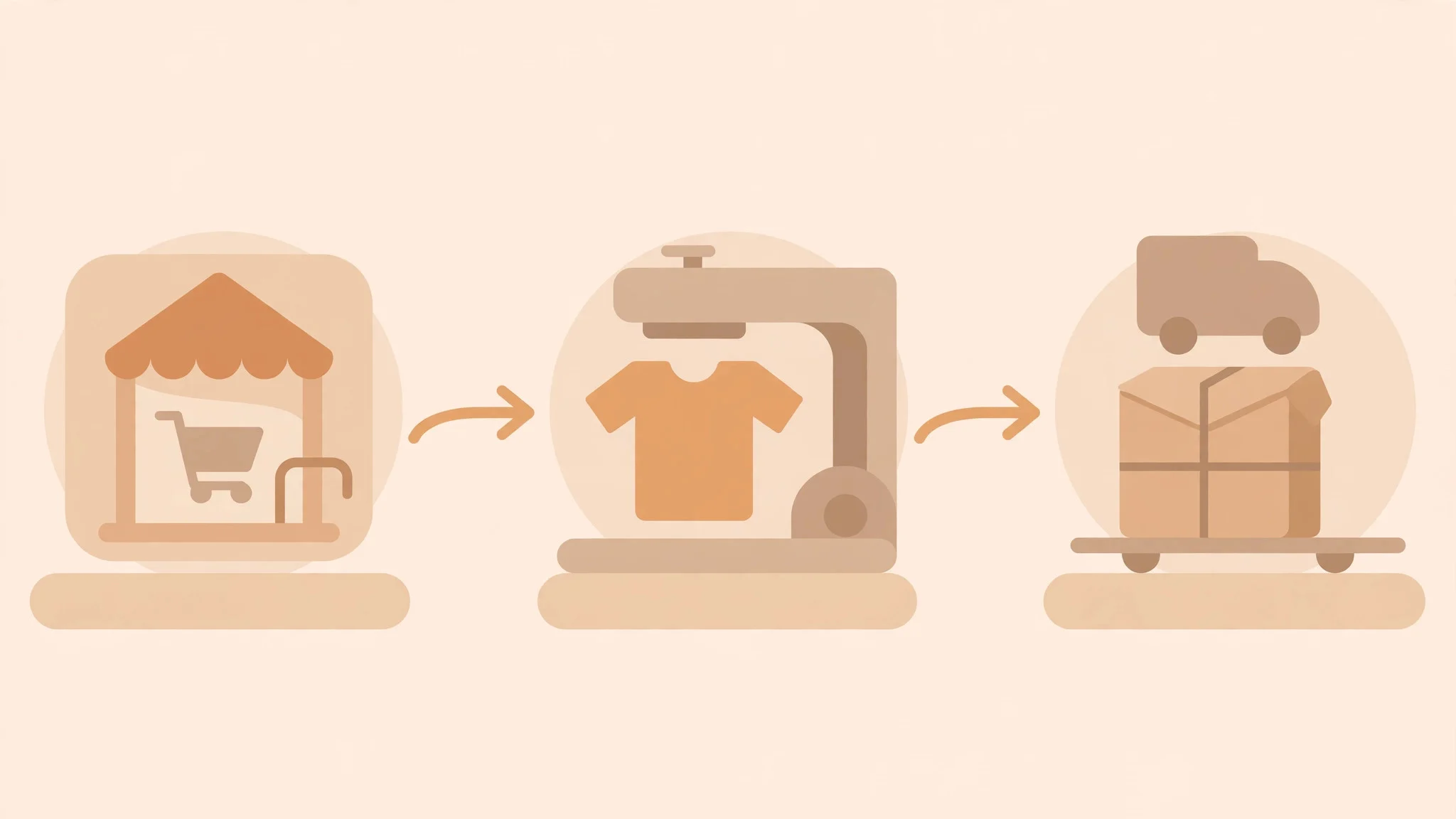
The best t-shirt makers for small business can also sell the shirt, and that changes the economics completely. Printful and Printify connect to a store, take the orders, print the shirts and ship them, so the business never holds stock and never packs a box. A design uploaded once can sell for a year, and the margin is the retail price minus the fulfilment cost.
The trade is margin, because a print-on-demand shirt costs more per item than a bulk shirt, and the profit per shirt is smaller. The win is risk, because there is no stock to guess, no sizes to over-order, and no box of unsold mediums in the back room. A business that sells ten shirts a month should use print on demand, and a business that needs fifty shirts for one event should use bulk.
The margin test for a store is the retail price minus the fulfilment cost, and the answer should be at least a third of the retail price, because a thinner margin leaves nothing for the store, the marketing and the returns. Printify Premium cuts the per-item cost, which is why a seller who moves volume should pay for the plan.
Best Pick by Job
Different situations need different tools, so the best pick changes with the job. This table matches the common situations to the tool that handles each one best. The best t-shirt makers for small business in this guide cover all of these jobs between them.
| Job | Pick | Why |
|---|---|---|
| Selling shirts through a store | Printful | Free plan, fulfilment handled, no stock |
| Lowest per-item cost for sellers | Printify | Free plan, provider network, fulfilment from $8.77 |
| Large uniform order | Custom Ink | $11.85 to $26.20 a shirt at 500, free design help |
| Fifty shirts, fast | RushOrderTees | $10.41 to $17.32 a shirt at 50, no subscription |
| Cheapest budget tee | Vistaprint | $4.15 to $8.99 a shirt, free design tool |
| Fundraising with no upfront cost | Bonfire | Free to launch, profit per shirt funds the cause |
The Design Is Half the Shirt
The best t-shirt makers for small business all include a design tool, and the quality of that tool decides whether the shirt looks designed or decorated. Custom Ink offers free help from a human designer, Designhill runs a contest where many designers submit ideas, and the template tools let a buyer swap text and upload a logo in minutes. A shirt with a clear idea and one strong image beats a shirt with a paragraph of text every time.
The test is the twenty-foot rule, because a shirt is read from across a room, not from a screen. A design with seven words or fewer, one image and a colour that contrasts with the fabric will read well, while a design with a slogan, a web address and three logos will not. The tools in this guide all let you preview the shirt, and the preview is the test that matters.
The logo file matters, because a low-resolution image printed large looks soft, and a soft print looks cheap. Upload a file at 300 dots per inch at the print size, with a transparent background when the design should sit on the fabric rather than in a box. The printers in this guide all accept high-resolution uploads, and the ones with free design help will fix a bad file.
The Decision in One Paragraph
Start with Printful when shirts are a product to sell through a store, because the fulfilment is handled and the plan is free to start. Start with Custom Ink when the order is a large uniform run, because the published pricing and the free design help remove the guesswork. Start with RushOrderTees when fifty shirts are needed fast at a published price, and start with Vistaprint when the budget is the whole decision. The best t-shirt makers for small business in this guide all print real shirts, and the difference between them is which second job they do well, so name the second job first and the tool follows.
Sizes, Shipping and the Hidden Half of the Bill
The shirt is half the bill, and the sizes and the shipping are the other half. A bulk order needs a size run, and the sizes that sell out are never the sizes ordered in equal numbers, so order more mediums and larges than smalls and extra larges. Shipping is free over a threshold at some printers and charged per shirt at others, so add it before comparing prices.
The size run deserves a spreadsheet, because the order that guesses sizes wastes money. A team of fifty needs more mediums and larges than smalls, and an event crowd needs more larges than a team does. Ask for sizes in advance, and the order will fit the people rather than the guess.
The shipping test is the total, because a shirt at $4 with $2 shipping costs more than a shirt at $5 with free shipping. Add the shipping and the tax before comparing, and the ranking will be honest, because the cheapest shirt on the page is rarely the cheapest order at checkout.
Questions About Ordering Custom Shirts
How much does a custom t-shirt cost?
A budget tee runs $4.15 to $8.99 at Vistaprint, a bulk order runs $10.41 to $17.32 a shirt at fifty items from RushOrderTees and $11.85 to $26.20 at five hundred from Custom Ink, and a single printed garment runs $22.99 to $29.99 at Spreadshirt. The price moves with the fabric, the quantity and the print, so compare at the same quantity before choosing.
Is print on demand or bulk printing cheaper?
Bulk printing is cheaper per shirt when the order is fifty or more, because the setup cost spreads across the run. Print on demand is cheaper overall when the shirts are sold one at a time, because there is no stock to buy and no unsold sizes to absorb. A team order should use bulk, and a store should use print on demand.
How long does a custom shirt order take?
A rush order can arrive in a few days from RushOrderTees, a standard bulk order takes about a week from Custom Ink, and a print-on-demand order ships per item, usually within a few days of the customer ordering. The design time matters too, because a contest on Designhill takes days while a template takes minutes.
What fabric should a small business choose?
A mid-range ringspun cotton tee is the safest pick, because it feels like a shop shirt and prints well. A budget tee is fine for a one-day event, and a premium tri-blend suits a shirt the team wears weekly. The fabric matters more than the print, because a shirt that feels cheap is worn once.
Can I sell custom shirts without holding stock?
Yes, and that is the print-on-demand model. Printful and Printify connect to a store, print each shirt when a customer orders, and ship it directly, so the business never holds stock. Bonfire works the same way for fundraising, with a campaign page instead of a store.
Before You Place the Order
Order one sample before the bulk run, because a shirt that looks right on screen can feel wrong in hand. Check the fabric, the print and the fit, and wear it for a day, because the shirt the team wears is the shirt that advertises the business. The best t-shirt makers for small business in this guide all sell single shirts, and the sample is the cheapest insurance in this whole guide.