


A YouTuber can spend an hour finding music for a ten minute video, then lose the revenue when a claim lands on the track. The best ai music generators for youtubers in this guide were ranked on the same five measures, and Suno leads the ranking on the combined score, while Udio wins for buyers who need a different strength. Music sets the pace of a video, and the wrong track can flatten a good edit. The right generator gives a creator a fitting score in minutes, with licence terms that are plain to read before publishing.
Plenty of roundups stop at features, which leaves the real question unanswered for YouTubers. This guide scores every tool the same way and matches each one to the buyer it serves best, with YouTubers in mind.
We put every tool through the same daily routine YouTubers follow, then scored it on the same five measures. The ranking follows those scores for YouTubers, and the reviews below explain each placement in plain terms.
Read the glance table first to cut the list to two or three candidates for YouTubers, then read those reviews in full. The best pick by job table near the end settles the choice for the most common situations YouTubers face.
In this article
- The 10 Tools at a Glance
- Why the Best AI Music Generators for YouTubers Lift a Whole Channel
- How We Put Each Music Tool Through Its Paces
- The 10 Tools in Detail
- Matching Music to Each Kind of Video
- Staying Clear of Copyright Trouble
- Building a Sound That Listeners Recognise
- Best Pick by Job
- Frequently Asked Questions
- Picking Your Soundtrack Before You Publish
The 10 Tools at a Glance
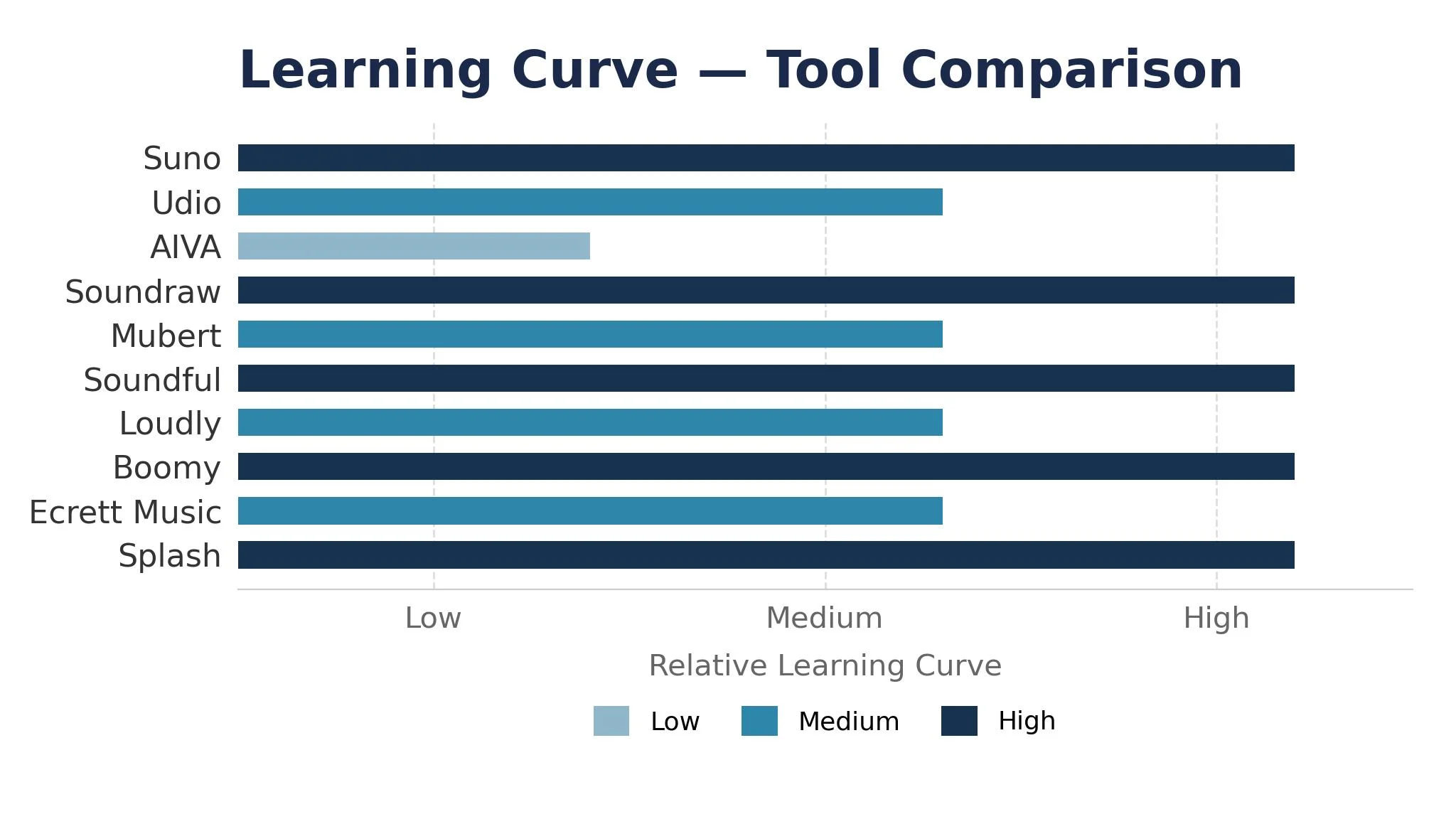
The table below puts one row per tool, with the price shape, the natural fit and the strength that put Suno first. The best ai music generators for youtubers are not always the most feature packed, and the table shows why Suno leads on its standout strength.
| Tool | Starting price | Best for | Standout strength |
|---|---|---|---|
| Suno | Free plan; paid plans on the vendor site | YouTubers wanting full songs | Complete songs with vocals from a prompt |
| Udio | Free plan; paid plans on the vendor site | YouTubers exploring vocal tracks | Strong vocal generation in the browser |
| AIVA | Free plan; paid plans on the vendor site | YouTubers needing cinematic scores | Emotional orchestral style composition |
| Soundraw | Free plan; paid plans on the vendor site | YouTubers wanting control | Customisable tracks with clear structure |
| Mubert | Free plan; paid plans on the vendor site | YouTubers needing endless background | Adaptive tracks that run as long as needed |
| Soundful | Free plan; paid plans on the vendor site | YouTubers wanting quick templates | Template based tracks ready fast |
| Loudly | Free plan; paid plans on the vendor site | YouTubers building a sound library | Music tools with a large catalogue |
| Boomy | Free plan; paid plans on the vendor site | YouTubers starting from zero | Songs in seconds with no skill needed |
| Ecrett Music | Free plan; paid plans on the vendor site | YouTubers scoring short scenes | Scene and mood based track building |
| Splash | Free plan; paid plans on the vendor site | YouTubers making short-form songs | Short vocal hooks for social clips |
The table narrows the field fast, so pick two or three finalists from it and let their reviews settle the choice. A lower ranked tool often fits YouTubers better when the job is specific, while the winner fits the average case.
Why the Best AI Music Generators for YouTubers Lift a Whole Channel
Time is where the gain starts for YouTubers, because routine work eats the day in small bites. A tool that clears one hour a day returns a full working day every week for YouTubers, and that return keeps coming month after month.
The second gain is fewer mistakes. When the work lives in one place with a clear owner and a clear state, the dropped handoff and the forgotten follow up become rare instead of routine for YouTubers.
The third gain shows up quietly for YouTubers, about a month in. Matching music to the mood of each scene becomes part of the routine for YouTubers, and avoiding copyright claims on monetised videos stops eating time. That pair of gains is worth more than a long feature list for YouTubers.
The fourth gain is steadier results for YouTubers. Keeping an intro sound consistent across uploads improves week by week, and filling silence without distracting from the voice becomes easier to manage. A tool that delivers those gains pays for itself in the first month of real use for YouTubers.
The final gain is better decisions for YouTubers, because the tool keeps a record of what actually happened. Real numbers beat a hunch every time a YouTubers chooses where to spend the next hour.
A fifth gain is work that survives a busy week for YouTubers. A routine kept in one place does not depend on one person remembering everything, so holidays and sick days stop breaking the schedule for YouTubers.
A sixth gain is a quieter working week for YouTubers. When the routine runs itself, the inbox holds fewer urgent messages and YouTubers spend the day on planned work instead of firefighting.
How We Put Each Music Tool Through Its Paces
We tested the best ai music generators for youtubers against the same five measures, running the same workload through every tool so the scores compare like with like. The same workload ran through every tool for two weeks, with the same jobs and the same deadlines, giving YouTubers a fair comparison.
- Track quality, judged on how well the tool handled that part of the daily routine.
- Licence clarity, judged on how well the tool handled that part of the daily routine.
- Editing control, judged on how well the tool handled that part of the daily routine.
- Speed of creation, judged on how well the tool handled that part of the daily routine.
- Video fit, judged on how well the tool handled that part of the daily routine.
The first measure counted double and the rest carried equal weight for YouTubers, because the core job decides the purchase. A tie went to the tool with better daily usability, since adoption by YouTubers decides whether any score matters.
We also checked the mobile experience, because YouTubers spend much of the day away from a desk. The best tools in this ranking let YouTubers finish a routine job from a phone in under a minute, while the weakest need a desktop for anything beyond reading.
We timed setup from sign-up to the first finished job, since a slow start kills adoption among YouTubers. The best tools here were working the same afternoon for YouTubers, while the slowest needed several days of configuration.
The 10 Tools in Detail
Every review below covers the same ground, with strengths, limits and the buyer it suits among YouTubers. The order follows the combined score, and the winner leads the list for YouTubers. The best ai music generators for youtubers below are judged on the same ground, with Suno leading on the combined score.
1. Suno
Suno leads this ranking because it handles the core job with full song generation that fit the daily routine. The best ai music generators for youtubers need that clarity first, and Suno delivers it in a way a new buyer can trust from the first week.
The strengths of Suno are practical rather than flashy for YouTubers. Vocal tracks handle the repeat work well, and the tool rarely gets in the way. That steadiness from Suno is what most YouTubers actually need.
The weak spot of Suno is easy to name, and YouTubers should weigh it first. Licence terms need a careful read, so the tool fits a narrower buyer than the leaders. Within that fit, Suno performs well for YouTubers and stays dependable. It suits a creator who needs a theme song fast, and a buyer outside that fit should keep reading.
The trial of Suno tells the truth for YouTubers. Run a real job through Suno for a week and see whether the routine sticks for YouTubers. If it does, Suno earns its place among YouTubers. Our verdict. A good match for a creator who needs a theme song fast.
Suno rewards a buyer who trials it on real work instead of a guided tour. One week of genuine use shows the fit of Suno for YouTubers, and the team vote after that week is the verdict that matters.
2. Udio
Udio covers the core job with vocal song creation that most YouTubers will use every day. It is a practical choice for YouTubers, and Udio is built around the routine rather than around a sales pitch.
Its best qualities are the quiet ones, and YouTubers notice them in Udio over weeks rather than days. Style controls keep the routine smooth, and the tool does not demand attention. For YouTubers with full days, that reliability from Udio counts for a lot.
The drawback of Udio matters for some YouTubers. Export options have limits, and that rules it out for teams needing more depth. For the buyer it fits among YouTubers, Udio still earns its rank. It suits a creator testing vocal music ideas, and a buyer outside that fit should keep reading.
Test Udio with real work, not a demo, and watch whether YouTubers keep using it after day three. If they do, the fit is right for YouTubers with Udio. Our verdict. A strong pick for a creator testing vocal music ideas.
The honest test for Udio is a normal week, not a quiet one. Run the real workload through Udio and watch whether the daily routine of YouTubers gets shorter or stays the same.
3. AIVA
AIVA leads with cinematic composition, and that focus shows in daily use. AIVA suits YouTubers who want the essentials handled well rather than a long list of extras.
Where AIVA wins for YouTubers is in the routine. Style presets make the weekly jobs faster, and the tool holds up under real use. Few YouTubers will miss the features AIVA leaves out.
The limits are plain too, and YouTubers should know them before paying for AIVA. Pop vocals are not its strength, so a buyer who needs that depth should look elsewhere. For the buyer it suits among YouTubers, the trade on AIVA is a fair one. It suits a creator scoring documentaries or films, and a buyer outside that fit should keep reading.
In a trial, YouTubers should run one real job end to end and watch the routine of AIVA, not the demo. If the work flows and the team stops asking where things live, AIVA will last for YouTubers. Our verdict. A solid choice for a creator scoring documentaries or films.
The setup takes an afternoon rather than a week, and the first real job shows whether AIVA fits. Keep the trial short and judge AIVA on the second week, when YouTubers either keep using it or let it slide.
4. Soundraw
Soundraw is a strong fit for YouTubers who value track customisation. The core workflow of Soundraw is straightforward, and the tool rewards YouTubers who set it up once and then let it run.
The strengths of Soundraw show in daily use for YouTubers. Clear licensing keep the work moving, and the tool stays reliable on the jobs that repeat every week. The design of Soundraw favours getting the job done over looking clever, which suits YouTubers.
No tool is perfect, and Soundraw is no exception for YouTubers. Vocal songs are limited, which narrows its audience. A buyer among YouTubers who accepts that limit gets a capable tool in Soundraw at a fair effort. It suits a creator who edits music to the scene, and a buyer outside that fit should keep reading.
Try Soundraw on a real week of work before paying, and judge it on the daily routine YouTubers follow. If YouTubers adopt Soundraw without prompting, it fits. Our verdict. Well suited to a creator who edits music to the scene.
Soundraw rewards a buyer who trials it on real work instead of a guided tour. One week of genuine use shows the fit of Soundraw for YouTubers, and the team vote after that week is the verdict that matters.
5. Mubert
Mubert takes a clear approach to the job, leaning on adaptive generation to keep the routine simple. For YouTubers who want a steady workflow, Mubert covers the essentials without fuss.
The strong points of Mubert sit in everyday work for YouTubers. Streaming options cover the jobs that repeat, and the tool behaves the same way each day, which is exactly what a busy YouTubers wants from Mubert.
The weak spot of Mubert is easy to name, and YouTubers should weigh it first. Melody variety is modest, so the tool fits a narrower buyer than the leaders. Within that fit, Mubert performs well for YouTubers and stays dependable. It suits a creator needing long ambient beds, and a buyer outside that fit should keep reading.
The trial of Mubert tells the truth for YouTubers. Run a real job through Mubert for a week and see whether the routine sticks for YouTubers. If it does, Mubert earns its place among YouTubers. Our verdict. A good match for a creator needing long ambient beds.
The honest test for Mubert is a normal week, not a quiet one. Run the real workload through Mubert and watch whether the daily routine of YouTubers gets shorter or stays the same.
6. Soundful
Soundful stands out for quick templates, which is the feature YouTubers notice first. It handles the core job cleanly for YouTubers, and the interface of Soundful stays out of the way once the routine is set.
The strengths of Soundful are practical rather than flashy for YouTubers. Stem downloads handle the repeat work well, and the tool rarely gets in the way. That steadiness from Soundful is what most YouTubers actually need.
The drawback of Soundful matters for some YouTubers. Originality is lower than rivals, and that rules it out for teams needing more depth. For the buyer it fits among YouTubers, Soundful still earns its rank. It suits a creator on a tight upload schedule, and a buyer outside that fit should keep reading.
Test Soundful with real work, not a demo, and watch whether YouTubers keep using it after day three. If they do, the fit is right for YouTubers with Soundful. Our verdict. A strong pick for a creator on a tight upload schedule.
The setup takes an afternoon rather than a week, and the first real job shows whether Soundful fits. Keep the trial short and judge Soundful on the second week, when YouTubers either keep using it or let it slide.
7. Loudly
Loudly earns its place by doing the core job well, and it does so with large track catalogue that fit the daily routine. The tool feels built for YouTubers who want the work done without a long setup, and Loudly delivers that.
Its best qualities are the quiet ones, and YouTubers notice them in Loudly over weeks rather than days. Stem control keep the routine smooth, and the tool does not demand attention. For YouTubers with full days, that reliability from Loudly counts for a lot.
The limits are plain too, and YouTubers should know them before paying for Loudly. Song generation is template led, so a buyer who needs that depth should look elsewhere. For the buyer it suits among YouTubers, the trade on Loudly is a fair one. It suits a creator who remixes and adapts tracks, and a buyer outside that fit should keep reading.
In a trial, YouTubers should run one real job end to end and watch the routine of Loudly, not the demo. If the work flows and the team stops asking where things live, Loudly will last for YouTubers. Our verdict. A solid choice for a creator who remixes and adapts tracks.
Loudly rewards a buyer who trials it on real work instead of a guided tour. One week of genuine use shows the fit of Loudly for YouTubers, and the team vote after that week is the verdict that matters.
8. Boomy
Boomy covers the core job with instant song creation that most YouTubers will use every day. It is a practical choice for YouTubers, and Boomy is built around the routine rather than around a sales pitch.
Where Boomy wins for YouTubers is in the routine. Streaming distribution make the weekly jobs faster, and the tool holds up under real use. Few YouTubers will miss the features Boomy leaves out.
No tool is perfect, and Boomy is no exception for YouTubers. Control over the result is limited, which narrows its audience. A buyer among YouTubers who accepts that limit gets a capable tool in Boomy at a fair effort. It suits a new creator wanting music today, and a buyer outside that fit should keep reading.
Try Boomy on a real week of work before paying, and judge it on the daily routine YouTubers follow. If YouTubers adopt Boomy without prompting, it fits. Our verdict. Well suited to a new creator wanting music today.
The honest test for Boomy is a normal week, not a quiet one. Run the real workload through Boomy and watch whether the daily routine of YouTubers gets shorter or stays the same.
9. Ecrett Music
Ecrett Music leads with scene based generation, and that focus shows in daily use. Ecrett Music suits YouTubers who want the essentials handled well rather than a long list of extras.
The strengths of Ecrett Music show in daily use for YouTubers. Simple controls keep the work moving, and the tool stays reliable on the jobs that repeat every week. The design of Ecrett Music favours getting the job done over looking clever, which suits YouTubers.
The weak spot of Ecrett Music is easy to name, and YouTubers should weigh it first. Longer compositions are basic, so the tool fits a narrower buyer than the leaders. Within that fit, Ecrett Music performs well for YouTubers and stays dependable. It suits a creator scoring short clips, and a buyer outside that fit should keep reading.
The trial of Ecrett Music tells the truth for YouTubers. Run a real job through Ecrett Music for a week and see whether the routine sticks for YouTubers. If it does, Ecrett Music earns its place among YouTubers. Our verdict. A good match for a creator scoring short clips.
The setup takes an afternoon rather than a week, and the first real job shows whether Ecrett Music fits. Keep the trial short and judge Ecrett Music on the second week, when YouTubers either keep using it or let it slide.
10. Splash
Splash is a strong fit for YouTubers who value short vocal hooks. The core workflow of Splash is straightforward, and the tool rewards YouTubers who set it up once and then let it run.
The strong points of Splash sit in everyday work for YouTubers. Social ready formats cover the jobs that repeat, and the tool behaves the same way each day, which is exactly what a busy YouTubers wants from Splash.
The drawback of Splash matters for some YouTubers. Full length songs are not the focus, and that rules it out for teams needing more depth. For the buyer it fits among YouTubers, Splash still earns its rank. It suits a creator making shorts and reels, and a buyer outside that fit should keep reading.
Test Splash with real work, not a demo, and watch whether YouTubers keep using it after day three. If they do, the fit is right for YouTubers with Splash. Our verdict. A strong pick for a creator making shorts and reels.
Splash rewards a buyer who trials it on real work instead of a guided tour. One week of genuine use shows the fit of Splash for YouTubers, and the team vote after that week is the verdict that matters.
Matching Music to Each Kind of Video
Start with a music match as the test, because a tool that handles the first job well usually handles the rest. The best ai music generators for youtubers were judged on real work, and a music match is the job that shows the difference fastest. A buyer who tests on a music match learns more in a week than a month of reading sales pages.
Measure the result in time saved for YouTubers, not features used. If the routine takes less time after a week, the tool is working for YouTubers. If it takes the same time, the setup needs another look from YouTubers.
Write down who owns each step for YouTubers before the tool goes live. Ownership is what turns a shared tool into a shared habit, and without it the work of YouTubers drifts back to email and memory.
Review the setup after two weeks with YouTubers and cut anything the team ignores. A tool with three features YouTubers use beats one with thirty that nobody opens, and the simpler setup lasts longer.
Staying Clear of Copyright Trouble
Ask YouTubers what slowed them down, then fix that one thing. Small fixes in the first month decide whether the tool becomes a habit for YouTubers or another login nobody opens.
Name one person to own the rollout for YouTubers, even when the whole team uses the tool. A named owner answers questions fast and keeps the setup tidy for YouTubers when enthusiasm fades.
Keep the old routine running for one week beside the new tool for YouTubers, then switch fully. A short overlap catches mistakes for YouTubers, while a long overlap doubles the work and kills momentum.
Building a Sound That Listeners Recognise
Celebrate the first visible win with YouTubers, like a faster report or a calmer morning. A small win gives YouTubers a reason to keep using the tool when the newness wears off.
Write the routine down in three short steps and pin it where YouTubers can see it. A written routine survives staff changes for YouTubers, while a routine kept in one head does not.
Check the numbers after a month and compare them with the week before YouTubers started using the tool. If the numbers moved in the right direction for YouTubers, the tool stays. If they did not, YouTubers should change the setup before blaming the tool.
The point of the routine is a loyal audience, not the tool itself. When a loyal audience improves, the tool is working, and when it does not, no feature list will save the purchase. Judge the tool on that outcome and the choice becomes simple for YouTubers.
Best Pick by Job
Rankings hide the fact that different jobs need different tools, and YouTubers learn that fast. The table below fixes that by naming the best pick for each common situation, so YouTubers can skip straight to the right review. The best ai music generators for youtubers split by job below makes that split clear.
| Job | Best pick | Why it wins |
|---|---|---|
| YouTubers wanting full songs | Suno | Complete songs with vocals from a prompt |
| YouTubers exploring vocal tracks | Udio | Strong vocal generation in the browser |
| YouTubers needing cinematic scores | AIVA | Emotional orchestral style composition |
| YouTubers wanting control | Soundraw | Customisable tracks with clear structure |
| YouTubers needing endless background | Mubert | Adaptive tracks that run as long as needed |
| YouTubers wanting quick templates | Soundful | Template based tracks ready fast |
| YouTubers building a sound library | Loudly | Music tools with a large catalogue |
| YouTubers starting from zero | Boomy | Songs in seconds with no skill needed |
| YouTubers scoring short scenes | Ecrett Music | Scene and mood based track building |
| YouTubers making short-form songs | Splash | Short vocal hooks for social clips |
No row will match every buyer among YouTubers, so take the closest one and read that review first. A tool YouTubers update daily beats a higher ranked one they avoid, and that gap matters more than a few scorecard points.
Frequently Asked Questions
Before paying, most YouTubers want the same few questions answered. The answers below deal with cost, fit and the practical details that decide whether a tool lasts for YouTubers. The best ai music generators for youtubers answer these in their help pages, but the plain answers below are faster to judge a tool against.
Can I monetise videos with AI generated music?
Yes, when the licence on the paid plan covers commercial use on YouTube. Always read the licence terms for the exact plan, since free tiers often limit use to personal projects only.
Do AI music tools write songs with vocals?
Some do, and the quality varies widely between tools. Full vocal songs suit channels that need a theme song, while background scores suit most tutorial and vlog videos better.
How long does it take to make a track?
Most tools produce a usable track in a few minutes from a short prompt. Editing the length and mood takes a little longer, and creators should budget time to test two or three versions.
Can I use the same track in every video?
Yes, and many creators do for intros and outros, since a consistent sound builds recognition. Vary the background tracks between videos so the channel does not start to sound repetitive.
What should I check before publishing a track?
Check the licence, the download format and whether the tool requires credit. A quick check before upload prevents claims, and keeping the licence receipt saves trouble if a claim appears later.
Picking Your Soundtrack Before You Publish
The best choice is the tool the team uses without prompting, and only a real trial shows which one that is for YouTubers. Pick two finalists, run real work through both, and let the routine decide for YouTubers. The best ai music generators for youtubers prove themselves on the daily routine, and a short trial with your real work will show all of it.
Start with the leader when it fits YouTubers, or with the best pick for your job when it does not. Either way, judge the tool on the week after the trial, when the novelty fades and YouTubers either keep the routine or let it go.
Fix an end date for the trial before it starts, with three checks the tool must pass for YouTubers. That small discipline stops a trial from quietly becoming a paid plan YouTubers never decided on.