

Among the Best AI Overview Tracking Tools, ZipTie leads for accuracy, because it captures the live Google AI Overview answer with its citations, plus the top ten organic results beneath it, using real browser sessions. Google AI Overviews now sit above the blue links for a large share of searches, so a page that never appears in the answer loses the click before the results load. The eight tools below track that answer, and the cheapest useful start is AlsoAsked at a reported 12 dollars a month.
The old rank report is no longer enough. A page can rank third on Google and still win the AI Overview citation, or rank first and lose the citation to a clearer rival page. A team that only tracks blue link positions will celebrate a ranking that earns no clicks, while a team that tracks the answer will see the real picture within a day.
This guide compares eight tools on answer capture, citation data, refresh speed and price, with a clear pick for accuracy and a clear pick for a team that already pays for a suite. Every price comes from the vendor own page or a published review of it, and the verdict at the end names the tool a team can start this week.
In this article
- The 8 Tools at a Glance
- Best Pick by Job
- Which Best AI Overview Tracking Tools Catch Every AI Overview Citation?
- How to Choose the Right AI Overview Tracker
- The 8 Tools in Detail
- ZipTie vs Semrush, Which One Tracks AI Overviews Better?
- Can One Tool Cover AI Overviews and Classic Rankings at Once?
- What Does AI Overview Tracking Cost in 2026?
- Frequently Asked Questions
- The Final Word on AI Overview Tracking
The 8 Tools at a Glance
| Tool | Main job | Best for | Starting price |
|---|---|---|---|
| ZipTie | AI Overview tracking specialist | technical seos who care about ai overview accuracy above all | reported from $25.65/mo |
| Semrush | All in one SEO suite | teams that want one suite for classic seo and ai search in the same login | from $139.95/mo |
| Ahrefs | SEO suite with backlink index | teams that judge seo by links and content gaps | from $129/mo |
| AlsoAsked | People Also Ask research tool | content teams that build pages around real questions | reported from $12/mo |
| Otterly.AI | AI visibility tracker | small brands taking a first step into ai search | from $29/mo |
| Profound | AI visibility analytics platform | brands and agencies that need deep ai answer data | from $99/mo |
| Authoritas | SEO and content platform | agencies that want rank, audit and content data in one platform | Pricing not published |
| seoClarity | Enterprise SEO platform | large sites with a dedicated seo team | Pricing not published |
Best Pick by Job
| Job type | First pick | Second tool | Why this pair works |
|---|---|---|---|
| Most accurate answer capture | ZipTie | Authoritas | ZipTie renders the live answer, Authoritas ties citations to page quality |
| Best inside a full SEO suite | Semrush | Ahrefs | Semrush covers the most jobs, Ahrefs leads on links and mentions |
| Cheapest useful start | AlsoAsked | Otterly.AI | AlsoAsked maps questions cheaply, Otterly.AI tracks daily for 29 dollars |
| Best for proving citations | ZipTie | Profound | ZipTie stores the live answer, Profound adds prompt volume data |
| Best for enterprise sites | seoClarity | Authoritas | seoClarity scales to millions of pages, Authoritas suits agencies |
The Best AI Overview Tracking Tools in this guide split into specialists and suites, and the split decides the buy. ZipTie and Authoritas watch the answer all day, while Semrush and Ahrefs add AI Overview tracking to a classic SEO login. A team that already pays for a suite should check the add on first, because it may cover the job for less than a second subscription.
Which Best AI Overview Tracking Tools Catch Every AI Overview Citation?
Answer capture decides the ranking, and ZipTie leads it. Its browser level sessions render the page the way a real user sees it, so it detects AI Overviews that simpler trackers miss, and it stores the answer with its citations as evidence. A team that needs proof of what the answer said should start with ZipTie, because a screenshot of the live answer settles any argument.
Citation detail comes next. A tracker that only says the brand appeared is less useful than a tracker that shows which page was cited and which rival pages shared the answer. Semrush and Ahrefs both report citation share, and Authoritas ties the citation to the page quality in one report, so the content team knows exactly which page to fix.
Refresh speed comes third. Daily checks catch a lost citation within a day, while weekly checks let a rival hold the answer for a week before anyone notices. A brand in a fast market needs daily data, while a brand in a slow market can live with a weekly check and spend the saving on content.
How to Choose the Right AI Overview Tracker
Start with the answer, not the ranking. Pick the ten searches that matter most, run them through a trial, and see whether the tool captures the live answer with its citations. The Best AI Overview Tracking Tools differ most in capture accuracy, and a tool that misses the answer will report fine numbers about a result nobody saw.
Next, check what sits beneath the answer. A tracker that also records the top ten organic results shows whether the page still ranks when it loses the citation, and that context decides whether the fix is content or authority. ZipTie records both in one check, and a suite will show the same data in two reports.
Then test the shortlist on live questions. Take the ten questions buyers actually ask, run them through each tracker for a week, and watch for an answer the team had not seen before. A tracker that only repeats the obvious adds nothing, while one that finds a surprise each week earns its renewal.
The 8 Tools in Detail
The eight tools below run from the accuracy specialist to the suites that added AI Overview tracking. Every entry lists its starting price, its main job and who it fits, so the Best AI Overview Tracking Tools can be judged on the same terms.
1. ZipTie
ZipTie captures the live Google AI Overview answer with its citations, plus the top ten organic results beneath it, using real browser sessions. Published pricing starts at reported from $25.65/mo.
Its browser level capture is the most accurate AI Overview detection in this list, and pricing is pay per check. Checking the report each Monday spots a slide before it costs a month of leads, while a report left for a quarter arrives after the damage is done.
Checks run on fixed schedules with no on demand recheck, and the Starter to Pro jump is steep. Suits technical SEOs who care about AI Overview accuracy above all.
ZipTie captures the live answer, so the weekly check is the capture itself. Every Monday, run the same five questions, note the citations and the top ten organic results beneath them in a shared sheet, and watch whether the page still ranks when it loses the citation. A capture checked once and forgotten tells the team nothing, while the same five questions checked every week show the slide in time to fix the page. Accuracy only helps when someone watches it weekly.
ZipTie is pay per check, so the trial has to spend checks on real questions. Load the ten questions that matter most, run them on the fixed schedule for a week, and see whether the captured answer names a citation the team did not know about. A tracker that only confirms the obvious is not earning its fee, while one that catches a lost citation in time is worth keeping. ZipTie’s trial should spend its checks on the ten questions that matter most, and the decision belongs to the captures from that week, not to the demo.
ZipTie’s fixed schedule means no on-demand rechecks, so the trial should load the ten questions that matter most and check whether the captured answer is worth the Starter to Pro jump.
2. Semrush
A team buying Semrush gets the whole SEO job in one account: term discovery, page health checks, position tracking, the link profile and the content tools. Its AI Visibility Toolkit adds prompt tracking across ChatGPT, Perplexity and Google AI answers, and the prompt list is where the team looks first. Published pricing starts from $139.95/mo.
Semrush’s database covers more ground than any other in this guide. Keyword, competitor and AI visibility work all fit under one subscription. At renewal the question is whether the report reaches the manager in a format they already read, because a good dashboard alone never saved a subscription.
The monthly bill grows quickly once the team adds seats or extra toolkits, and the menus are deep enough to slow a first-time user down. For a team already running classic SEO, the AI-answer tracking comes in the same login it opens every morning, so the team adds no new vendor.
Semrush covers the whole SEO job, so the trial has to test the AI visibility add on beside the classic tools. Load the keywords that already bring traffic, switch on prompt tracking for a week, and watch whether the AI answers change a decision the team makes. An add-on that only repeats what rank tracking already showed wastes money, so circle the renewal date on day one and judge it while the evidence is fresh.
Semrush is the widest suite here, so the report has to prove the width is worth the price. During the trial, hand one report to the manager who signs the budget and ask whether it answers their question in two minutes. When a report needs a walkthrough before anyone understands it, the first quarter will kill it, however wide the suite looks inside the tool. The reporting test should happen before the trial ends, not after.
Semrush’s AI tracking is an add-on, so the trial should switch it on beside the classic tools and watch whether the AI answers change a decision the rank data did not.
3. Ahrefs
The live backlink index is the reason to buy Ahrefs, and the login gives access to Site Explorer, Keywords Explorer, Site Audit and Rank Tracker, with Brand Radar watching AI mentions across the answer engines. Published pricing starts from $129/mo.
Ahrefs leads this guide on link data and content gaps, and the content-gap report is the one rivals cannot match. Set the alerts live during the trial, so a citation that moves pings the team instead of sitting unseen in a dashboard.
The cheapest Ahrefs plan tracks fewer keywords than the dearer ones, and the AI features are held back for those tiers. Ahrefs suits a team that judges SEO by link data and content gaps.
Ahrefs is bought for link data, so the report has to carry that data to the people who pay. In the trial week, hand one backlink report to the budget holder and ask whether the gap is plain to see without a call. If the manager still needs the team to explain it, the report is not doing its job, however sharp the link data looks inside the tool. Judge the report on the budget holder first, because they decide the renewal.
Ahrefs data is deep, so the export has to carry that depth out of the tool. In the trial week, take one backlink report and one content-gap report into a spreadsheet and judge whether the columns make sense to someone who has never opened Ahrefs. When a year of link history is locked behind a higher tier, proving a trend costs more exactly when the team needs the proof. An export a colleague can follow without help tells the buyer more about the vendor than any feature page.
Ahrefs is bought for link data, so the trial should end with one backlink report and one content-gap report open in a spreadsheet, judged by whether the columns make sense without editing.
4. AlsoAsked
AlsoAsked maps People Also Ask questions into branching trees, showing how one question leads to the next, which is gold for FAQ and AI answer content. Published pricing starts at reported from $12/mo.
Its question trees reveal the follow up questions Google expects a page to answer. Give it one fixed weekly slot, such as a Friday look at the same five seed questions, and the numbers stay trustworthy all quarter.
It researches questions only, so tracking and optimisation need other tools. Suits content teams that build pages around real questions.
AlsoAsked exports question trees, so test whether the tree survives outside the tool. In the trial week, take one tree and one brief out of AlsoAsked into a spreadsheet and see whether a writer new to the tool could work from them. When the research behind the tree sits behind a higher tier, keeping old trees costs more later. A tree that a freelance writer can follow unaided is worth more than a clever map.
AlsoAsked maps questions, so the weekly check is the question tree itself. Every Friday, run the same five seed questions, note the new branches the tree grows, and write them in a shared sheet. A content team that maps questions once and never returns will miss the follow ups Google adds, while a weekly look shows the new branches in time to write the page. Question research only helps when someone watches the tree grow.
Export one question tree for a seed question and build a brief from it before deciding whether AlsoAsked earns a place.
5. Otterly.AI
Otterly.AI keeps watch on the four main answer engines, logging each time a brand is named or cited. Otterly.AI’s GEO audit grades the page factors behind those numbers, and a falling tone across the answers is the first sign the brand is slipping. Published pricing starts from $29/mo.
It is the cheapest way to start AI tracking, with a clear dashboard and a useful free look at the audit. A Monday look at the report spots a slide before it costs a month of leads, while a report left for a quarter arrives after the damage is done.
The entry plan covers a small prompt set, and each extra engine adds to the bill. A small brand new to AI search can begin here with no sales call first.
The cheapest tracker is also the easiest to forget, so fix a weekly slot for it. Every Monday, run the same five brand questions, note the mention and citation counts in a shared sheet, and read the GEO audit beside them to see which page fix it suggests next. A free look that nobody repeats tells the team nothing, while the same five questions checked every week show whether the audit fixes are moving the numbers. The habit is what turns a cheap plan into evidence.
Otterly is the cheapest start in this list, so the trial can run on a small prompt set without much risk. Load the questions buyers ask about the brand, run them for a week, and watch whether the GEO audit names a page fix the team had not seen. A low price does not excuse a tracker that only repeats what the team knew, while one useful surprise a week is worth the renewal. Put the trial end date in the calendar on day one, and count the prompts before it ends, because extra engines add to the bill.
Otterly’s free look at the audit is the draw, so the trial should run the five brand questions for a week and see whether the audit points at a fix the team had missed.
6. Profound
Profound’s job is watching the answer engines: each mention and citation of a brand is logged, with the tone of those answers and how much of the conversation each rival owns. Published pricing starts from $99/mo.
Its prompt volume data shows which questions drive mentions, which most trackers hide. Renewal hinges on whether the report lands where the manager already works, since a dashboard the manager never opens cannot defend the spend.
Larger brands pay a price agreed for their account, while a small team can begin on the agency plan or with a trial. Suits brands and agencies that need deep AI answer data.
Profound tracks mentions across answer engines, so the trial has to run on the questions buyers actually ask. Load the ten questions that matter most, watch them across ChatGPT, Perplexity and Gemini for a week, and see whether the prompt volume data names a question the team had missed. A tracker that only confirms the obvious is not worth 99 dollars a month, while one surprise a week is worth keeping. Profound’s trial should end with the prompt-volume data on the table: if it names a question the team had missed, the depth is worth the 99 dollars a month.
Profound’s depth only matters if the report carries it to the people who pay. During the trial, put one report in front of the manager who signs the budget and ask whether it answers their question in two minutes. If the manager needs a walkthrough to read it, the tool will not survive the first quarter, however deep the prompt data runs. Test the reporting before the trial ends, not after the renewal lands.
Profound’s prompt-volume data is the draw, so the trial should watch the ten questions that matter most and see whether it names a question the team had missed.
7. Authoritas
Authoritas combines rank tracking, technical audits, content analysis and AI search reporting for agencies and in house teams. The vendor lists no price, so check with them before budgeting for it.
Its content analysis ties rankings to page quality in one report. Enable alerts during the trial, so a ranking that shifts reaches the team at once instead of waiting in a dashboard nobody opens.
Pricing is not published, so budgeting needs a sales conversation. Suits agencies that want rank, audit and content data in one platform.
An agency buys Authoritas to report rank, audit and content work in one place, so the client report is the real test. Export one combined report during the trial, send it to a client, and ask whether it shows the work plainly without a call. If the client still needs the agency to explain it, the report is not doing its job, however deep the content analysis looks inside the tool. The renewal belongs to the client who reads the report, so test it on them first.
Authoritas is bought to report rank, audit and content work in one place, so the trial should end with a combined report in a client’s hands: if the client reads it without a call, the agency keeps it.
8. seoClarity
seoClarity is an enterprise SEO platform with rank tracking, content intelligence and AI search reporting, built for large sites. seoClarity lists no price, so budgeting starts with a sales conversation, not with the website.
Its scale suits sites with millions of pages, and the AI search reporting is deep. Set aside Wednesday mornings for five numbers, and the numbers stay trustworthy all quarter.
Pricing is not published and the platform is built for enterprise budgets. Suits large sites with a dedicated SEO team.
On a site with millions of pages the export is the only way anyone sees the whole picture. In the trial week, take one AI search export and one rank export into a spreadsheet and judge whether the columns and dates make sense to someone who has never opened the tool. If a year of history sits behind a higher tier, the cost of proving a trend climbs just when the enterprise wants it most. When a director can read the export unaided, it says more about the vendor than the feature page ever will.
Ask seoClarity for a trial on one section of the site and check whether its AI search reporting goes deeper than the suite the team already runs.
ZipTie vs Semrush, Which One Tracks AI Overviews Better?
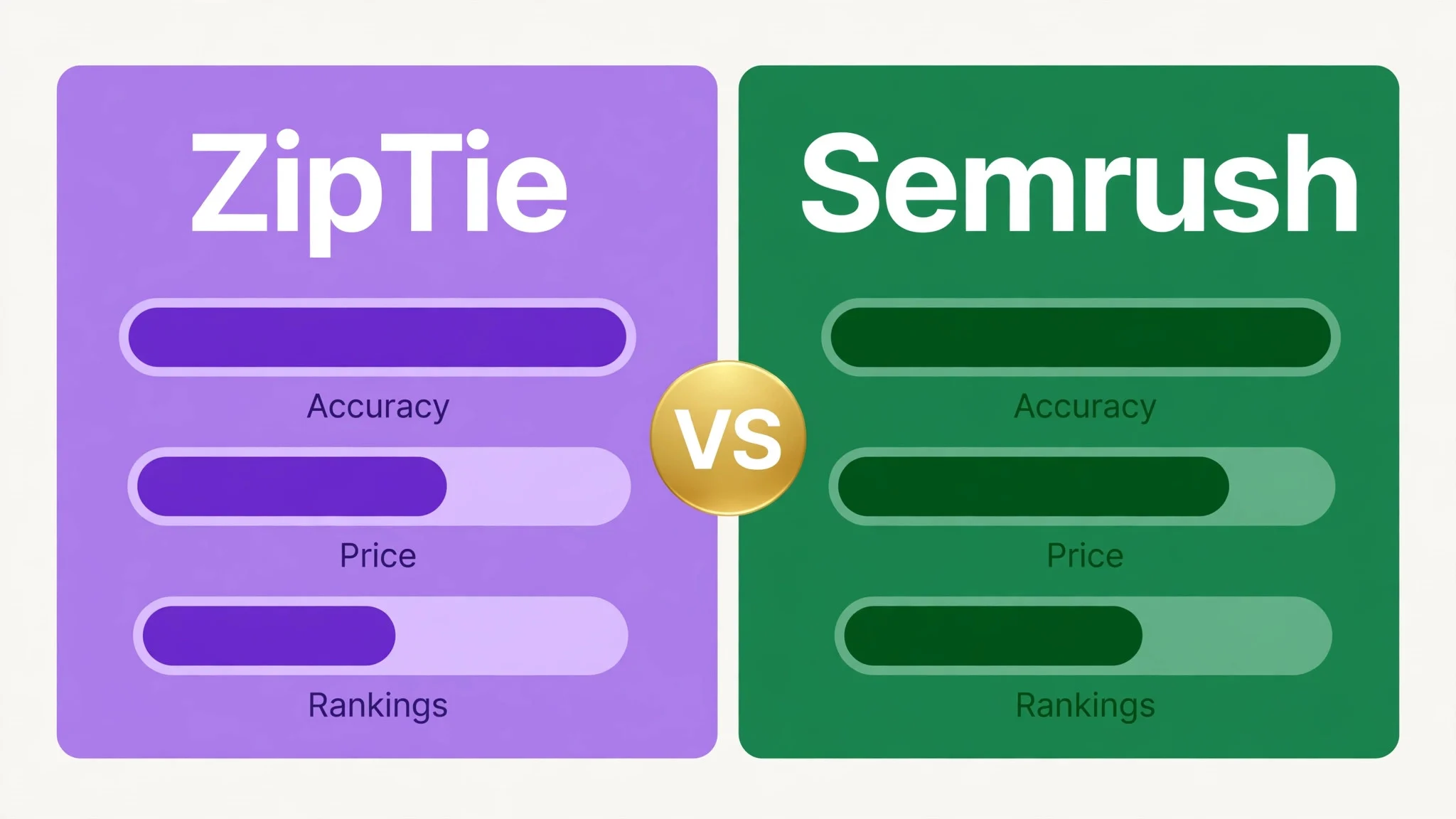
ZipTie wins on accuracy. Its browser based rendering detected AI Overviews far more often than suite trackers in independent checks, and it stores the full answer with citations as evidence. A team that needs to know exactly what the answer said, and which pages it cited, should pick ZipTie, because no suite in this list captures the answer as faithfully.
Semrush wins on breadth. It tracks AI Overviews beside keyword research, audits, rank tracking and backlink data, so one login shows the answer and the classic ranking side by side. The Best AI Overview Tracking Tools split here on accuracy against breadth, and a team that already pays for Semrush should turn the tracking on before buying a second tool.
Price decides the tie for a small team. ZipTie starts at a reported 25.65 dollars a month on its usage based configurator, while Semrush starts at 139.95 dollars a month with AI visibility as an add on. A team that only needs the answer should pick ZipTie, while a team that needs the full suite should pick Semrush.
Can One Tool Cover AI Overviews and Classic Rankings at Once?
A suite can cover both, and Semrush is the closest to doing it well. Its AI Overview tracking sits beside keyword research, audits and rank tracking, so one login shows the blue link rank and the AI citation side by side. A team that already pays for Semrush should turn the tracking on before buying a second tool.
Ahrefs offers the same idea with stronger link data. Its Brand Radar and AI features track mentions across answer engines, while Site Explorer and Rank Tracker cover the classic work. A team that judges SEO by links and content gaps will get more from Ahrefs, and the AI tracking is a useful extra rather than the main reason to buy.
A specialist still wins on evidence. ZipTie stores the live answer with its citations, and Authoritas ties the citation to page quality, so a team that must prove what the answer said should keep a specialist beside the suite. The pair costs more, and the evidence is worth it when a client asks why traffic fell.
What Does AI Overview Tracking Cost in 2026?
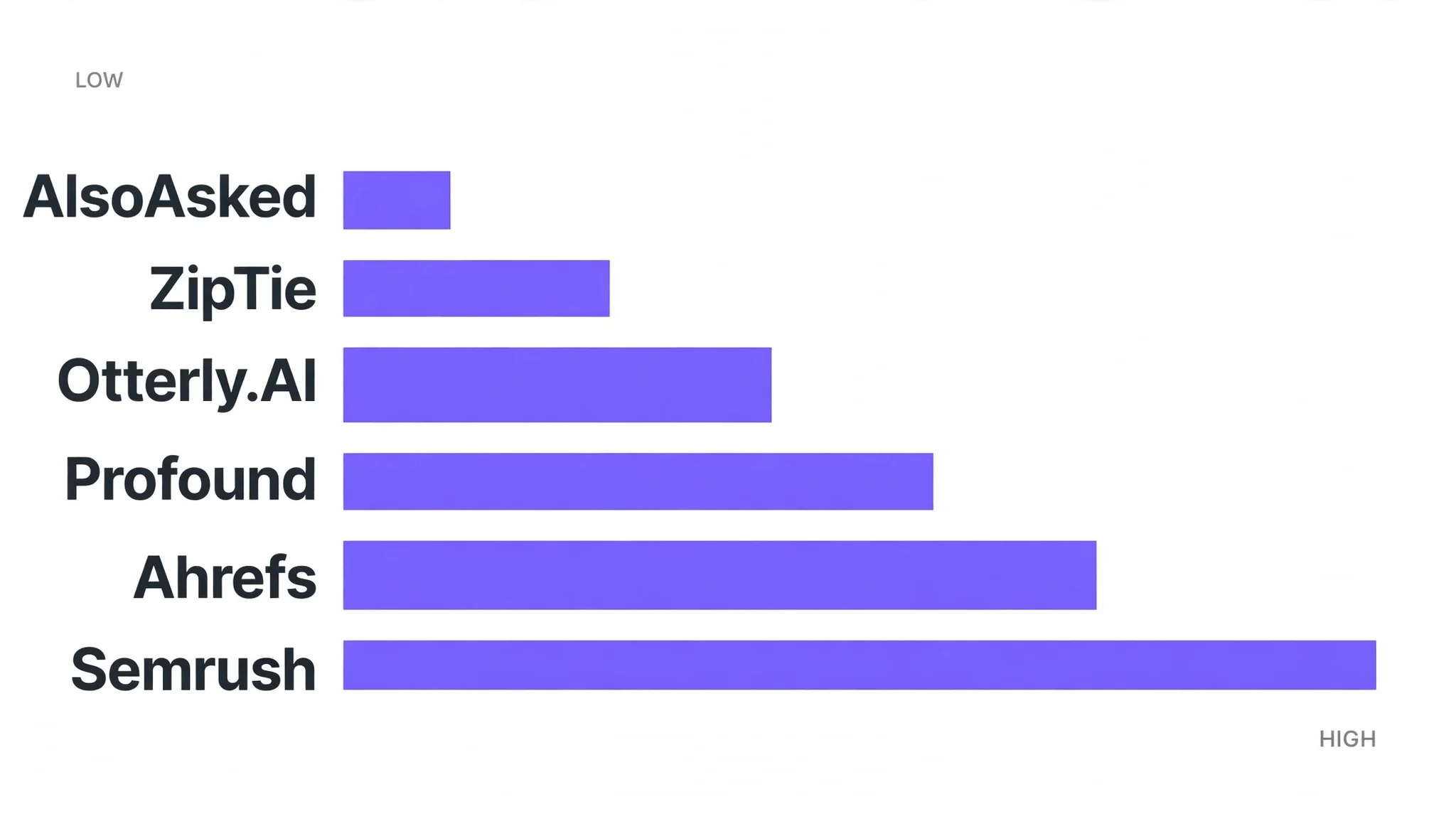
A small team can start for about 12 to 30 dollars a month. AlsoAsked starts at a reported 12 dollars a month, ZipTie at a reported 25.65 dollars a month, and Otterly.AI at 29 dollars a month. The Best AI Overview Tracking Tools at this level cover the answer for a small prompt set, and a team should expect that range for the first tool.
A suite costs far more. Semrush starts at 139.95 dollars a month and Ahrefs at 129 dollars a month, with AI tracking as part of the wider login. A team that needs keyword research, audits and content tools as well should budget at this level, because the suite replaces several smaller tools.
The hidden cost is prompt volume. A tracker priced by checks will look cheap at fifty prompts a day and dear at five hundred, so count the real questions first and price the plan against that list. A team should price the full setup, with the prompts and engines it will actually use, before comparing two vendors on the headline number.
Frequently Asked Questions
Which AI Overview tracker is most accurate?
ZipTie is the most accurate tracker in this guide, because it renders the live search page with real browser sessions and stores the answer with its citations. Among the Best AI Overview Tracking Tools, it is the one built for accuracy first, and technical SEOs who care about the answer above all should start with it.
Do I still need rank tracking if I track AI Overviews?
Yes, because AI answers and blue link rankings measure different things, and both drive traffic. A page sitting third on Google can still take the AI citation, while the top-ranked page can lose it to a clearer rival. A team needs both numbers to see the full picture.
How many keywords should I track in AI Overviews?
A team usually needs fifty to one hundred keywords, spanning brand questions, comparison questions and problem questions. Start with the twenty questions customers ask most, add the comparison questions against the top three rivals, and expand only when the reports show gaps the current list misses.
Can a free tool track AI Overviews?
A free tool can give a first read, and the question tools in this guide show which questions trigger an answer. The Best AI Overview Tracking Tools that track daily need a paid plan, because daily checks across engines cost the vendor real money, so a free tool can show where a page stands today but cannot show whether it is rising or falling.
How often should AI Overview data refresh?
Daily refresh suits teams in fast markets, where a lost citation can cost a week of leads, while weekly refresh suits slow markets with stable answers. A team should match the refresh to the market speed, and a daily check that nobody reads is worse than a weekly check the team acts on.
Will AI Overviews replace organic search results?
No, because AI Overviews sit above the organic results rather than replacing them, and many searches still show blue links first. A page that wins the citation and ranks well will earn traffic from both places, while a page that wins only one will earn half the clicks it could.
The Final Word on AI Overview Tracking
ZipTie takes the accuracy spot, Semrush takes the suite spot for teams that already pay for it, and AlsoAsked takes the budget spot for question research. The Best AI Overview Tracking Tools all track the same shift, and the winner for any one team is the tool that captures the live answer faithfully, at a prompt count it can afford, with reports someone actually reads.
Start with the ten searches that matter most, trial one tracker for a week, and check whether it catches the answer your page already wins. The tool that finds a citation the team did not know about is the tool to keep. AI Overviews reward the page that answers clearly, and the tracker is how a team knows whether its page does.