

The Best SEO Tools for Accountants for most firms start with BrightLocal, because it tracks local rankings by area, manages citations and watches reviews from one dashboard, and it costs 39 dollars a month. An accounting firm wins clients from local search and from trust, so the tool that shows the local map and the review count wins. The ten tools below cover local rank, reviews, keyword research and the on page work a firm site still needs.
A business owner who needs an accountant searches locally, reads the first three results, and calls the firm that looks most trusted. A firm that ranks fourth with twelve reviews will lose to a firm that ranks second with two hundred, even if the first firm does better work. Local visibility and review volume decide the call, and the website decides whether the caller becomes a client.
This guide compares ten tools on local tracking, review work, keyword research and price, with a clear pick for a small firm and a clear pick for a firm with several offices. Prices here come from the vendor’s own page or a published review of it, and the verdict at the end names the tool a firm can start this week.
In this article
- The 10 Tools at a Glance
- Best Pick by Job
- Which Best SEO Tools for Accountants Bring in Client Leads Fastest?
- How to Choose the Right SEO Tool for an Accounting Firm
- The 10 Tools in Detail
- Semrush vs Ahrefs, Which One Suits an Accounting Firm?
- Can One Tool Cover Local SEO and Content at Once?
- What Does SEO Software Cost an Accounting Firm in 2026?
- Frequently Asked Questions
- The Final Word for Accounting Firms
The 10 Tools at a Glance
| Tool | Main job | Best for | Starting price |
|---|---|---|---|
| Semrush | All in one SEO suite | teams that want one suite for classic seo and ai search in the same login | from $139.95/mo |
| Ahrefs | SEO suite with backlink index | teams that judge seo by links and content gaps | from $129/mo |
| Moz Pro | SEO suite with authority metrics | small teams that want a steady suite without a steep learning curve | from $49/mo |
| BrightLocal | Local SEO platform | practices and firms that win clients from a map pack | from $39/mo |
| Whitespark | Local search and citation tool | anyone fixing citations and local rankings on a budget | from $25/mo |
| Surfer | Content optimisation platform | teams that write a lot and want every page scored before it ships | from $49/mo (billed annually) |
| SE Ranking | SEO suite with AI visibility | budget conscious teams that still want the full workflow | reported from $65/mo |
| Mangools | Simple SEO toolkit | small firms and freelancers that want simple keyword work | from $29/mo |
| Ubersuggest | Budget keyword tool | a firm starting seo on a tight budget | from $12/mo |
| Yoast SEO | WordPress SEO plugin | any wordpress site that needs the basics done right | Free; Premium from $99/year |
Best Pick by Job
| Job type | First pick | Second tool | Why this pair works |
|---|---|---|---|
| Best first tool for one firm | BrightLocal | Whitespark | BrightLocal shows the map grid, Whitespark is cheaper for citations alone |
| Best full SEO suite | Semrush | Ahrefs | Semrush covers the most jobs, Ahrefs leads on links and content gaps |
| Cheapest local tracking | Whitespark | Ubersuggest | Whitespark covers citations too, Ubersuggest adds cheap keyword data |
| Best service page scoring | Surfer | Mangools | Surfer scores drafts live, Mangools is easier for beginners |
| Best WordPress basics | Yoast SEO | SE Ranking | Yoast SEO lives in the editor, SE Ranking adds rank tracking |
The Best SEO Tools for Accountants in this guide split into local tools and suites, and a firm usually needs one of each. BrightLocal and Whitespark cover the local map and citations, while Semrush and Ahrefs cover keyword research and the content that earns trust. A small firm can start with one local tool and add a suite once the ranking work is steady, because content helps only if the firm already appears in the map.
Which Best SEO Tools for Accountants Bring in Client Leads Fastest?
Local rank tracking brings leads fastest, because it shows the firm where it stands for accountant near me and for the service searches that matter. BrightLocal leads here, because its map grid shows the ranking street by street, so the firm knows which areas need citations and which need reviews before it spends on content.
Review volume comes next. A firm that asks every happy client for a review will add dozens of reviews in a quarter, and the map pack rewards that volume within weeks. A firm with two hundred recent reviews will win calls over a firm with twenty old ones, even when the second firm has the better website.
Service pages come third. A firm that publishes one clear page per service, with real prices or fee ranges and a plain explanation of the work, will rank for the searches that carry buying intent. Surfer earns its place here, because it scores each service page against the pages already ranking before it ships.
How to Choose the Right SEO Tool for an Accounting Firm
Start with the local map, because that is where clients choose. Check where the firm ranks for accountant near me and for the top five service searches, then pick a tool that tracks those terms by area. The Best SEO Tools for Accountants that track local grids will show the answer, while a national rank tracker will report a single number that hides the real picture.
Next, count the review gap. Compare the firm review count with the top three rivals, and if the gap is more than a hundred reviews, a review flow matters more than a keyword tool. A firm that closes the review gap will rise in the map even before it publishes a new page.
Then check who will use the tool. A suite with deep menus will sit unused in a small firm, while a simple local tool the office manager opens weekly will earn its fee. Pick the tool the firm will actually use, because a tool nobody opens is just a subscription, however strong its data looks.
The 10 Tools in Detail
The ten tools below run from local rank trackers to full SEO suites, in the order a firm usually buys them. Entries here carry the starting price, the main job and who each tool fits, so the Best SEO Tools for Accountants can be measured on the same terms.
1. Semrush
One Semrush account holds everything a firm needs, from finding the terms clients search and auditing pages to checking positions, mapping links and shaping drafts. The AI Visibility Toolkit follows the prompts buyers type into ChatGPT, Perplexity and Google AI answers, so the firm sees which questions name it and which name a rival. Published pricing starts from $139.95/mo.
For an accounting firm its database covers the whole job, from service keywords to rival backlinks, without a second subscription. Check the report on Monday and a slide shows up before it costs the firm a month of enquiries, while a report left unread until the quarter ends arrives after the damage is done.
Seats and extra toolkits push the price up fast, and the menus are deep enough that a new user needs time to learn them. A firm already paying for classic SEO can add the AI-answer tracking to the same account it opens every day, without buying a second tool.
For an accounting firm the weekly check is the local pack and the service pages that bring clients. Every Monday, note the rank for the five services that earn the most fees and the number of new enquiries, and write both in a shared sheet. A firm that looks once a quarter finds the slide after tax season has passed, while a firm that looks every week can fix the listing before the next deadline rush. The suite is only worth its price when someone reads it on a schedule.
For an accounting firm the weekly check is the local pack and the service pages that bring clients, so the trial should run on the firm’s own service pages and watch whether the AI Visibility Toolkit names a prompt the team had missed.
2. Ahrefs
Ahrefs’ backlink index is one of the largest live ones anywhere, built over years of crawling the web, and the login holds Site Explorer, Keywords Explorer, Site Audit, Rank Tracker and Brand Radar for AI mentions. Published pricing starts from $129/mo.
No tool in this guide beats Ahrefs on link data and content gaps, and the pages stay quick to open even on a large firm site. What decides the renewal is whether the report reaches the partners in a form they already read, because a dashboard they never open will not defend the spend.
Ahrefs’ cheapest plan caps the keywords a firm can follow and the reports it can pull, and the AI features only unlock on a dearer plan. For a firm that measures SEO by links and content gaps, Ahrefs is the obvious pick.
Test Ahrefs on the firm’s own site and its nearest rivals, not on the demo. Load the service pages that already bring clients, run a site audit, and see whether the content gap report names a topic the firm had not thought to cover. A report that only repeats what the firm already knew is not worth 129 dollars a month, while one gap that turns into a signed client pays for the trial. Set the decision date before the first crawl, so the firm judges Ahrefs on a week of live work instead of a sales call.
Put Ahrefs on the firm site for a week and let the first audit and content-gap report decide whether it earns the 129 dollars a month.
3. Moz Pro
Moz Pro holds term discovery, rank checks, site audits and a link profile in one login, and clients still ask for its Domain Authority number by name. Published pricing starts from $49/mo.
Moz Pro’s crawl reports rank the fixes instead of burying the firm in charts, and the pace feels slower than the big suites. Set up alerts during the trial, because a warning the day a ranking slips is worth more than a dashboard the firm checks once a quarter.
Moz Pro trades depth for calm: its numbers run thinner than the two suites above, and its AI-answer tracking barely exists. It fits a small firm that wants a steady suite without a steep learning curve.
An accounting firm buys Moz Pro for steady work, so the report has to show that work plainly. During the trial, pull one crawl report and hand it to the partner who signs the budget: if the report needs a call to explain, it is not doing its job. If the partner still needs the agency to explain it, the report is not earning its keep, however calm the workflow feels inside the tool. Judge the reporting before the quarter ends, because the partner who reads the report decides the renewal.
Moz Pro’s draw is a steadier workflow, so the trial should be one crawl on a live firm site, judged by whether the report ranks the fixes the firm needs first.
4. BrightLocal
A firm opening BrightLocal sees its map positions by postcode, its citation list, its review feed and its Google Business Profile, all in one login. Published pricing starts from $39/mo.
No national tool can show what BrightLocal shows: the firm’s rank on every street it serves. Fix one weekly slot for it, such as a Tuesday check of the same five service keywords, and the figures stay trustworthy all quarter.
BrightLocal never writes a page and never follows an AI answer, so the firm keeps another tool for those two jobs. It fits firms that win clients from a map pack.
A firm is found or missed street by street, so the export has to carry the rank grid, not just a summary. Pull the grid and the citation list during the trial, open them in a spreadsheet, and see whether a partner with no SEO background can follow them. When a year of history sits behind a higher tier, proving progress costs more exactly when the firm needs the proof. An export the partners can read on their own is worth more than any dashboard.
Pull the rank grid for the firm’s service streets, repair the citation errors, and recheck the map after 30 days.
5. Whitespark
Whitespark’s work is the citation list: it finds the ones a firm is missing, builds the review links to match, and watches where the firm ranks locally. Its Local Citation Finder has been the local campaign staple for years. Published pricing starts from $25/mo.
Citations are Whitespark’s home turf, and the reports are written plainly enough for a partner to forward without editing. Checking the report each Monday catches a citation gap while it is still cheap to fix, while a report left until the quarter ends arrives after the map pack has already slipped.
A firm buys Whitespark for citations alone, so keywords and site audits still need a second tool beside it. It suits anyone fixing citations and local rankings without a big budget.
Citations go stale without warning, so fix a weekly slot for the citation list. Each Friday, check the same five service keywords, note the firm’s street by street rank, and write down any citation the finder marks as missing. A firm that looks once and moves on will only notice the map pack slip when a rival firm opens down the road, while a weekly check catches the drift early. Clean citations need a weekly eye, not a one off cleanup.
Whitespark’s trial is one real firm listing: run the citation finder for a week and see whether it turns up a gap the firm never knew it had.
6. Surfer
A service page goes into Surfer, comes back with a score, and the writer follows the heading and term guidance until the number clears the bar. Published pricing starts from $49/mo (billed annually).
Its content editor is the most practical here, and the score gives writers a clear target. At renewal the question is whether the report lands in a spreadsheet the partners already open, because a good score alone never saved a subscription.
Surfer’s job is scoring pages, not writing them, and the credits run out fast for a firm that scores every page. It fits firms that write a lot and want every page scored before it ships.
Surfer scores pages, so the trial has to run on pages the firm actually publishes. Take five service pages, score them, follow the heading and term guidance for a week, and watch whether the scores move and the rankings follow. A score that only shuffles terms is not worth the credits, while a page that climbs after following the guidance proves the tool. Mark the trial end date in the calendar on day one, so the choice rests on that week of pages, not on the demo score.
Surfer’s trial should run on the firm’s own service pages: score five, follow the heading and term guidance for a week, and watch whether the scores move.
7. SE Ranking
For less than the big suites charge, SE Ranking gives a firm rank checks, page audits, link numbers and content scoring. The AI visibility add-on follows the prompts buyers type into chatbots. Published pricing starts at reported from $65/mo.
SE Ranking undercuts the big suites by roughly half, so a firm gets most of the same job without paying the leaders’ rate. Turn on alerts in the trial week, because a nudge when a number moves beats a dashboard nobody remembers to open.
SE Ranking’s data is thinner than the leaders’ and the AI tracking costs extra on top of the plan. It fits a budget conscious firm that still wants the full workflow.
SE Ranking is the budget pick, so the report has to prove the saving was worth it. During the trial, pull one report that covers ranks, the audit and the AI visibility add on, hand it to the partner who signs, and ask whether it answers their question in two minutes. If the report needs a walkthrough, the firm will drift back to a bigger suite, however cheap the plan looks. Test the report before the trial ends, because the partner who reads it decides the renewal.
The trial should prove the budget case: one live firm site, the AI add-on switched on, and a report that shows the saving was worth it.
8. Mangools
Mangools bundles KWFinder, SERPChecker, SERPWatcher, LinkMiner and SiteProfiler in a friendly interface that a beginner learns in an afternoon. Published pricing starts from $29/mo.
It is the easiest suite here to learn, and the keyword difficulty score is honest. Reserve the same hour every Friday for five service keywords, and the numbers stay trustworthy all quarter.
Its databases and crawl depth are lighter than the big suites. Suits small firms and freelancers that want simple keyword work.
Mangools is the easy suite to learn, so the export should be just as easy to read. Pull one keyword report during the trial, open it in a spreadsheet, and check whether a beginner could follow the difficulty scores without opening the tool. If older months sit behind a higher tier, the cost of looking back a year is higher than the plan price suggests. A simple export that a small firm can act on beats a detailed one nobody opens.
Run KWFinder on five service keywords and keep Mangools only if its difficulty scores match what the firm sees in the rankings.
9. Ubersuggest
Ubersuggest offers keyword ideas, site audits, rank tracking and content suggestions, with a low monthly price that undercuts every suite here. Published pricing starts from $12/mo.
It is the cheapest full toolkit here, and the keyword ideas are plentiful. Looking at the report each Monday spots a slide before it costs the firm a month of enquiries, while a report left unread until the quarter ends arrives after the damage is done.
Its data refreshes less often and runs shallower than the leaders. Suits a firm starting SEO on a tight budget.
At 12 dollars a month the tool is cheap, but the habit still decides whether it helps. Every Monday, check the same five service keywords, note the rank and the new keyword ideas, and write both in a shared sheet. A firm that buys the cheapest toolkit and never opens it has still wasted the money, while a weekly look at the same five keywords shows whether the ideas are turning into traffic. The price is low, so the routine is the whole value.
Ubersuggest costs 12 dollars a month, so the trial is not about the price: check whether the keyword ideas turn into traffic over a few Monday checks.
10. Yoast SEO
Yoast SEO handles titles, meta descriptions, sitemaps, schema and readability checks inside WordPress, and it is installed on millions of sites. Published pricing starts at Free; Premium from $99/year.
It puts the on page basics inside the editor, so nothing is forgotten before publish. Yoast has no report worth exporting, so the renewal test is the plugin itself, because a checklist the writer ignores will not save a page.
Yoast handles a single site at a time, and it offers no rank tracking or keyword research. Suits any WordPress site that needs the basics done right.
Yoast lives inside WordPress, so the trial has to run on the firm’s own site. Turn on the Premium trial, run the readability and schema checks on five live service pages, and fix what it flags for a week. If the checks only repeat what the firm already knew, the Premium price is not worth paying, while one missed schema error caught in time pays for the year. Set a reminder before starting, so the choice rests on real pages, not on the plugin page.
Yoast lives inside WordPress, so the trial is the plugin itself: run the readability and schema checks on five live service pages and fix what it flags for a week.
Semrush vs Ahrefs, Which One Suits an Accounting Firm?
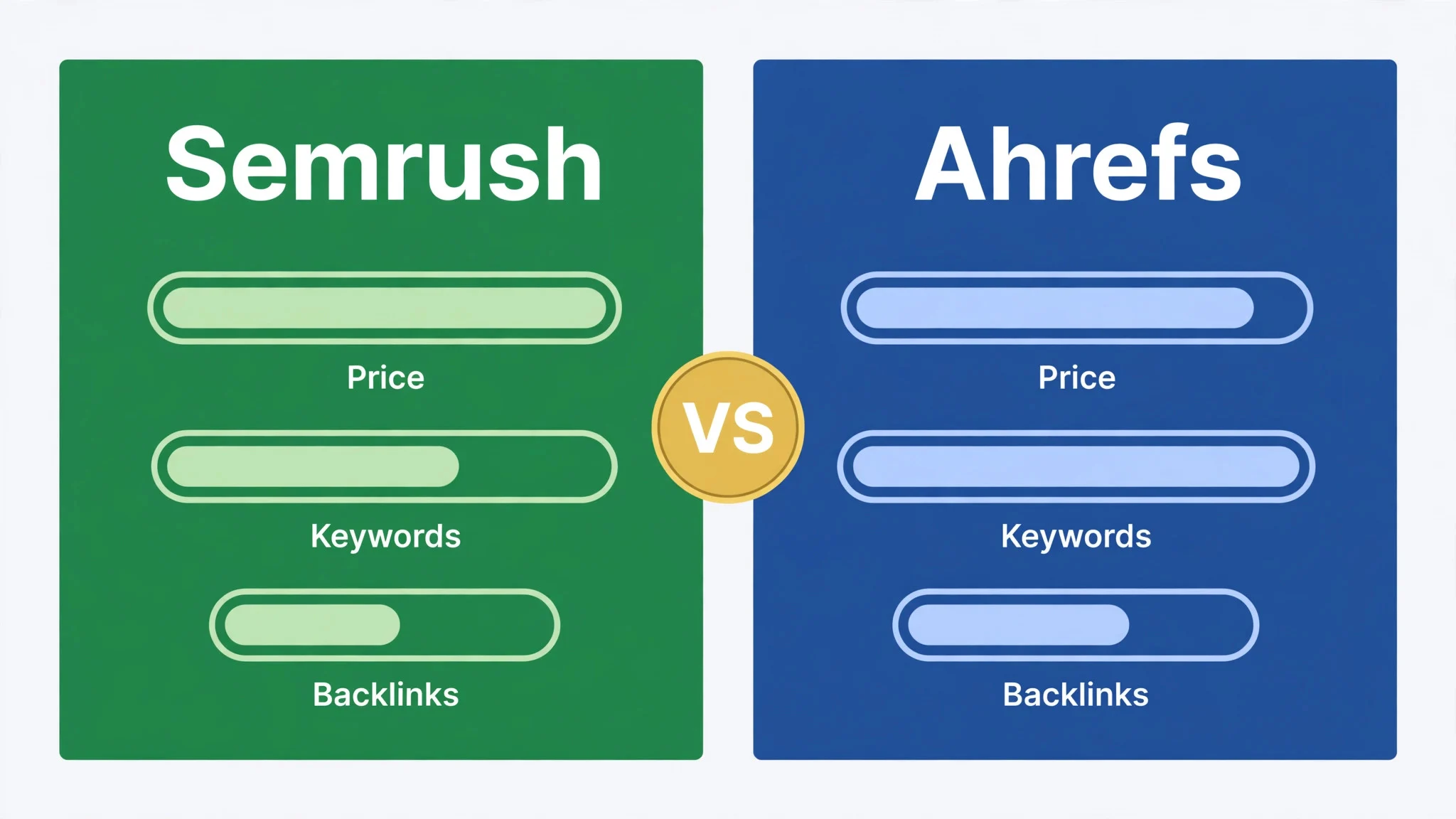
Most firms should start with Semrush, because a single login covers the search-term work, the audits, the position checks and the content tools, with local tools in the same account. A firm that wants one subscription for the whole job will get more from Semrush, and the AI visibility add on covers the new search answers too. The Best SEO Tools for Accountants split here on breadth, and breadth suits a small team.
Ahrefs wins on link data and content gaps. Its backlink index shows which sites link to rival firms, and its content gap report shows the service topics rivals rank for that the firm misses. A firm that already ranks locally and wants to win the content game will feel the Ahrefs difference in the first month.
Price decides the tie. Semrush starts at 139.95 dollars a month and Ahrefs at 129 dollars a month, so the gap is small, and the choice should follow the job rather than the price. A firm that needs one suite for everything should pick Semrush, while a firm that needs link and content depth should pick Ahrefs.
Can One Tool Cover Local SEO and Content at Once?
Semrush comes closest, because it tracks local rankings, audits the site, researches keywords and scores content in one account. A firm that buys Semrush can run the local work and the content work from the same login, and the reports go to the partners in one format. It costs more than a local tool alone, yet it replaces two subscriptions.
A local tool plus a content tool is the cheaper pair. BrightLocal covers the map and citations for 39 dollars a month, and Surfer scores service pages for 49 dollars a month, so the pair costs about 88 dollars a month against a suite at 139.95 dollars. A small firm that only needs those two jobs should buy the pair and spend the saving on review requests.
A WordPress firm can go cheaper still. Yoast SEO handles the on page basics inside the editor, and BrightLocal handles the local work, so the pair covers the essentials for about 39 dollars a month plus the Yoast premium. A firm with a WordPress site should start there, and move to a suite only when the content plan grows past one page a month.
What Does SEO Software Cost an Accounting Firm in 2026?
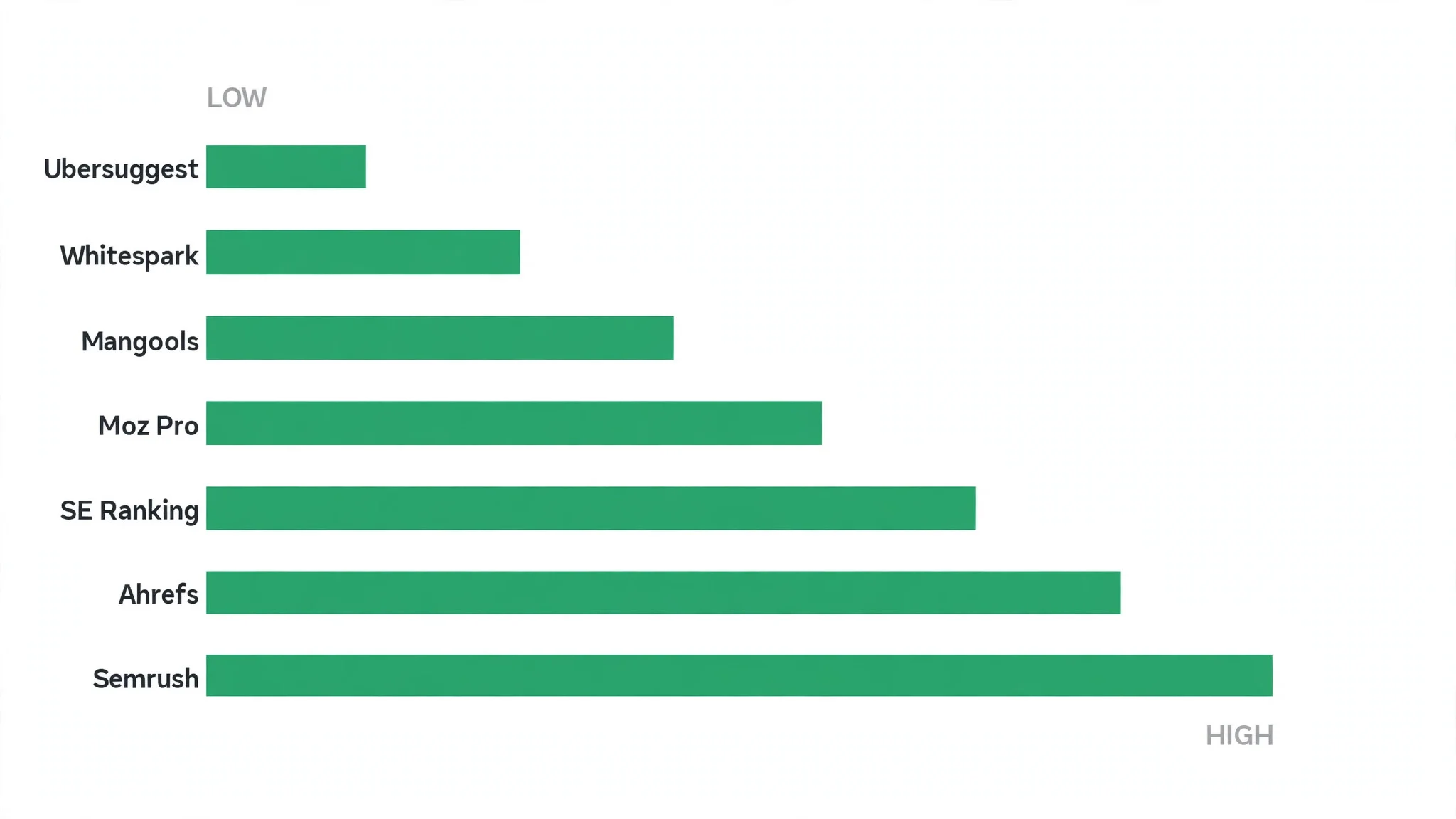
A small firm can start for about 25 to 65 dollars a month. Whitespark starts at 25 dollars a month, BrightLocal at 39 dollars a month, and SE Ranking at a reported 65 dollars a month. The Best SEO Tools for Accountants at this level cover local rankings, citations and the basic SEO a firm site needs, and a firm should expect that range for the first tool.
For a full suite, budget roughly 129 to 139.95 dollars a month. Ahrefs starts at 129 dollars a month and Semrush at 139.95 dollars a month, and both cover keyword research, audits, rank tracking and content tools. A firm that publishes service pages every month and tracks rivals should budget at this level, because the suite replaces several smaller tools.
The return is measured in client calls, not in rankings. A firm should track calls from the Google Business Profile before and after the first month, and keep the tools only if the call count rises. A tool that cannot show more calls is not earning its fee, however good its dashboard looks, and a firm should review the spend every quarter.
Frequently Asked Questions
Which SEO tool is best for a small accounting firm?
A small firm should start with BrightLocal, which tracks the local map, manages citations and watches reviews for 39 dollars a month. Among the Best SEO Tools for Accountants, it is the one tool that shows where the firm stands locally, and a firm can add a suite later once the ranking work is steady.
How many Google reviews does an accounting firm need?
A firm should aim for more reviews than the top three rivals in its area, and for most towns that means one hundred or more, with fresh reviews every month. A firm with twenty reviews will lose the map to a rival with two hundred, even if its work is better, because clients read the count before they read the words.
Do accountants still need a website if clients find them on Google Maps?
Yes, because the map listing links to the website, and a business owner checks it before calling. A fast site with clear service pages, real fee ranges and a plain contact form will turn map views into calls, while a slow or thin site will send the owner back to the map to pick the next firm.
Can a firm manage SEO without an agency?
Yes, and the Best SEO Tools for Accountants in this guide are built for exactly that. A firm can track rankings with BrightLocal, request reviews with a simple flow, and publish one service page a month, and that routine will beat most local rivals within a year, because most firms do none of it consistently.
How long does local SEO take for an accountant?
Most firms see movement in the map within eight to twelve weeks, and a strong position within six months, if citations are fixed and reviews arrive steadily. A firm that publishes nothing and asks for no reviews will wait a year for the same result, so the speed depends on the routine rather than the tool.
Should a firm with several offices buy one tool for all of them?
Yes, because one platform with per location pricing keeps rankings, citations and reviews consistent across offices, and the firm can compare offices side by side. BrightLocal scales per location, and a suite covers the content work for all offices at once, so a firm should price the full office count before choosing.
The Final Word for Accounting Firms
BrightLocal takes the top spot for most firms, Semrush takes the suite spot for firms that publish content, and Whitespark takes the budget spot for a firm that only needs citations and rank data. The Best SEO Tools for Accountants all serve the same client journey, from a local search to a review read to a phone call, and the winner for any one firm is the tool that fixes its weakest step first.
Start with the map grid, fix the citations, then ask every happy client for a review. That routine, run every week, will move a firm up the map faster than any single feature in this guide. The tool matters less than the habit, and the habit starts with one dashboard the office opens every Monday.