

A voice is an identity, and cloning one is the most powerful trick in audio. A podcaster can fix a flubbed line without re-recording, a course creator can narrate in a language they never learned, and a brand can sound the same in every ad. The best ai tools for voice cloning are the ones that sound human first and handle consent properly, because a clone without permission is a lawsuit, not a feature.
Ten tools made the list, and they split into three kinds. Clone specialists build the most realistic copies. Studio tools add cloning to a wider workflow. Enterprise services sell Hollywood-grade conversion by quote. The prices below were checked against vendor pages and November 2026 roundups, and where sources disagreed the draft says so rather than picking the friendlier number.
In this article
How the Best AI Tools for Voice Cloning Were Compared
Each of the best ai tools for voice cloning was judged on five things that decide whether a clone is usable. Quality is first, because a clone that sounds robotic helps nobody. Languages are second, because a voice that speaks 29 languages beats one that speaks two. Price is third, measured as the cost of one project and as the cost of a year of production. Consent is fourth, because a tool without a proper consent flow is a risk. Workflow is fifth, because a clone inside an editor beats a clone that needs exporting.
The tools in this guide all clone real voices, and every tool here has a free plan or a free trial except the ones that say otherwise. The comparison below names the limit of each tool plainly, because a tool bought for the wrong job wastes more than its subscription. It wastes the voice it was bought to copy.
The prices in this guide were checked in November 2026, and several are unpublished, especially Resemble AI, Lovo and WellSaid Labs, whose vendor sites carry the current figures. Check the site before budgeting, because a roundup cannot quote a price the vendor does not publish.
Consent Comes Before the Clone
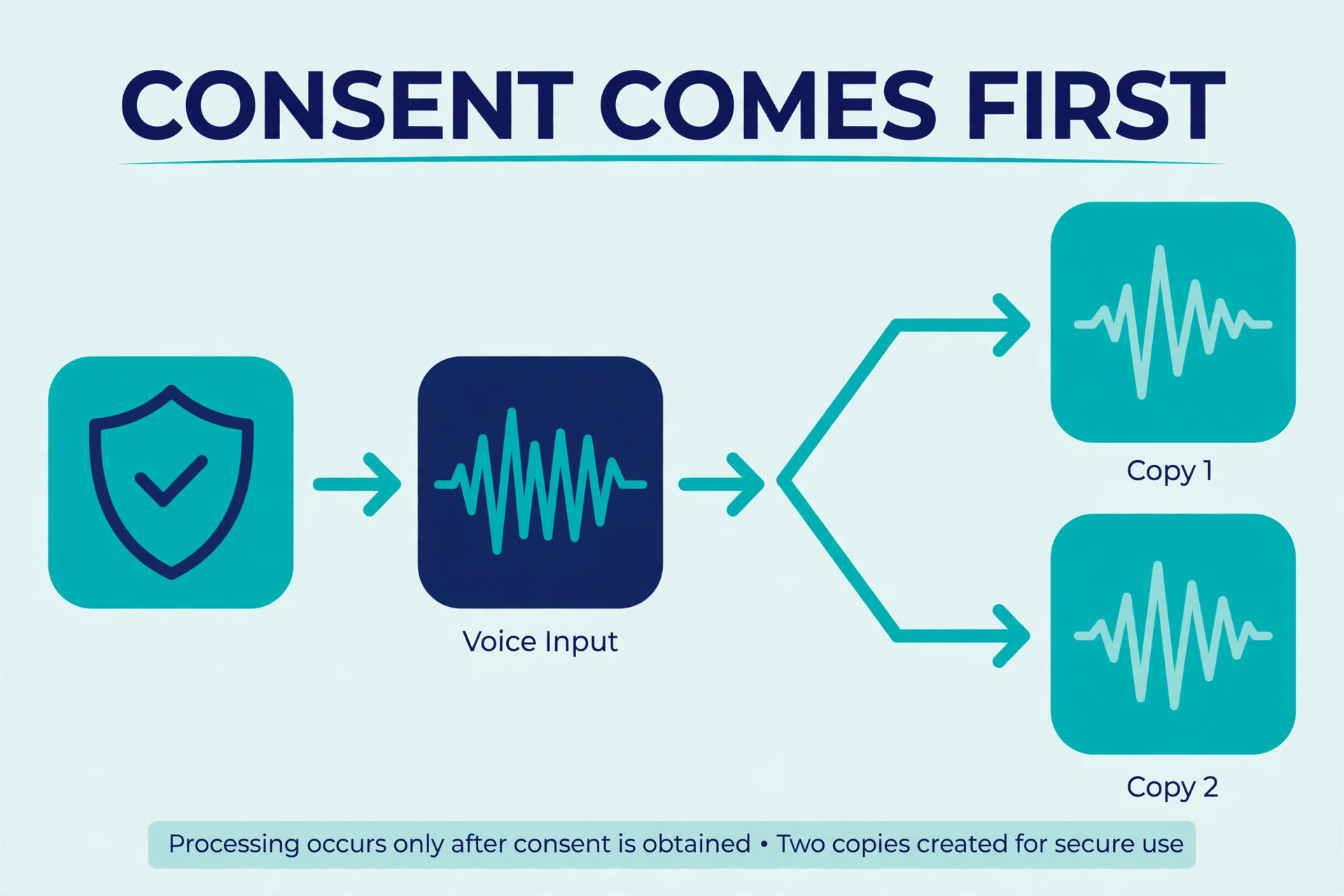
Every serious cloning tool asks for a consent recording before it builds a copy, and that step cannot be skipped. The rule is simple, clone only a voice you own or have written permission to use, because cloning someone else without consent can end a channel and break the law. The tools in this list all enforce that rule in some form, and a tool that does not should not be trusted.
The best ai tools for voice cloning treat consent as part of the product. ElevenLabs, Descript and PlayHT all require a clear consent step, and the enterprise tools confirm ownership in the contract. A buyer who sees consent as friction is buying the wrong tool, because the friction is what keeps the work legal.
The legal exposure deserves a line in every plan, because a voice is an identity and the law treats it that way. A brand voice needs ownership confirmed in the contract, and a personal voice needs written permission on file. The tools that enforce consent are protecting the user, not slowing them down.
The sample is the asset, because a clone built from a good recording can be rebuilt and a clone built from a lost recording cannot. Keep the original files safe, and the clone will always be recoverable.
The 10 Tools at a Glance
The table below lines up the ten tools by entry price and free access, so the shortlist takes a minute to build.
| Tool | Price | Free plan | Best for |
|---|---|---|---|
| ElevenLabs | Starter $6 a month | Free plan, 10,000 credits a month | Most natural voice cloning |
| PlayHT | Creator $39 a month | Free plan, 12,500 characters a month | Largest voice library |
| Descript | Creator $24 a month on annual billing | Free plan | Cloning inside the editor |
| Resemble AI | Paid plans on the vendor site | Free trial available | Custom voices for brands |
| Lovo | Paid plans on the vendor site | Free plan | Voices for video and e-learning |
| Speechify Studio | Starter $19 a month | Free plan, 600 credits | Narration plus video editing |
| Murf AI | Creator $29 a month | Free plan, 10 minutes of generation | Voiceover studio for training video |
| Respeecher | Custom pricing | No free plan published | Hollywood-grade voice conversion |
| WellSaid Labs | Paid plans on the vendor site | Free trial available | Studio voices for business content |
| Voice.ai | Free plan | Free plan, paid plans on the vendor site | Real-time voice changing and cloning |
Read the price column against the meter, because credits, characters and minutes all behave differently as the volume grows.
The 10 Tools in Detail
1. ElevenLabs
Best for Most natural voice cloning. Price Starter $6 a month. Free plan Free plan, 10,000 credits a month.
Ask a listener to tell a cloned voice from a real recording, and ElevenLabs is the tool most likely to fool them. A few minutes of uploaded audio is enough to build a copy that reads any script in that voice, across more than 29 languages, with pauses and emphasis that sound human rather than stitched together. The Studio editor lets you steer the delivery, and the dubbing mode carries the same voice into another language instead of hiring a second actor.
The entry point is cheap. Starter runs $6 a month billed monthly, or $5 on annual billing, and includes 30,000 credits a month with ten instant clones. Creator is $22 a month, or $18.33 annually, with 121,000 credits and the professional cloning option. Pro at $99 a month adds 600,000 credits. Ignore the $11 Creator figure seen in ads, because that is a first-month promotion and the ongoing rate is $22.
Buy it when the clone has to pass as a person, because the realism gap against the rest of the list is audible in the first sentence. Skip it when the job is a handful of short tests, because the free plan handles those and the paid tiers are priced for regular production.
Watch out. Only clone a voice you own or have written permission to use, because an unauthorised clone can end a channel and break the law.
2. PlayHT
Best for Largest voice library. Price Creator $39 a month. Free plan Free plan, 12,500 characters a month.
Volume changes the maths, and PlayHT is built for the high-volume end of it. The library holds more than 900 voices in 142 languages, the API is strong enough for developers to build on, and an instant clone needs only about 30 seconds of audio. A voice can even speak a language its owner never recorded, which matters for a team publishing the same narration in a dozen markets.
Creator costs $39 a month, or $31.20 on annual billing, and covers roughly 250,000 characters a month with ten instant clones and a commercial licence. Unlimited is $99 a month for up to 2.5 million characters under a fair-use ceiling. The free plan gives 12,500 characters a month. At low volume PlayHT costs more than ElevenLabs, and at very high volume it costs less, so count the characters before choosing.
Buy it when the work is narration at scale in many languages, because the library and the flat ceiling fit that shape. Skip it when the monthly volume is small, because ElevenLabs Starter at $6 does the same job for far less.
Watch out. A clone built from 30 seconds is a rough sketch, so feed it longer samples when the voice has to carry a whole video.
3. Descript
Best for Cloning inside the editor. Price Creator $24 a month on annual billing. Free plan Free plan.
Every podcaster knows the moment, a perfect take ruined by one wrong number. Descript fixes it without a re-record. Its Overdub feature clones your own voice, and then a correction is just typing the right words into the transcript. The take stays, the error goes, and the session that would have taken an hour takes a minute.
Creator is $24 a month on annual billing, or $35 billed monthly, and Overdub comes with the full editing suite. The free plan covers the basics with limited transcription time. The catch is scope, because Overdub exists to repair your own voice, not to invent character voices, so it is a repair tool first and a creative tool second.
Buy it when long takes need small fixes, because no other tool repairs a recording this fast. Skip it when the brief calls for many different voices, because Descript clones one voice at a time for one person.
Watch out. Overdub asks for a clear consent recording before it clones anything, and there is no way around that step.
4. Resemble AI
Best for Custom voices for brands. Price Paid plans on the vendor site. Free plan Free trial available.
A brand that sounds different in every ad has no voice at all. Resemble AI sells the opposite, one custom voice a company owns and uses everywhere, in ads, on phone systems and in video, instead of hiring a different actor for each job. The cloning works from a short sample, the emotion can be steered, and a real-time mode changes voices live.
No public price could be verified for this list, so the vendor site is the only place to check the current figure. The free trial lets you test a clone of your own voice before committing. The setup and the price both reflect a production audience, because Resemble AI is built for teams, not for casual users trying one narration.
Buy it when a brand needs a single consistent voice across channels, because a custom clone costs less over a year than a voice actor retainer. Skip it when the job is one narration, because a simpler tool does that for less.
Watch out. A brand voice carries legal weight, so confirm who owns the clone in the contract before using it.
5. Lovo
Best for Voices for video and e-learning. Price Paid plans on the vendor site. Free plan Free plan.
Training videos have three parts, a script, a voice and an edit, and Lovo, now sold as Genny, keeps all three in one workspace. The platform holds a large voice library, offers cloning, and includes a video editor, so a course creator can write the script, voice it and cut the video without exporting between apps.
No public price could be verified for this list, so the vendor site carries the current figure, and the free plan covers enough to test the voices. The compromise is depth, because a tool that does the whole video workflow cannot do any single part as deeply as a specialist, and the cloning is one feature among many.
Buy it when the voice is one step in a video production line, because the built-in editor removes the export loop. Skip it when the voice alone is the deliverable, because a dedicated cloning tool sounds better.
Watch out. Try the clone on your own script before paying, because library voices and cloned voices can sound very different.
6. Speechify Studio
Best for Narration plus video editing. Price Starter $19 a month. Free plan Free plan, 600 credits.
Written content becomes video here without leaving the tool. Speechify Studio pairs text-to-speech with a video editor, so a script turns into a narrated video with visuals and captions in the same place. Course creators and marketers who convert articles into video every week save the round trip between a voice app and an editor.
Starter is $19 a month, or about $8.33 a month billed annually, with around 7,200 credits a month. Creator at $49 a month adds more credits and features. The free plan gives 600 credits. The compromise is focus, because this is a narration and video tool first, and cloning is one feature inside it rather than the headline.
Buy it when written material must become narrated video quickly, because the combined workflow is the reason it exists. Skip it when the brief is a high-fidelity copy of one specific voice, because ElevenLabs does that better.
Watch out. Credits are the meter, and a long script can spend a month of them in a single session.
7. Murf AI
Best for Voiceover studio for training video. Price Creator $29 a month. Free plan Free plan, 10 minutes of generation.
Training videos need a studio, not a toy, and Murf AI behaves like one. More than 200 voices, a built-in editor, B-roll sync and two hours of generated audio a month on the Creator plan add up to a workspace a team can produce in every week. The voice quality is good and the workflow is the most polished in this list.
Creator is $29 a month, or $19 billed annually, and Business is $99 a month, or $66 annually. The free plan gives ten minutes of generation and no downloads. The fact that matters most is the cloning limit, because cloning is only sold on the Enterprise plan as a negotiated add-on, so no plan you can buy online includes it.
Buy it when the job is voiceover for training videos, because the studio and the editor are built for exactly that. Skip it when cloning is the requirement, because Murf does not sell it on any self-serve plan.
Watch out. No downloads on the free plan means it works as a demo, not as a usable tier.
8. Respeecher
Best for Hollywood-grade voice conversion. Price Custom pricing. Free plan No free plan published.
Film work sets the bar for voice conversion, and Respeecher has cleared it on real productions, including making a voice sound younger for a character. The conversion is the most realistic in this list, and it is sold as a professional service with individually quoted projects rather than as a self-serve subscription.
Pricing is custom and unpublished, which puts Respeecher in the enterprise bracket, with no free plan. The trade is quality against access, because the results are the best here and the price and the process show it. A small creator will find the door closed, and a production company will find the quality worth the quote.
Buy it when the conversion must be indistinguishable from the real thing, because that is the job it was built for. Skip it for ordinary narration, because the cost and the process are far beyond what that job needs.
Watch out. Get the quote and the delivery timeline in writing before a production schedule depends on it.
9. WellSaid Labs
Best for Studio voices for business content. Price Paid plans on the vendor site. Free plan Free trial available.
Corporate narration has a sound, clear, steady and trustworthy, and WellSaid Labs records its voices to match it. The library is built from professional voice actors and aimed at training, marketing and product teams, so the result sounds like a studio read rather than a performance. That polish is the product.
No public price could be verified for this list, so the vendor site carries the current figure, and a free trial lets you test the voices on your own scripts. The compromise is range, because WellSaid is a voice library and studio first, and its cloning features are narrower than the dedicated cloning tools.
Buy it when the narration has to sound like a professional studio read, because the actor-recorded voices carry that polish. Skip it when the brief is cloning one specific person, because ElevenLabs does that better.
Watch out. A voice that sounds good on a demo can sound flat on technical copy, so test it on your own script first.
10. Voice.ai
Best for Real-time voice changing and cloning. Price Free plan. Free plan Free plan, paid plans on the vendor site.
Every other tool here works on recordings. Voice.ai works live. It started as a real-time voice changer for streaming and calls, and it now covers cloning alongside the live features, so a creator can sound like a different voice in the moment or clone one for a recorded piece, from the same account.
The free plan covers the basics, with paid plans on the vendor site for more voices and higher quality. The compromise is fidelity, because real-time processing prioritises speed over the quality a studio tool delivers, and the clone reflects that.
Buy it when the voice needs to change live, because no other tool here does real-time. Skip it when the clone has to carry a finished video, because the studio tools record at higher fidelity.
Watch out. Live voice changing has obvious misuse potential, so only use voices you own or have permission to use.
Quality Checks Before You Commit
The best ai tools for voice cloning all claim natural voices, and the claim is only true on your own script. Test every tool on the same paragraph, the one the clone will actually read, because a voice that sounds good on a demo can sound flat on technical copy. The test script should include numbers, names and the hardest words in the project.
The second check is the language. ElevenLabs covers more than 29 languages, PlayHT covers 142, and the quality varies by language, so a voice that shines in English may struggle in another tongue. Test the clone in every language the project needs, because the library count is not a quality promise.
The third check is the consent flow. A serious tool asks for a clear consent recording before it clones anything, and that step cannot be skipped. A tool that clones without consent is a risk, not a shortcut, because the legal exposure follows the user, not the vendor.
The fourth check is the meter. ElevenLabs charges by credits, PlayHT by characters, and Speechify by credits, so the same script costs different amounts on different tools. Count the characters in a typical month before choosing, because the meter decides the bill.
Best Pick by Job
The right pick depends on the job, so match the tool to the work rather than buying the biggest name.
| Job | Pick | Why |
|---|---|---|
| Most natural clone | ElevenLabs | Realistic voices, $6 a month |
| High-volume narration | PlayHT | 900 voices, 142 languages |
| Fixing recordings | Descript | Overdub repairs in the editor |
| Brand voice asset | Resemble AI | One voice across channels |
| Video and e-learning | Lovo | Voice, script and video together |
| Narrated video | Speechify Studio | Script to video in one place |
| Training voiceover | Murf AI | Studio workflow, 200 voices |
| Film-grade conversion | Respeecher | Indistinguishable results |
| Studio business voices | WellSaid Labs | Actor-recorded polish |
| Live voice changing | Voice.ai | Real-time, free plan |
When two tools tie, test both on the same script, because the quality gap is audible in the first sentence and no review can hear it for you.
Quality, Volume or Live
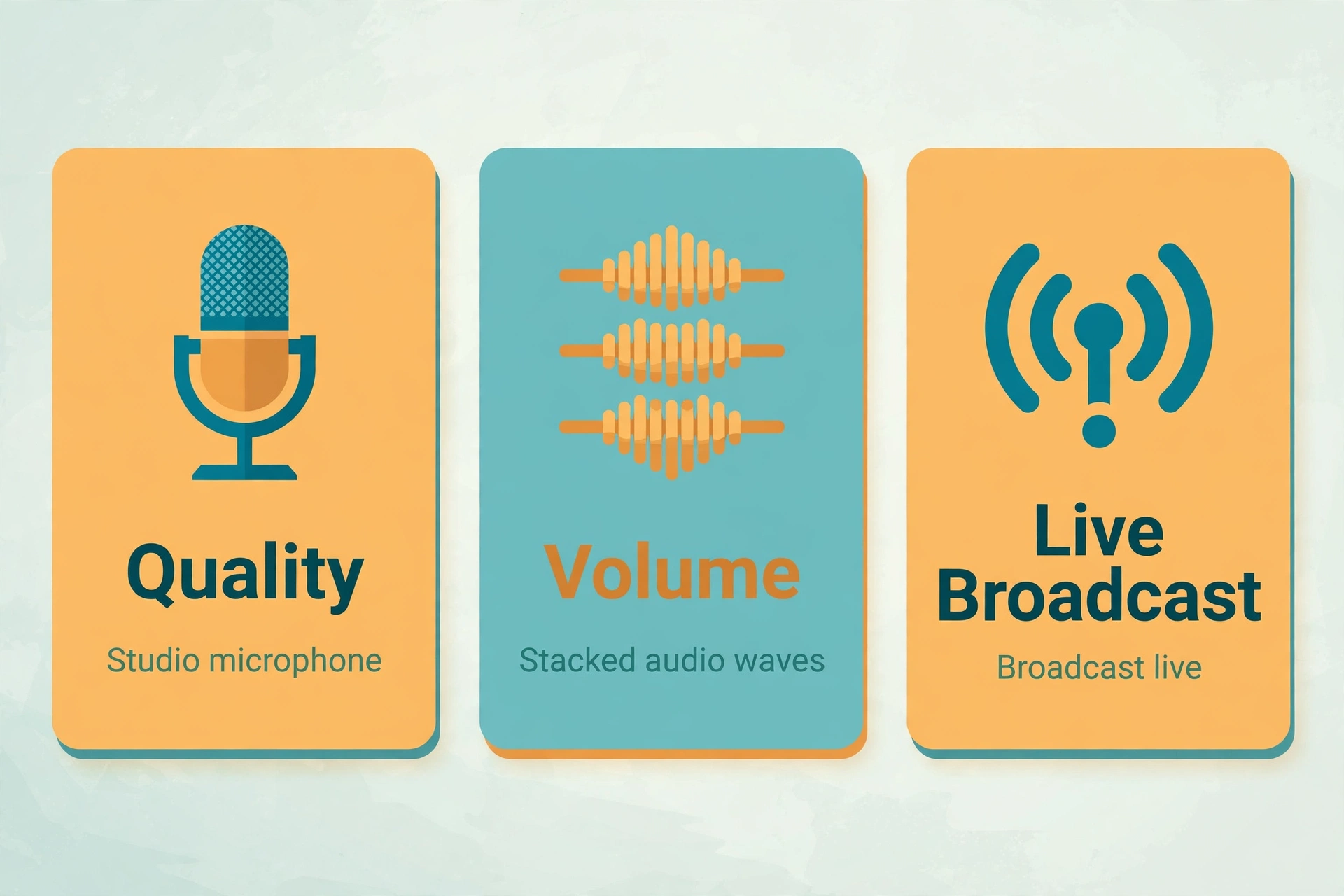
Three buyers need three different tools. The quality buyer wants the most realistic clone and will pay for it, so ElevenLabs wins. The volume buyer wants the most characters per dollar across many languages, so PlayHT wins. The live buyer wants the voice to change in real time, so Voice.ai wins, because no other tool here does live at all.
The practical rule is simple. Buy quality when the clone carries a finished video. Buy volume when the narration runs for hours every month. Buy live when the voice must change in the moment. A buyer who mixes up the three will pay the quality price for a volume job, or expect studio quality from a live tool.
The live buyer deserves a warning, because real-time voice changing prioritises speed over fidelity. A live clone will never sound as good as a studio clone, and the gap is the price of immediacy. Buy live only when the moment demands it.
The best ai tools for voice cloning sound human first and handle consent properly, and the pick that fits your job is the right one. ElevenLabs leads for realism, PlayHT for volume, and Descript for fixing recordings.
A Simple First Clone
The best ai tools for voice cloning repay a careful first project, and the care starts with the sample. Record three minutes of clean audio in a quiet room, with the natural pace and tone the clone should copy, because the clone can only learn what the sample teaches. A noisy sample produces a noisy clone, and no tool can fix that afterwards.
Step two is the test script, write the paragraph the clone will read in production, including the numbers and names that usually trip a voice up. Step three is the comparison, run the same script through two tools and listen to both with fresh ears, because the difference is audible in the first sentence.
Step four is the consent record, keep the written permission with the project files, because a clone without paperwork is a liability. Step five is the production run, and only then should the subscription be bought, because the test has already proved the quality.
Keep the original recordings, because a clone built from a good sample can be rebuilt, and a clone built from a lost sample cannot. The sample is the asset, and the clone is the copy.
Free Plans and Trials Worth Using
The best ai tools for voice cloning include free plans that cover a real test. ElevenLabs gives 10,000 credits a month free, PlayHT gives 12,500 characters a month, Descript covers the basics with limited transcription, and Speechify Studio gives 600 credits. A creator who tests on the free plans can hear the quality gap before paying anything.
A free test follows a simple pattern. Record three minutes of clean audio, run the same test script through two tools, and listen to both with fresh ears, because the difference is audible in the first sentence. The tool that sounds human on your own script is the tool worth paying for.
The free plans have limits that bite in different places. ElevenLabs free caps the credits, PlayHT free caps the characters, and Murf free allows no downloads at all, which makes it a demo rather than a usable tier. A creator who hits a limit should pay for the tool whose output earned it.
Start free for the first project, and let the quality decide the purchase. The clone that sounds like a person on the free plan will sound better on the paid tier, and the clone that sounds robotic for free will not improve with a subscription.
Frequently Asked Questions
Is voice cloning legal?
Cloning your own voice, or a voice you have written permission to use, is legal. Cloning someone else without consent can break the law and end a channel, so every serious tool requires a consent recording first. Never clone a voice you do not own or have permission for.
How much audio does a clone need?
It depends on the tool. PlayHT builds an instant clone from about 30 seconds, though a longer sample sounds better. ElevenLabs asks for a few minutes for the best quality. A 30-second clone is a rough copy, so use longer samples when the voice must carry a whole video.
Can a cloned voice speak another language?
Yes, on the better tools. ElevenLabs dubs a video into another language while keeping the original voice, and PlayHT offers cross-language cloning that lets a voice speak a language its owner never recorded. The quality varies by language, so test it on your own script.
How much does voice cloning cost?
From nothing to $99 a month. ElevenLabs Starter is $6 a month, PlayHT Creator is $39, Descript Creator is $24 a month on annual billing, and the enterprise tools are custom priced. Most creators spend $6 to $40 a month on one tool.
Can I clone a celebrity voice?
No, not legally. Cloning a celebrity or any other person without their written permission breaks the law in most places and violates every serious tool terms of service. The tools in this list will refuse, and a tool that does not refuse should not be trusted.
How do I record a good voice sample for cloning?
In a quiet room, with a decent microphone, at a natural pace, for three minutes or more. The clone can only learn what the sample teaches, so a noisy sample produces a noisy clone, and a rushed sample produces a rushed voice. Record the sample as if it were the performance itself.
Can I use a cloned voice commercially?
Yes, when the voice is yours or you hold the rights to it, and the tool licence allows commercial use. PlayHT includes a commercial licence on Creator, and ElevenLabs covers commercial use on paid plans. Read the licence before publishing, because the free plan may restrict commercial use.
The Bottom Line
The best ai tools for voice cloning sound human first and handle consent properly, and the creator who tests on a free plan will hear the quality before paying. Record a clean sample, compare two tools on the same script, and keep the permission with the project.