


A consultant who follows up within a day wins more engagements than one who waits a week, and the difference is usually a system, not talent. The best crm software for consultants keeps every client, conversation, and follow up in one place, and HubSpot leads this list because its free CRM covers the whole job without a learning curve. This guide reviews 8 tools on what actually wins work for a consultant.
A consultant sells trust, and the CRM behind the work decides whether a client feels remembered or forgotten. A missed follow up, a lost note, or a proposal sent to the wrong person will cost a client faster than a weak pitch. The tools below were judged on the work a consultant does every week, which is winning work, delivering it, and winning the next one.
You will find a comparison table first, then a full review of each tool, then a head-to-head between the top two, plus a five step plan for running a first client pipeline. Pricing changes often in this market, so confirm the current figure on the vendor site first.
In this article
- The 8 Tools at a Glance
- Why the Best CRM Software for Consultants Shortlist Matters in 2026
- How We Judged Every Consultant CRM on This List
- Best Pick by Job
- The 8 Tools in Detail
- HubSpot vs Pipedrive: The Head-to-Head That Decides It
- Choosing a Consultant CRM Without Paying for Features You Skip
- Running Your First Client Pipeline in Five Steps
- Frequently Asked Questions
- Our Pick, Stated Plainly — HubSpot Is the Consultants Default
The 8 Tools at a Glance
The table below gives the short version of the best crm software for consultants, with the starting price, the consultant each tool suits, and the strength that sets it apart.
| Tool | Starting price | Best for | Standout strength |
|---|---|---|---|
| HubSpot | Free plan, paid plans | Consultants who want one system | Free CRM plus marketing tools |
| Pipedrive | Free trial, paid plans | Consultants who sell by pipeline | Clearest visual pipeline |
| Zoho CRM | Free plan, paid plans | Consultants who want low cost scale | Strong features at a low price |
| Capsule | Free plan, paid plans | Solo consultants who want simple | Simple CRM done well |
| Copper | Free trial, paid plans | Consultants who live in Google | CRM inside Gmail |
| Less Annoying CRM | Paid plans | Consultants who hate complex software | Simplest CRM on this list |
| Streak | Free plan, paid plans | Consultants inside Gmail | Pipelines inside the inbox |
| Insightly | Free trial, paid plans | Consultants who track delivery too | CRM plus project tracking |

Why the Best CRM Software for Consultants Shortlist Matters in 2026
Consulting runs on relationships, and the shortlist matters because a consultant has no product to fall back on. The work is the advice, and the CRM is the memory that keeps every client, every conversation, and every promise straight. A consultant who remembers the details wins the renewal, and one who forgets loses it.
The second reason is time. A solo consultant has no team to hand admin to, so every hour spent searching for a note or chasing a follow up is an hour not spent on client work. The tools on this list earn their place by removing that admin, not by adding features a consultant will never open.
Follow up is the test that matters most here. A CRM that reminds a consultant before a deadline, drafts the follow up, and logs the reply is worth more than one with a hundred reports. The reviews below note where the follow up tools are genuinely useful and where they just add setup work.
Cost is the other factor a solo consultant cannot skip. A tool that charges per user is cheap for one person and expensive for a growing practice, so the reviews note where the price stays fair as the team grows.
Contact history is the memory a solo consultant cannot afford to lose. A CRM that shows every call, email, and meeting with a client on one screen means you never ask a client to repeat what they told you last month. The tools below are judged on how complete and how readable that history is.
Proposal tracking is the part of a CRM that pays for itself. Knowing which proposals are open, which were viewed, and which went quiet tells a consultant exactly who to call on Monday morning. The tools on this list differ in how clearly they show proposal status.
Follow up reminders are the quiet feature that wins work. A consultant who follows up within a day of a proposal is far more likely to win the engagement than one who waits a week, and a CRM that nudges you at the right moment is worth more than any report. The reviews below note which reminders actually work.
The link to invoicing matters more than it looks. A CRM that hands a won deal to an invoice without retyping the client details saves errors and saves time at the end of a project. The tools below are judged on whether that handover is clean or whether it means exporting a spreadsheet.
A consultant who keeps every client note in one place stops losing work to memory. The tools below are judged on whether a note written in a hurry is still findable a month later, because that is when it matters most.
Migration is the fear that keeps consultants on spreadsheets. The tools on this list import contacts from a CSV in minutes, and the reviews below note which imports keep the history intact and which only bring the names across.
How We Judged Every Consultant CRM on This List
Every tool on this list went through the same five tests, run on the same solo consultancy setup, so the results below are comparable rather than guessed. The scores below show how the best crm software for consultants compare on the tests that matter for consultants.
- A contact test, importing a messy list and checking duplicates and history survive.
- A deal test, moving five proposals through the pipeline and checking the view stays clear.
- A follow up test, setting reminders and checking they fire before the deadline.
- A proposal test, sending a proposal from the CRM and tracking whether it gets opened.
- A pricing check, listing what the starter plan includes and what costs extra.
Best Pick by Job
The right tool changes with the practice, so the best crm software for consultants is matched to jobs below. The table pairs five common consulting jobs with the tool we would pick first for each one.
| Job | Best pick |
|---|---|
| All round consultancy CRM | HubSpot |
| Visual pipeline for proposals | Pipedrive |
| Low cost CRM that scales | Zoho CRM |
| Simple CRM for a solo practice | Capsule |
| CRM inside Gmail | Streak |
| Client work plus projects | Insightly |
The 8 Tools in Detail
1. HubSpot
HubSpot offers a free CRM that covers contacts, deals, pipelines, and email tracking, which is why it leads this list. A consultant can log every client conversation, track proposals, and automate follow ups without paying anything at first. The paid plans add sequences, reporting, and marketing tools as the practice grows, and the interface is clean enough for a solo consultant to learn in a day. HubSpot also includes templates that a consultant can adapt in minutes, which cuts the setup time from days to an afternoon. HubSpot security and access controls let a consultant share the right view with each client while keeping other client data out of sight.
The best crm software for consultants earns its place by removing follow up gaps, and HubSpot does that with the least friction of any tool here. The trade-off is price, which climbs once the paid hubs are added, and the breadth can feel large for a one person practice. Consultants who use the free CRM plus one paid hub will find it fair value. Our verdict. HubSpot is the pick for a consultant who wants one system for clients, deals, and follow up. HubSpot updates arrive often, and the new features tend to help a working consultant rather than adding complexity for its own sake.
Setup takes a day, including the import and the first pipeline. The free plan covers the core work well, and the academy courses help a new user learn the platform without paid help. The community around HubSpot is active, and a consultant can find answers and templates from other users without waiting for support. For the price, HubSpot gives a consultant a solid daily tool, and the trial is the fastest way to see whether it fits the routine.
2. Pipedrive
Pipedrive is built around a visual pipeline that shows every proposal, its stage, and its next step at a glance. The interface is clean, the automations handle follow ups and reminders, and the reporting covers the numbers a consultant needs without extra work. It suits a consultant who wins work through a clear sales process and wants a CRM the whole practice will actually open. Pipedrive security and access controls let a consultant share the right view with each client while keeping other client data out of sight. Pipedrive also handles the reporting a consultant needs each month, with totals by campaign and by client that export cleanly to a spreadsheet.
The marketing tools are lighter than HubSpot, and the feature set is narrower. The strength is the pipeline view, which is the clearest on this list. Our verdict. Pipedrive is the pick for a consultant who lives by the pipeline and wants it visible. The Pipedrive price stays fair for what it covers, and daily use of the core features makes the cost easy to justify. For a consultant, the Pipedrive setup stays simple, since the core workflow needs no team admin or extra training to run well.
Setup takes an afternoon, and the first pipeline can be built from a template. The automations save the most time, and the mobile app keeps the pipeline in reach between meetings. For the price, Pipedrive gives a consultant a solid daily tool, and the trial is the fastest way to see whether it fits the routine. Most consultants who try Pipedrive keep it for the daily workflow, not the feature list, since the routine work is where the time is saved.
3. Zoho CRM
Zoho CRM offers pipelines, automation, and reporting at a price below most rivals, with a free plan for tiny practices. The feature set is deep, the integrations cover the Zoho suite and beyond, and the AI assistant flags deals that need attention. It suits a consultant who wants a proper CRM without paying for a big brand name. Zoho CRM also handles the reporting a consultant needs each month, with totals by campaign and by client that export cleanly to a spreadsheet. The Zoho CRM mobile app keeps the daily work in reach, so a consultant can check progress, reply, and update records between meetings without a laptop.
The interface feels busier than HubSpot or Pipedrive, and the learning curve is moderate. The value for money is the best on this list. Our verdict. Zoho CRM is the pick for a consultant who wants a full CRM for a fair price. For a consultant, the Zoho CRM setup stays simple, since the core workflow needs no team admin or extra training to run well. The main limit of Zoho CRM is the learning curve on the advanced features, though the daily work stays simple once the first week is past.
Setup takes a day, including the import and the first automations. The free plan covers the basics, and the paid plans add the features a growing practice needs. Most consultants who try Zoho CRM keep it for the daily workflow, not the feature list, since the routine work is where the time is saved. The best way to judge Zoho CRM is a two week trial with real work, since the value shows in the daily routine rather than the sales page.
4. Capsule
Capsule is a simple CRM that does the basics well, with contacts, deals, tasks, and a clean pipeline view. The interface is calm, the setup takes an hour, and the price is fair. It suits a solo consultant who wants a CRM that gets used every day, without the weight of a big platform. The Capsule mobile app keeps the daily work in reach, so a consultant can check progress, reply, and update records between meetings without a laptop. Capsule integrations cover the tools a consultant already uses, so records move between systems without manual copying or double entry.
The automation and reporting are lighter than the leaders, and growing practices will outgrow it. The strength is simplicity, which is why consultants adopt it fast. Our verdict. Capsule is the pick for a solo consultant who wants a simple CRM done well. The main limit of Capsule is the learning curve on the advanced features, though the daily work stays simple once the first week is past. Moving up from the Capsule starter plan needs no rebuild, since records, templates, and history carry over cleanly for a consultant.
Setup takes an hour, and the import tools move contacts from a spreadsheet cleanly. The task reminders are the feature consultants mention most, since they keep follow ups on track. The best way to judge Capsule is a two week trial with real work, since the value shows in the daily routine rather than the sales page. More depth is available later on the Capsule advanced plan, without losing the records and templates built in the first month.
5. Copper
Copper is a CRM that lives inside Gmail and Google Workspace, so contacts, deals, and emails share one screen. A consultant who runs on Google will find it natural, since deals update from the inbox without switching tools. The pipeline view is clean, and the automations cover the common follow ups. Copper integrations cover the tools a consultant already uses, so records move between systems without manual copying or double entry. Copper support answers quickly, and the help guides are written for a working consultant rather than a software expert.
Outside Google Workspace it is less useful, and the feature depth is below HubSpot. The strength is the Gmail fit, which saves hours each week. Our verdict. Copper is the pick for a consultant who lives in Google Workspace. Moving up from the Copper starter plan needs no rebuild, since records, templates, and history carry over cleanly for a consultant. The Copper trial period is long enough to test with real work, which matters more than any demo for a consultant choosing a tool.
Setup takes an afternoon, and the Gmail integration is the feature that sells it. The pipeline updates from email automatically, which keeps the records honest without manual work. More depth is available later on the Copper advanced plan, without losing the records and templates built in the first month. Copper keeps the work quiet in the background for a consultant, with the results visible and the admin out of sight.
6. Less Annoying CRM
Less Annoying CRM is exactly what the name promises, with contacts, tasks, and a simple pipeline in an interface anyone can learn in an hour. The price is flat and fair, the support is famously helpful, and there are no tiers or upsells to navigate. It suits a consultant who wants a CRM that stays out of the way. Less Annoying CRM support answers quickly, and the help guides are written for a working consultant rather than a software expert. Less Annoying CRM also includes templates that a consultant can adapt in minutes, which cuts the setup time from days to an afternoon.
The feature set is the narrowest on this list, with no marketing automation and basic reporting. The strength is the simplicity and the support, which consultants praise often. Our verdict. Less Annoying CRM is the pick for a consultant who wants the simplest CRM available. The Less Annoying CRM trial period is long enough to test with real work, which matters more than any demo for a consultant choosing a tool. Less Annoying CRM updates arrive often, and the new features tend to help a working consultant rather than adding complexity for its own sake.
Setup takes an hour, and the support team helps with the import. The flat price makes budgeting easy, and the lack of tiers means no surprise upgrades. Less Annoying CRM keeps the work quiet in the background for a consultant, with the results visible and the admin out of sight. The community around Less Annoying CRM is active, and a consultant can find answers and templates from other users without waiting for support.
7. Streak
Streak turns Gmail into a CRM, with pipelines that live inside the inbox and deals that update from email threads. The setup takes minutes, the price is low, and the consultant never leaves Gmail to work a deal. It suits a solo consultant who runs everything from the inbox and wants a pipeline without a new system. Streak also includes templates that a consultant can adapt in minutes, which cuts the setup time from days to an afternoon. Streak security and access controls let a consultant share the right view with each client while keeping other client data out of sight.
The depth is below a full CRM, and the reporting is basic. The strength is the Gmail fit, which makes adoption almost automatic. Our verdict. Streak is the pick for a solo consultant who lives in Gmail and wants a pipeline inside it. Streak updates arrive often, and the new features tend to help a working consultant rather than adding complexity for its own sake. The Streak price stays fair for what it covers, and daily use of the core features makes the cost easy to justify.
Setup takes minutes, and the pipelines are built from the inbox itself. The email tracking shows when a proposal gets opened, which is the number consultants watch most. The community around Streak is active, and a consultant can find answers and templates from other users without waiting for support. For the price, Streak gives a consultant a solid daily tool, and the trial is the fastest way to see whether it fits the routine.
8. Insightly
Insightly combines a CRM with project tracking, so a proposal that closes can flow straight into delivery without a handoff. The pipeline tools are solid, the project views keep delivery visible, and the reporting covers both sides. It suits a consultant whose work does not end at the signature, but continues through delivery. Insightly security and access controls let a consultant share the right view with each client while keeping other client data out of sight. Insightly also handles the reporting a consultant needs each month, with totals by campaign and by client that export cleanly to a spreadsheet.
The feature set is narrower than HubSpot, and the interface is plainer. The strength is the sales to delivery flow, which removes the gap most consultants feel. Our verdict. Insightly is the pick for a consultant who wants sales and delivery in one place. The Insightly price stays fair for what it covers, and daily use of the core features makes the cost easy to justify. For a consultant, the Insightly setup stays simple, since the core workflow needs no team admin or extra training to run well.
Setup takes a day, including the pipeline and the first project template. The delivery views keep the consultant honest about capacity, which matters when the diary fills up. For the price, Insightly gives a consultant a solid daily tool, and the trial is the fastest way to see whether it fits the routine. Most consultants who try Insightly keep it for the daily workflow, not the feature list, since the routine work is where the time is saved.
HubSpot vs Pipedrive: The Head-to-Head That Decides It
HubSpot and Pipedrive are the two most compared CRMs on this list, and the choice comes down to breadth versus focus. HubSpot covers the whole client journey, with a free CRM, email tracking, and marketing tools that grow with the practice. Pipedrive covers the pipeline better, with the clearest visual view of deals and the simplest daily workflow.
A consultant who wants one system for contacts, deals, and marketing will move faster with HubSpot, since the pieces share one database. A consultant who wants the pipeline front and centre, with nothing else in the way, will move faster with Pipedrive, since the daily view is just the deals.
The deciding factor is how the consultant works. If the work is mostly relationship and marketing, HubSpot wins. If the work is mostly proposals moving through stages, Pipedrive wins, and the free HubSpot plan is still worth a look before paying for either.
Choosing a Consultant CRM Without Paying for Features You Skip
A consultant CRM should fit one person, not a sales floor, so the choice deserves a short checklist before the subscription starts.
- Import your real contacts first, and check that notes and history survive the move.
- Run five real proposals through the pipeline, and see whether the stages match how you sell.
- Check the follow up reminders on the plan you will actually buy, not the top tier.
- Send a test proposal, and see whether the open tracking works.
- Confirm you can export every contact and deal, so leaving later is possible.
Running Your First Client Pipeline in Five Steps
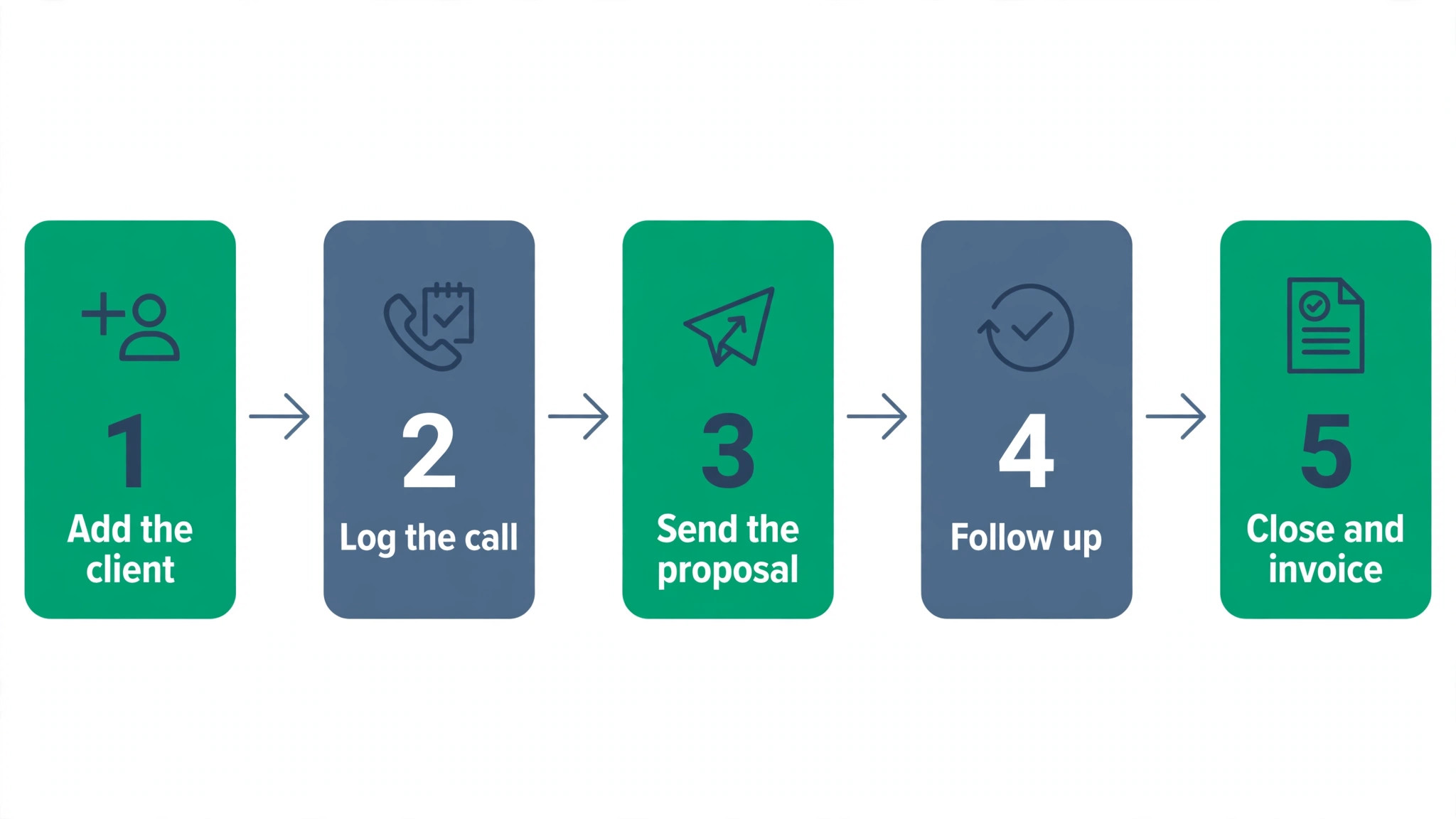
A first client pipeline does not need a consultant. It needs five small steps, done in order, with real clients from your own practice. The steps below show how the best crm software for consultants fit into a first week of real work for consultants.
- Add the client. Create a contact record with the full history, so the next conversation starts from facts.
- Log the call. Note what was agreed, the next step, and the date, before the details fade.
- Send the proposal. Draft it from the CRM record, so the numbers and the history match.
- Follow up. Set a reminder for three days later, and check whether the proposal was opened.
- Close and invoice. Mark the deal won, send the invoice, and log the start date for delivery.
Frequently Asked Questions
The questions below come from consultants who compared the best crm software for consultants and wanted the practical answers before choosing.
Which CRM is best for a solo consultant?
HubSpot and Capsule suit solo consultants best, with HubSpot offering a free CRM and marketing tools, and Capsule offering the simplest daily workflow. A solo consultant will adopt either one in a day, and the free HubSpot plan is the cheapest way to start properly.
Do I need a paid CRM, or is free enough?
The free plans from HubSpot, Zoho CRM, and Capsule cover contacts, deals, and pipelines for a solo practice. The paid plans add automation, sequences, and reporting, which become worth it once the client list grows or the follow ups start slipping.
Can I move my contacts from spreadsheets?
Yes, you can import your contacts from a spreadsheet in a few minutes, and the tools here map the columns for you. Tidy the file first by removing duplicates and stale contacts, since a messy import means months of cleanup later.
How long does setup take for one person?
A simple CRM takes an hour, and a full setup takes a day of part time work. The pipeline design is the slow part, not the software, so agree on the stages before opening the tool. Start with one pipeline and add the rest later.
Will I actually use it every day?
A CRM gets used when it saves time rather than adding admin. Pick the tool with the clearest pipeline, turn on the follow up reminders, and make the CRM the one place client work lives. Consultants adopt HubSpot and Capsule fastest, since the daily view is simple.
Can a CRM help me win more work?
Yes, when the follow up is tight. A consultant who follows up within a day wins more work than one who waits a week, and a CRM makes that follow up automatic. The tool does not win the work, but it stops the consultant from losing work to a missed message.
Our Pick, Stated Plainly — HubSpot Is the Consultants Default
The best crm software for consultants all track clients, but HubSpot wins on the job that matters most, which is keeping follow up tight without adding admin. Its free CRM, clean pipelines, and email tracking cover the whole client journey, and a solo consultant can learn it in a day.
Start with the free CRM, build one real pipeline, and run it for a month before paying. If the follow ups improve and the pipeline gets clearer, keep it and add the paid tools. If the pipeline is the whole job, Pipedrive is the honest second choice, and if simplicity matters most, Less Annoying CRM deserves a trial too.