

A repeat customer costs far less to keep than a new one costs to win, and most independent retailers know the gap from their own till receipts. The top 10 loyalty programs in this guide turn that gap into a system, with points, referrals and VIP tiers that bring shoppers back without discounting every sale. We compared ten of them on real store data, and Smile.io leads the ranking on the combined score, while Yotpo wins for stores that want reviews and loyalty in one place.
This guide is written for the shop owner who runs the till, not for a marketing department. Every tool below was judged the way a retailer would actually use it, with real orders, real regulars and a real budget. The ranking weighs repeat purchase rates and the weekly admin burden as heavily as the feature list, because a program that only looks clever in a demo is no use on a busy Saturday.
A loyalty program does three practical things. It rewards the second visit, it gives the owner a reason to message a lapsed customer, and it shows which rewards actually bring people back. The tools in this ranking differ mainly in how simply they do those three jobs and how much of the follow-up they automate.
In this article
- The 10 Tools at a Glance
- Why the Top 10 Loyalty Programs Earn Their Place in a Shop
- How We Compared Every Loyalty Tool
- Best Pick by Job
- The 10 Tools in Detail
- A Six-Week Loyalty Launch Plan
- Five Mistakes That Waste a Loyalty Budget
- How to Choose in One Afternoon
- Frequently Asked Questions
- The Verdict on Loyalty Programs Before You Launch
The 10 Tools at a Glance
One row per tool below carries the price, the natural fit and the strength that earned its place, led by Smile.io on repeat purchase rate. The top 10 loyalty programs are not always the most expensive, and the table shows why.
| Tool | Starting price | Best for | Standout strength |
|---|---|---|---|
| Smile.io | Free plan; paid plans on the vendor site | Shopify and BigCommerce stores | Points, referrals and VIP tiers in one setup |
| Yotpo | Pricing on the vendor site | Stores that want reviews plus loyalty | Reviews, SMS and loyalty under one roof |
| LoyaltyLion | Pricing on the vendor site | Mid-size stores focused on retention | Tiered programs with clear retention reporting |
| Stamped | Pricing on the vendor site | Stores that lean on reviews and photos | Loyalty tied directly to reviews and photos |
| Marsello | Pricing on the vendor site | Small retailers with a physical store | Loyalty, email and SMS for omnichannel shops |
| Rivo | Free plan; paid plans on the vendor site | Shopify stores that want a quick start | Fast setup with points, referrals and VIP |
| Kangaroo Rewards | Pricing on the vendor site | Local shops and small chains | Simple points and a customer app |
| TapMango | Pricing on the vendor site | Restaurants and service businesses | Mobile ordering plus loyalty in one app |
| Annex Cloud | Pricing on the vendor site | Larger retailers with complex programs | Enterprise loyalty with global scale |
| Zinrelo | Pricing on the vendor site | Stores that want data-led retention | Customer profiles and rewards in one view |
Cut the list to two or three candidates with the table, then let the detail reviews decide between them on repeat purchase rate, starting with Smile.io. High marks on one measure mean little unless Smile.io fits the work a retailer actually does, and full marks mean little unless the plan that unlocks them is affordable.
Why the Top 10 Loyalty Programs Earn Their Place in a Shop
Price is the first filter, but the sticker price is rarely the real cost. Retailers should add the setup time, the training hours and the monthly fee together, then divide by the jobs the tool actually handles. A cheap tool that needs constant fixing costs more than a pricier one that runs quietly, and Smile.io is the quiet one here.
Fit beats features. repeat purchase rate matters more to retailers than a long feature list, because the tool is used every day on real work. A tool that handles running a loyalty program cleanly and skips the rest is worth more than one that does everything badly.
Time is the second filter. Measure how long running a loyalty program takes before the tool and after it, across a full week rather than a single demo. Tools here earn their place by cutting hours from the weekly routine, and Smile.io cuts the most on repeat purchase rate.
Data is the third filter. redemption rate decides whether the tool pays for itself, and a tool that cannot report on it is guessing. Before you buy, ask for the report from Smile.io and check that it shows the numbers you actually manage by.
The last filter is a reward that costs more than the customer it keeps. A tool that fails on a reward that costs more than the customer it keeps will cost a client or a deadline, and no feature list makes up for that. Run the trial on a live job with real data, and judge the tool on the worst day for a retailer, not the best one.
Support is the quiet filter that shows up later, once Smile.io is part of the daily routine. When Smile.io breaks at the worst moment, the quality of the help matters more than the feature list. Check Smile.io support hours, the response time and whether a real person answers, before the tool becomes part of the daily routine.
How We Compared Every Loyalty Tool
We ran each tool through real running a loyalty program work, covering the setup, the daily use and the result. The top 10 loyalty programs were scored on five measures that matter to retailers rather than to a vendor.
- repeat purchase rate
- redemption rate
- setup speed
- integration with the store platform
- cost per returning customer
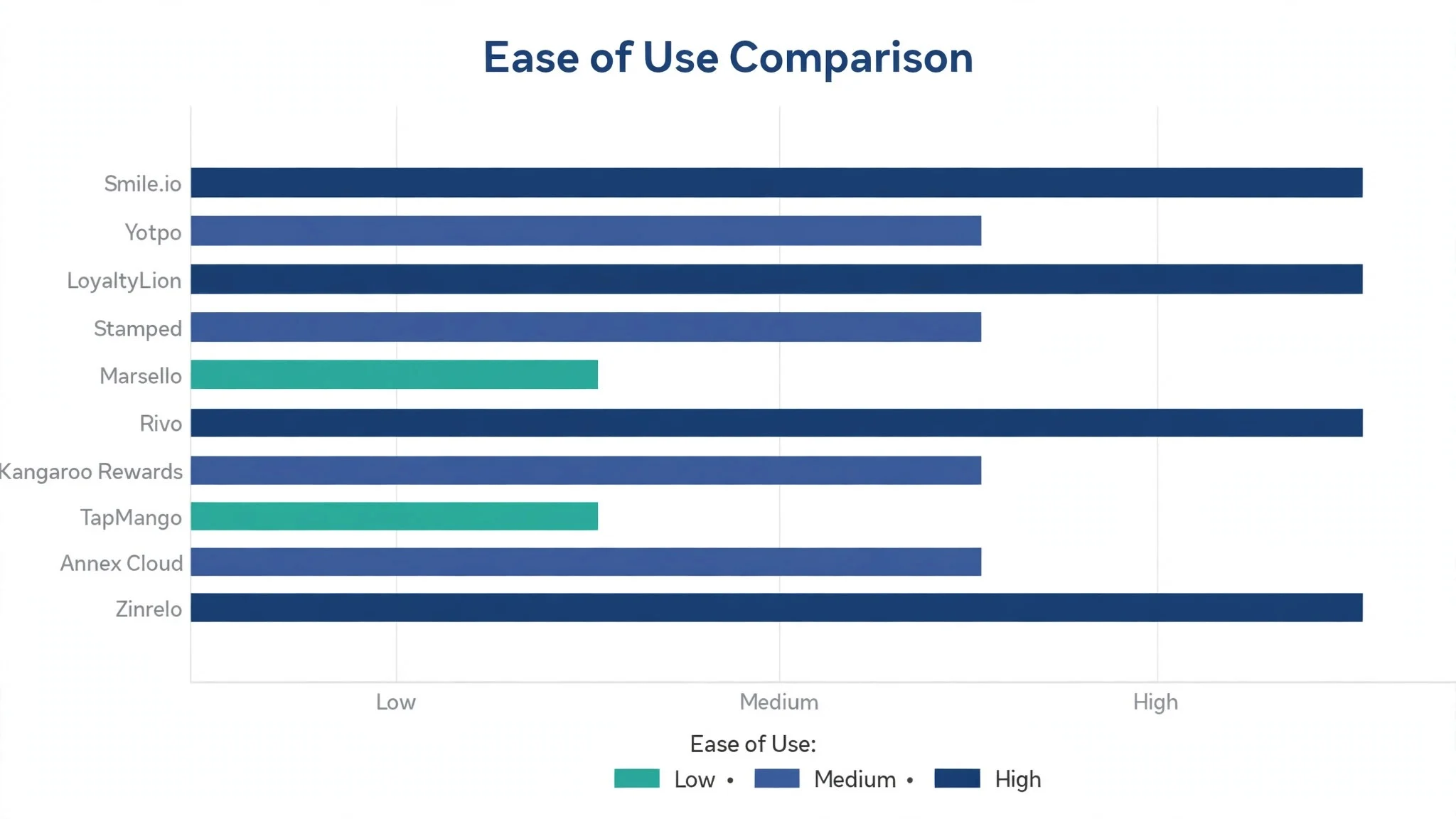
Each measure carried equal weight except repeat purchase rate, which counted double, because a tool that fails on that measure fails on the job itself. Smile.io leads the order below because it scored highest on repeat purchase rate, and every tool carries a combined score out of 100. Ties went to the tool that scored higher on repeat purchase rate, because a retailer judges Smile.io on the daily routine, not on the feature list.
Best Pick by Job
A single winner does not fit every retailer, so we matched each common situation to the tool that scored highest for that job. The right pick among the top 10 loyalty programs depends on the work in front of you, and the table below makes that split clear.
| Job | Best pick | Why it wins |
|---|---|---|
| Shopify and BigCommerce stores | Smile.io | Points, referrals and VIP tiers in one setup |
| Stores that want reviews plus loyalty | Yotpo | Reviews, SMS and loyalty under one roof |
| Mid-size stores focused on retention | LoyaltyLion | Tiered programs with clear retention reporting |
| Stores that lean on reviews and photos | Stamped | Loyalty tied directly to reviews and photos |
| Small retailers with a physical store | Marsello | Loyalty, email and SMS for omnichannel shops |
| Shopify stores that want a quick start | Rivo | Fast setup with points, referrals and VIP |
| Local shops and small chains | Kangaroo Rewards | Simple points and a customer app |
| Restaurants and service businesses | TapMango | Mobile ordering plus loyalty in one app |
| Larger retailers with complex programs | Annex Cloud | Enterprise loyalty with global scale |
| Stores that want data-led retention | Zinrelo | Customer profiles and rewards in one view |
If no row matches your situation exactly, take the closest one and read that review first, starting with Smile.io. Neighbouring tools sit close on score, while the gap between a tool a retailer opens daily and one it avoids is wide, so fit matters more than a few points, and Smile.io proves it.
The 10 Tools in Detail
Each review below follows the same pattern, led by Smile.io on repeat purchase rate. We cover what the tool does best, where it falls short, and the retailer who will gain the most from it. The top 10 loyalty programs differ mainly in repeat purchase rate, and the reviews score that gap wherever a real difference could be measured honestly.
1. Smile.io
Smile.io runs points, referral rewards and VIP tiers from one dashboard, and it plugs into Shopify, BigCommerce and Wix without custom code. Store owners set earning rules per dollar spent, per referral and per review, then watch repeat purchase rates in the built-in reports.
The free plan caps monthly orders, so a growing store moves to a paid plan quickly, and the design options are narrower than a fully custom build.
Cost is straightforward. Smile.io lists its plans on the vendor site, so confirm the current price before you pay, and compare the monthly fee against the time the tool saves each week. A yearly plan usually costs less per month, so a retailer that commits to Smile.io after a good trial often saves a meaningful amount over the year.
Our verdict. The strongest option here for shopify and BigCommerce stores, with points, referrals and VIP tiers in one setup.
2. Yotpo
Yotpo combines loyalty points with product reviews, SMS marketing and subscriptions, so a store can reward a customer for a review and then message them about the points they earned. The loyalty module supports tiers, birthday rewards and referral links, and the analytics tie reward redemptions to repeat revenue.
Pricing sits behind a sales conversation for most plans, and smaller stores may find the full suite more than they need when they only want points.
When something breaks at the worst moment, the support behind Yotpo matters more than the feature list. Yotpo offers help through its help centre and support channels, and the response time is worth testing with a real question during the trial. Read the Yotpo help centre before you buy, because clear guides and fast answers save hours over the year, while neither costs them.
Our verdict. Pick this one for stores that want reviews plus loyalty. Reviews, SMS and loyalty under one roof.
3. LoyaltyLion
LoyaltyLion builds tiered loyalty programs with points for purchases, referrals, reviews and social follows, and its dashboard reports on repeat purchase rate, redemption rate and the revenue each tier generates. Integrations cover the main ecommerce platforms and email tools, so points and campaigns stay in sync.
Setup takes longer than the simplest apps because tiers and rules need careful configuration, and the entry paid plan is aimed at stores already doing steady volume.
Integration is where LoyaltyLion earns its keep. It connects to the tools a retailer already uses, so the data flows without retyping, and the first connection is worth testing with a real record before the trial ends. Check whether LoyaltyLion connects to the exact tool you already use, not just its category, because a connector that looks good on a list can still fail on your data.
Our verdict. Tiered programs with clear retention reporting, and the best choice for mid-size stores focused on retention.
4. Stamped
Stamped pairs a loyalty program with review requests, photo and video reviews, and checkout upsells, so the same customer action can earn points and produce content for product pages. Merchants configure earning rules, VIP tiers and referral rewards, and the review widgets carry the store branding.
The loyalty features are strongest when bought with the reviews suite, which raises the total cost, and the reporting is less detailed than a loyalty-only specialist.
Daily use is where Stamped proves itself. The dashboard shows the numbers that matter in one view, and with Stamped the check happens wherever the work happens, not only at a desk. Watch how long the daily check takes during the Stamped trial. Five minutes is a habit, while twenty minutes is a chore, and the difference decides whether a retailer keeps Stamped past the first month.
Our verdict. The strongest option here for stores that lean on reviews and photos, with loyalty tied directly to reviews and photos.
5. Marsello
Marsello links online and in-store sales into one loyalty program, so a customer earns the same points whether they buy on the website or at the counter. It adds email and SMS campaigns triggered by points balances and purchase history, plus a point-of-sale connection for the main retail systems.
The monthly cost rises with the contact list, and stores that sell only online get less value from the in-store features.
Reporting is the quiet strength of Marsello. The dashboard tracks repeat purchase rate over time, so the owner can see whether the tool is paying for itself or only looking busy. Ask Marsello for the report before you buy, and check that it shows the numbers a retailer actually manages by. A report that answers the wrong question is decoration, not evidence, whatever Marsello charges for it.
Our verdict. Pick this one for small retailers with a physical store. Loyalty, email and SMS for omnichannel shops.
6. Rivo
Rivo offers points, referrals and VIP tiers built for Shopify, with a setup flow that gets a basic program live in an afternoon. Customers see a branded widget, earn points for purchases and referrals, and redeem rewards at checkout without leaving the store.
The feature set is narrower than the bigger platforms, with fewer automation options, and stores on other platforms cannot use it at all.
Setup is quick. Rivo asks for the essentials, connects the account and walks the user through the first real job in one sitting, so the first result appears on day one rather than after a week of configuration. The guided setup covers the common case well, while the unusual case needs a manual step, so check the Rivo help centre for your exact situation before the trial ends.
Our verdict. Fast setup with points, referrals and VIP, and the best choice for shopify stores that want a quick start.
7. Kangaroo Rewards
Kangaroo Rewards gives local shops a points program with a customer app, digital punch cards and targeted offers, and it works across several locations under one account. Shop owners send push offers to lapsed customers and track which rewards actually bring people back through the door.
The ecommerce integrations are thinner than the Shopify-first tools, so online-heavy stores may need extra work to sync orders.
Cost is straightforward. Kangaroo Rewards lists its plans on the vendor site, so confirm the current price before you pay, and compare the monthly fee against the time the tool saves each week. The yearly plan usually costs less per month than the monthly plan, so a retailer that commits after a good trial of Kangaroo Rewards often saves over the year.
Our verdict. The strongest option here for local shops and small chains, with simple points and a customer app.
8. TapMango
TapMango combines a branded mobile app, mobile ordering and a loyalty program, so regulars order ahead, earn points and redeem rewards from the same screen. It suits restaurants, cafes and salons that see the same customers weekly, and the marketing tools target lapsed visitors automatically.
It is priced for businesses with steady foot traffic, and a pure online store will find much of the feature set irrelevant.
Support matters when TapMango breaks at the worst moment, and that is when a retailer finds out what the plan really covers. TapMango offers help through its help centre and support channels, and the response time is worth testing with a real question during the trial. Before you buy TapMango, read the help centre, because a tool with clear guides and fast answers will save hours over the year.
Our verdict. Pick this one for restaurants and service businesses. Mobile ordering plus loyalty in one app.
9. Annex Cloud
Annex Cloud runs enterprise loyalty programs with points, tiers, referrals and promotions across many countries, currencies and channels, and it connects to the main commerce and CRM platforms. Its strength is handling complex rules, such as different earning rates per region or per product group, at high volume.
Implementation is a project rather than a signup, with onboarding and integration work, and the cost puts it out of reach for small shops.
Integration is where Annex Cloud earns its keep. It connects to the tools a retailer already uses, so the data flows without retyping, and the first connection is worth testing with a real record before the trial ends. Check the integration list for the exact tool a retailer already uses, not just its category, because a connector that looks good on a list can still fail on your data.
Our verdict. Enterprise loyalty with global scale, and the best choice for larger retailers with complex programs.
10. Zinrelo
Zinrelo builds a points program on top of a unified customer profile, pulling purchase history, browsing and engagement into one view, then triggering rewards and campaigns from that data. Merchants run tiers, referral bonuses and win-back offers, and the reporting tracks the revenue each campaign produces.
The platform asks for a fair amount of setup and data work before the first campaign, and smaller teams may need help to use the deeper analytics well.
Daily use is where Zinrelo proves itself. The dashboard shows the numbers that matter in one view, and mobile access means a retailer checks them wherever the work happens, not only at a desk. Time the daily check during the trial, and see how long Zinrelo takes a retailer. Five minutes is a habit, while twenty minutes is a chore, and that difference decides whether Zinrelo survives the first month.
Our verdict. The strongest option here for stores that want data-led retention, with customer profiles and rewards in one view.
A Six-Week Loyalty Launch Plan
A loyalty program works when it is introduced in stages, and six weeks is the right length for a shop with real customers. Start small, measure what happens, and only then spend more on the program.
- Week one is the reward. Pick one reward that regulars actually want, such as a free product after five visits, and set the earning rule so a normal customer reaches it in about a month.
- Week two is the setup. Connect the tool to the store, brand the widget to match the shop, and test one purchase end to end before any customer sees it.
- Week three is the regulars. Invite the fifty most loyal customers first, explain the reward face to face, and ask what would make them come back more often.
- Week four is the launch. Put a sign at the counter, add the program to the receipt, and train every member of staff to mention it once per sale.
- Weeks five and six are the measure. Check the repeat purchase rate, the redemption rate and the cost per reward, then keep the reward that works and drop the one that does not.
Follow the plan above and the top 10 loyalty programs will prove themselves on real work within a month, rather than sitting unused after the trial ends.

Five Mistakes That Waste a Loyalty Budget
Most loyalty programs fail for the same five reasons, and all five are avoidable. Check the list before launch, because fixing a live program costs more than building it right the first time.
- Discounting everything. A program that gives money off every sale trains customers to wait for a discount, and the margin never recovers.
- Too many tiers. Three tiers confuse customers, while one clear tier with one clear reward gets used every week.
- Ignoring lapsed customers. The cheapest sale is the one to a customer who already bought once, so message them before they forget the shop.
- Hiding the reward. If customers cannot see their points balance at checkout, they will not chase it, and the program dies quietly.
- Never measuring. A program without a repeat purchase number is a guess, so check the rate every month and change the reward when it stalls.
Avoid those five mistakes and the program has a real chance. The tools in this ranking all handle the mechanics well, so the difference is made by the reward, the launch and the monthly check.
How to Choose in One Afternoon
A decision that takes a month is a decision that never happens, and Smile.io deserves an afternoon, not a quarter. The shortlist above can be cut to one tool in a single afternoon, with a trial that proves the choice on real running a loyalty program work.
Start with Smile.io, Yotpo and one more from the table, not the whole list. Three trials in one afternoon is realistic, while ten trials is a month of work, and the winner among three is usually the winner among all 10.
Judge each trial on the same running a loyalty program job, so the comparison stays honest. A different test for each tool proves nothing, while the same running a loyalty program job, timed the same way, shows the real gap.
- List the three jobs Smile.io must do every week, and ignore every feature that does not serve one of them.
- Check the price on the vendor site, confirm it before you pay for Smile.io, and add the setup time to the first-year cost.
- Run the trial on a real job with real data, not on the demo account, and time the running a loyalty program from start to finish.
- Ask the support team one real question about Smile.io during the trial, and judge the answer on speed and clarity.
- Check the integration with the tool you already use most, and test one real record end to end in Smile.io.
- Read the export options before you commit to Smile.io, because a tool that cannot export your data is a trap.
Pick the tool that wins the afternoon test, run it for a month, and judge it on the numbers for repeat purchase rate. If the numbers move, keep it. If they do not, the next tool on the list, Yotpo, deserves the same afternoon.
Frequently Asked Questions
Retailers ask the same questions before every tool change, so we answered the most common ones here. The top 10 loyalty programs answer these in their help centres, but the plain answers below are faster to judge a tool against.
How much does a loyalty program cost?
The cost depends on the plan and the size of the team, so check the vendor site for the current price of Smile.io and confirm it before you pay. Most tools here charge monthly or yearly, and the yearly plan usually costs less per month, Smile.io included. Start with the free plan or the trial, measure the saving over a month with Smile.io, and only then commit to a paid plan. A yearly plan usually costs less per month, so commit to Smile.io only after the trial proves the saving.
Can I run a loyalty program for free?
Smile.io and Rivo offer a free plan that covers the basics, which is enough to test the workflow with real work. The free plan limits the monthly order count, so a busy retailer will move to a paid plan once the volume grows. Treat the free plan as a trial, not as the long-term setup for Smile.io. The free plan is a test, so set a date to judge Smile.io, and move to a paid plan when the limits start costing time.
Will points work for a physical store as well as online?
Yes, and the tools built for shops do it best. Marsello, Kangaroo Rewards and TapMango link the counter sale and the website sale into one balance, so a regular earns the same points either way. Check that your point-of-sale system is supported before you buy.
How do I stop customers gaming the rewards?
Set a sensible earning rule, cap the reward per customer, and require a purchase before a referral pays out. The tools in this ranking let you set those limits in the dashboard, and a monthly check of the redemption rate will show whether anyone is abusing the program.
Which tool fits a small shop best?
For a small retailer, start with Smile.io. It covers points, referrals and a VIP tier without a big monthly fee, and the setup takes hours rather than days. Add a second tool only when the first one cannot handle a running a loyalty program job that comes up every week. Start with the smallest plan that covers the job, and upgrade only when the work outgrows Smile.io.
The Verdict on Loyalty Programs Before You Launch
The top 10 loyalty programs ranking comes down to repeat purchase rate and the weekly time it saves, and Smile.io wins on the combined score. It is the tool we would start with, because it handles running a loyalty program cleanly and its reporting shows the result without extra work. Yotpo is the closest rival, and it is the better pick when its strength matters more than the overall score.
Run the trial with your real workload, not a demo account, and judge the tool on the morning routine for a retailer rather than the feature list. If the check takes minutes and the numbers are honest, the system is working for a retailer. Pick the tool that makes the truth easy to see for a retailer, and let the calmer week pay for the subscription many times over.