
One clinic cut its no-show rate from 18 percent to about 11 percent simply by switching from a manual reminder call the day before to an automated text and email sequence sent 48 hours and 2 hours out. That single change freed roughly six appointment slots a week, and the top 10 ai tools for chiropractors exist to make changes like that automatic rather than heroic.
The market splits into three camps. Practice systems such as ChiroTouch and Noterro run the clinic, communication tools such as Weave and Podium catch the calls and messages the front desk misses, and review tools such as Birdeye turn happy patients into public reviews. A solo chiropractor needs the first camp. A multi-location clinic needs all three.
This guide compares ten tools on the numbers that decide a clinic purchase. We look at entry price, the cost for a 500-patient practice, AI charting, scheduling, missed-call recovery and the review features that fill the diary. Prices are drawn from published pages and third-party trackers, so treat each figure as a starting point and confirm it on the vendor site.
The 10 Tools at a Glance
| Tool | Best for | Starting price | Free plan |
|---|---|---|---|
| Noterro | Solo practitioners and small clinics | From about 28 dollars a month | 14-day trial |
| ChiroTouch | Large clinics with complex billing | From about 159 dollars a month | Trial available |
| Jane App | Solo clinics that value patient experience | From about 79 dollars a month | No, trial available |
| ChiroSpring | Chiro-specific features at a mid price | From about 149 dollars a month | Trial available |
| ClinicMind | Multi-location clinics and billing depth | Quote-based | No, demo available |
| Weave | Missed-call text-back and patient messaging | Pricing on the vendor site | No, demo available |
| Podium | AI webchat and review requests | Quote-based | No, demo available |
| Doctible | Patient communication and reputation | Quote-based | No, demo available |
| Solutionreach | Reminders, recalls and reactivation | Quote-based | No, demo available |
| Birdeye | Reviews and local visibility at scale | From about 299 dollars a month | No, demo available |
Best Pick by Job
| Your job | Pick this tool | Why it fits |
|---|---|---|
| You are a solo chiropractor | Noterro | AI charting and scheduling from 28 dollars a month |
| You run a large clinic with insurance billing | ChiroTouch | Deep EHR, billing and compliance in one system |
| You want the smoothest patient experience | Jane App | Beautiful booking, intake and payment flow |
| You want chiro-specific tools at a mid price | ChiroSpring | SOAP templates and automated billing built in |
| You run several locations | ClinicMind | Multi-location billing and reporting in one place |
| You miss calls while treating patients | Weave | Missed-call text-back within seconds |
| You want reviews without begging | Podium | AI webchat plus automated review requests |
| You need recalls and reactivation | Solutionreach | Automated campaigns that bring lapsed patients back |
| You want local visibility at scale | Birdeye | Review management across every listing |
| You want communication plus reputation | Doctible | Messaging and reviews in one account |
What the Top 10 AI Tools for Chiropractors Automate First
The first job is the missed call. A patient who calls while the chiropractor is treating someone else will ring a competitor if nobody answers, and the top 10 ai tools for chiropractors catch that call with an automatic text within seconds. The message asks how the practice can help, the patient replies and the booking happens without a phone call at all. A tool that recovers even two missed calls a week pays for itself in a month.
The second job is the SOAP note. The top 10 ai tools for chiropractors turn voice notes into formatted clinical documentation in seconds, with AI scribes that draft the note from the visit and let the chiropractor review rather than type. A practitioner seeing thirty patients a day saves an hour of typing, and the notes stay consistent across the whole team.
The third job is the reminder sequence. A manual call the day before misses patients who need a nudge two days out, and a text 48 hours before plus a text 2 hours before cuts no-shows measurably. The best tools send the right reminder at the right time without staff effort, and they fill cancellations from a waitlist automatically.
The fourth job is the lapsed patient. A clinic with 800 lapsed patients can rebook 4 to 9 percent of them per campaign with a simple automated text, which is 30 to 70 booked appointments from a list that cost nothing extra to acquire. A tool that runs reactivation campaigns every six months turns a dormant list into a steady source of bookings.
The 10 Tools in Detail
The ten tools below run in the comparison table’s order, so a chiropractor who liked a scheduling or intake strength can find it again by number. Each one states the starting price, the strongest clinic feature and the weakness that should make a specific kind of practice walk away. Read the entry that matches your practice size first, then check the two entries next to it before you decide.
1. Noterro
Noterro is the practice management platform for solo chiropractors and small clinics, and it starts at about 28 dollars a month with a 14-day free trial. The Core plan covers scheduling, charting, billing and patient engagement, with Plus at about 55 dollars a month and Max at about 77 dollars a month for the full feature set.
The AI charting is the draw. The AI Scribe turns voice notes into formatted SOAP notes in seconds, which speeds up documentation and keeps the notes consistent across a busy day. Online scheduling with a clinic-branded app lets patients book and manage appointments from a phone, and the reminders and waitlist features fill cancellations automatically.
Noterro suits a solo practitioner or a small clinic, and it is lighter than the enterprise systems on billing depth and compliance reporting. A large clinic with complex insurance claims will need ChiroTouch or ClinicMind instead. Choose Noterro when the practice is small and the budget is tight, and upgrade when the billing complexity grows.
2. ChiroTouch
ChiroTouch is the long-standing chiropractic EHR for large clinics with complex billing. Pricing starts at about 159 dollars a month per provider, with third-party trackers citing about 139 dollars a month for the Start plan. The platform covers full EHR, billing, documentation and compliance in one system, serving over 36,000 providers.
The billing depth is the strength. Insurance-specific automations, customisable SOAP note templates, spinal charting macros and integrated payment processing handle the claims work that a large clinic cannot do by hand. Newer versions include an AI assistant for faster SOAP notes and check-in tools that send patient answers straight into the chart.
The price and the complexity are the barriers. A solo chiropractor will find the platform more than needed, and the setup takes real configuration time. The Capterra rating near 4.0 reflects that complexity rather than a lack of features. Choose ChiroTouch when the clinic is large and the billing is complex, and choose Noterro when it is not.
3. Jane App
Jane App is the practice platform that prioritises the patient experience, and it suits solo chiropractic clinics that want booking to feel effortless. Pricing starts at about 79 dollars a month, with a trial available. The platform covers online booking, charting, intake forms, invoicing and payments in one clean interface.
The patient flow is the draw. Patients book, view treatment plans, schedule appointments and pay independently, without calling the clinic or waiting for a reply. The interface is minimal and beautiful, which matters when the patient experience is part of the brand. The charting tools cover SOAP notes with templates that a solo practitioner can customise quickly.
Jane is a general allied-health platform rather than a chiropractic specialist, so its chiro-specific features are lighter than ChiroTouch or ChiroSpring. A clinic that needs deep insurance billing will find the tools thin. Choose Jane when the patient experience is the priority and the billing is simple, and choose a specialist when it is not.
4. ChiroSpring
ChiroSpring is the chiropractic-specific platform at a mid-market price, starting at about 149 dollars a month. The system covers patient engagement, security and automated billing, with a Capterra rating near 4.9. The platform suits chiropractors of all sizes who want chiro-specific features without the enterprise price of ChiroTouch.
The chiro-specific design is the strength. SOAP templates, spinal charting, care plan management and automated billing are built for chiropractic work rather than adapted from general practice software. The security and compliance tools are solid, and the patient engagement features cover reminders, recalls and reactivation in one place.
The price sits above Noterro and Jane, and the platform is less well known than ChiroTouch, which means fewer third-party integrations. A solo practitioner on a tight budget will find Noterro cheaper, while a large clinic will find ChiroTouch deeper. Choose ChiroSpring when the practice wants chiro-specific tools at a fair mid price.
5. ClinicMind
ClinicMind is the practice platform for multi-location clinics that need billing depth and central reporting. Pricing is quote-based, with a demo available. The system covers EHR, billing, scheduling and reporting across locations, and it suits a group practice that needs one view of every clinic.
The multi-location reporting is the draw. A group owner sees revenue, utilisation and no-show rates per location from one dashboard, and the billing tools handle the complexity of several providers and payers. The platform scales with the group, so a practice that adds a second location does not need a second system.
ClinicMind is an enterprise-grade purchase with a sales-led process and a price to match. A solo practitioner will find the platform far more than needed, and the implementation takes weeks. Choose ClinicMind when the practice spans locations and the billing needs central control, and choose Noterro when it does not.
6. Weave
Weave is the patient communication platform built for healthcare and dental practices, and it is the tool for a clinic that misses calls while treating patients. Pricing is on the vendor site, with third-party reports placing it near 300 to 500 dollars a month depending on practice size. The platform covers phones, texting, missed-call text-back and review requests.
The missed-call text-back is the strength. A call that rings out triggers an automatic text within seconds asking how the practice can help, which keeps the conversation alive instead of losing the patient to a competitor Google listing. The unified inbox shows calls, texts and messages in one place, so the front desk answers from a single screen.
The price is the barrier for a solo practice. At several hundred dollars a month, Weave costs more than Noterro itself, and a small clinic must recover several missed calls a month to justify it. Choose Weave when missed calls are a real and measurable loss, and measure the recovered bookings for a month before renewing.
7. Podium
Podium pairs AI webchat with automated review requests, and it suits a clinic that wants new patients from local search. Pricing is quote-based, with a demo available. The platform covers webchat, texting, payments and reviews, and its AI assistant answers common questions on the website around the clock.
The review engine is the draw. Podium asks happy patients for a review at the right moment, usually right after a good visit, and the reviews land on Google where new patients search. The AI webchat answers the common questions that stop a visitor from booking, and the texting tools keep the conversation going after the first reply.
Podium is a communication and reputation tool, not a practice system, so it pairs with ChiroTouch or Noterro rather than replacing one. The quote-based pricing means a buyer must run a sales process to learn the cost. Choose Podium when local reviews drive new patients, and pair it with a practice system for the clinical work.
8. Doctible
Doctible covers patient communication and reputation in one account, and it suits a clinic that wants messaging plus reviews without two subscriptions. Pricing is quote-based, with a demo available. The platform handles appointment reminders, two-way texting, recall campaigns and review requests from a single dashboard.
The combination is the strength. A clinic can remind a patient, rebook a lapsed one and ask a happy one for a review without switching tools, and the reporting shows which campaigns actually fill the diary. The texting tools are built for healthcare, with the compliance and consent handling that a general messaging tool lacks.
Doctible is a communication layer rather than a clinical system, so it sits beside the EHR rather than replacing it. The quote-based pricing hides the cost until a demo, which makes comparison harder. Choose Doctible when the front desk needs one communication tool, and keep the clinical system separate.
9. Solutionreach
Solutionreach automates reminders, recalls and reactivation for healthcare practices, and it is the tool for a clinic with a large lapsed list. Pricing is quote-based, with a demo available. The platform covers appointment reminders, recall campaigns, reactivation texts and patient surveys in one system.
The reactivation campaigns are the draw. A clinic running six-monthly texts to a dormant list typically rebooks 4 to 9 percent of that list per campaign, which is 30 to 70 booked appointments from 800 lapsed patients. The reminder sequences cut no-shows, and the surveys catch a dissatisfied patient before the review goes public.
Solutionreach is a communication tool, not a practice system, and it needs the EHR beside it to work well. The quote-based pricing means the cost is only known after a sales call. Choose Solutionreach when the lapsed list is large and the diary has gaps to fill, and measure the rebooked appointments per campaign.
10. Birdeye
Birdeye is the review and local visibility platform for clinics that want to dominate local search. Pricing starts at about 299 dollars a month, with a demo available. The platform covers review management, listings, messaging and surveys across every channel where patients find a clinic.
The scale is the strength. A multi-location practice can manage reviews, listings and messages for every clinic from one dashboard, and the AI tools draft review replies and survey follow-ups automatically. The local visibility reporting shows where each clinic ranks and which listings need attention, which helps a group practice grow in every market at once.
The price is the barrier for a solo clinic. At 299 dollars a month, Birdeye costs more than the practice system itself, and a single-location clinic will find Podium or Doctible cheaper. Choose Birdeye when the practice spans locations and local visibility is a growth strategy, and choose a smaller tool when it is not.
What a 500-Patient Practice Pays
| Tool | Monthly cost at 500 patients | What drives the cost |
|---|---|---|
| Noterro | About 28 to 77 dollars | Plan tier, Core to Max |
| ChiroTouch | About 139 to 159 dollars | Per-provider pricing |
| Jane App | About 79 dollars | Flat plan |
| ChiroSpring | About 149 dollars | Flat plan |
| ClinicMind | Quote-based | Contract size and locations |
| Weave | About 300 to 500 dollars | Practice size and features |
| Podium | Quote-based | Seat count and features |
| Doctible | Quote-based | Seat count and features |
| Solutionreach | Quote-based | Patient count and features |
| Birdeye | About 299 dollars | Plan tier and locations |
The table uses published figures where they exist and says quote-based where they do not, so treat each number as a planning estimate. The pattern is what matters. A practice system costs 28 to 159 dollars a month, while a communication layer costs 300 to 500 dollars a month on top. A solo clinic can run on Noterro alone for under 30 dollars, while a multi-location group will pay for the practice system plus a communication tool plus a review platform.
The return math deserves a worked example. A clinic that recovers six no-show slots a week at an average visit value of 60 dollars gains about 1,440 dollars a month in recovered revenue. The top 10 ai tools for chiropractors pay for themselves when the recovered bookings exceed the subscription, so count the missed calls for a month before buying the tool that catches them. A Weave subscription near 400 dollars a month pays for itself several times over when the missed calls are real, while the same subscription wastes money when the front desk already answers every call.

Practice Errors That Cost Booked Appointments
The first error is a phone that rings out during treatment hours. A patient who calls while the chiropractor is with another patient will try a competitor within minutes, and the clinic never learns the call happened. The top 10 ai tools for chiropractors catch that call with an automatic text, yet many clinics still rely on voicemail. Check the missed-call count for a month and the number will decide the purchase.
The second error is a reminder sent too late. A call the day before misses the patient who needed a nudge two days out, and a text 48 hours before plus a text 2 hours before cuts no-shows measurably. A clinic that only reminds once is paying for empty slots that a second reminder would have filled.
The third error is a SOAP note written at the end of the day from memory. A note written hours after the visit misses details and takes longer, while an AI scribe that drafts the note during the visit keeps the record accurate and the practitioner home on time. A clinic that still types notes by hand is spending an hour a day on work a tool does in seconds.
The fourth error is a lapsed list that nobody contacts. A patient who has not booked in 90 days is not a lost patient, and a simple automated text offering a check-up brings a meaningful share of them back. A clinic that runs reactivation campaigns every six months fills gaps in the diary from a list that cost nothing to acquire.
The fifth error is asking for reviews at the wrong moment. A patient asked for a review before the visit has nothing to say, while a patient asked right after a good visit will write a genuine one. Time the request to the moment after treatment, when the patient is happiest, and the reviews will arrive without begging.
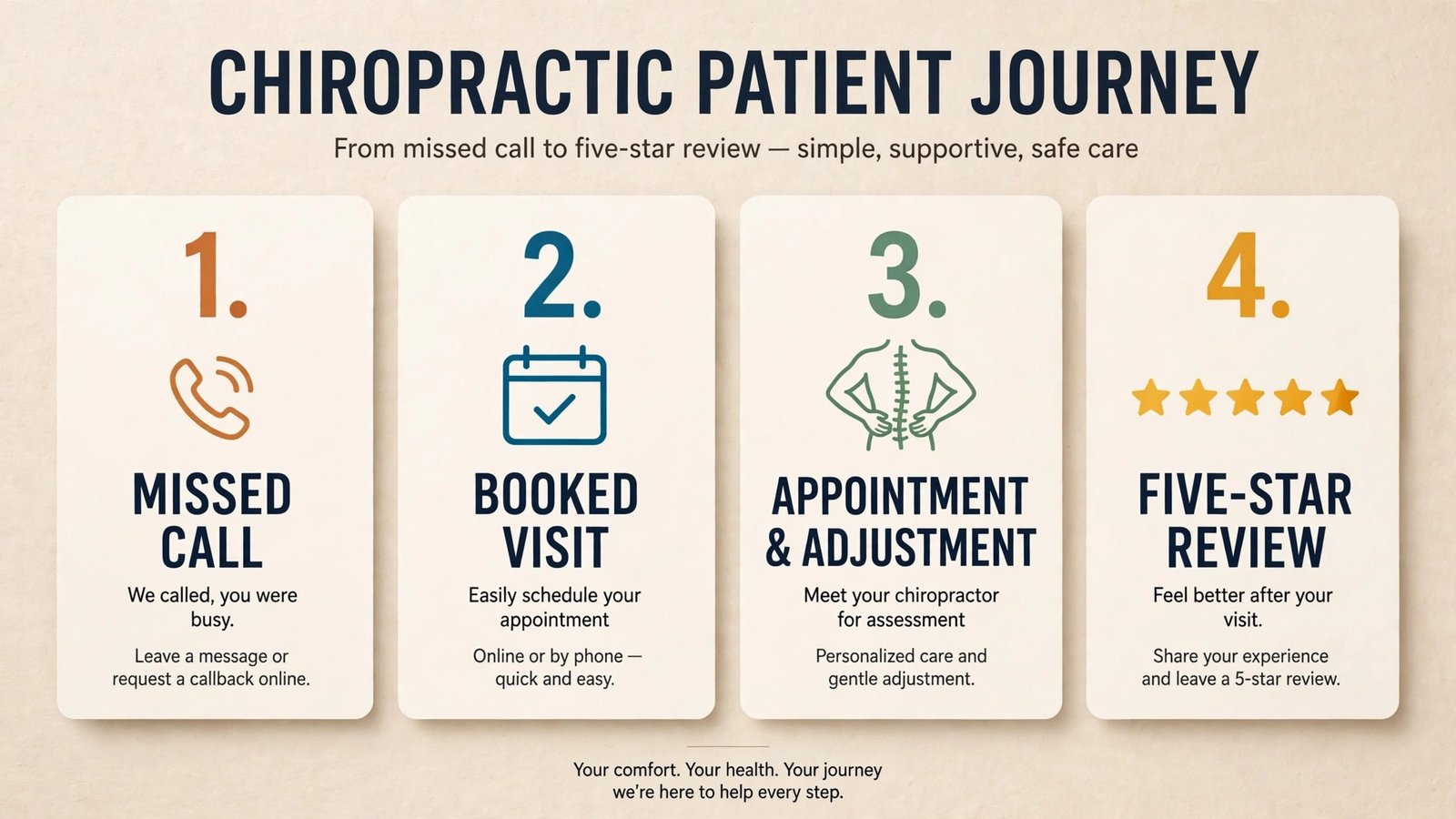
From First Patient to First Automated Week
A clinic tool should prove itself within a month of going live. The sequence below keeps the rollout small enough to finish and real enough to learn from, and the top 10 ai tools for chiropractors all support a phased launch that starts with one automation before the whole front desk moves over.
- Count the missed calls, no-shows and lapsed patients for one month first.
- Set up online booking and test it on a phone before telling patients.
- Switch on the AI scribe for one practitioner and compare the notes.
- Turn on the 48-hour and 2-hour reminder sequence for the next week.
- Add the missed-call text-back and measure the recovered bookings.
- Send the first reactivation text to patients who have not booked in 90 days.
- Ask five happy patients for a review and track where the reviews land.
- Review the numbers after 30 days and keep only the tools that earned their cost.
How to Measure Whether a Clinic Tool Pays
A clinic tool should earn its subscription in measurable bookings, and the measurement starts before the purchase. Count the missed calls for a month, count the no-shows and count the lapsed patients who have not booked in 90 days. Those three numbers are the revenue the tool can recover, and a tool that costs 400 dollars a month needs to recover at least seven visits at 60 dollars to break even.
The second measure is the no-show rate. A clinic at 18 percent that moves to 11 percent with automated reminders frees roughly six slots a week, which is about 1,440 dollars a month at 60 dollars a visit. Track the rate weekly for the first month after launch, because a tool that does not move the rate within four weeks is not working as promised.
The third measure is the note time. A practitioner who saves an hour a day on SOAP notes gains five hours a week, which is time for more patients or an earlier finish. Ask each practitioner to log the note time for a week before the AI scribe and a week after, and the difference is the return in hours rather than dollars.
The fourth measure is the review count. A clinic that asks five happy patients a week for a review should see the Google rating rise within two months, and the new patient enquiries should follow. A review tool that does not move the rating or the enquiries within a quarter is a subscription without a return, so measure it and cancel it if the numbers do not move.
Frequently Asked Questions
Can Noterro really run a solo chiropractic practice for 28 dollars a month?
Yes, the Core plan at about 28 dollars a month covers scheduling, charting, billing and patient engagement, with a 14-day free trial. The AI Scribe turns voice notes into SOAP notes in seconds, and the reminders and waitlist features fill cancellations automatically. A solo practitioner will find it covers the whole job.
How does ChiroTouch pricing work for a clinic with three providers?
ChiroTouch charges per provider, with pricing starting at about 159 dollars a month per provider and third-party trackers citing about 139 dollars a month for the Start plan. A clinic with three providers should budget roughly 420 to 480 dollars a month, and confirm the quote before signing.
Is Weave worth 300 to 500 dollars a month for a small clinic?
Yes when the clinic misses real calls during treatment hours, because the missed-call text-back recovers bookings that would otherwise go to a competitor. A clinic that recovers six slots a week at 60 dollars a visit gains about 1,440 dollars a month, which covers the subscription several times over.
Does Jane App suit a chiropractor who needs insurance billing?
Only partly. Jane covers booking, charting, intake and payments beautifully, yet its insurance billing is lighter than ChiroTouch or ChiroSpring. A clinic with simple cash billing will find Jane ideal, while a clinic with complex insurance claims should choose a chiropractic specialist.
What should a clinic check before buying a review tool?
Check three things. Whether the tool asks for reviews at the right moment, whether it covers the listings where patients actually search, and whether the monthly cost is justified by the new patients the reviews bring. A review tool that nobody reads is a subscription without a return.
Which tool gives the best value for a solo chiropractor?
Noterro gives the best value for a solo chiropractor, with AI charting and scheduling from about 28 dollars a month. Jane App is the runner-up when the patient experience is the priority, while Weave is the best add-on when missed calls are the biggest leak in the diary.
Pick by Practice Size, Then by Front-Desk Pain
If you are a solo chiropractor, pick Noterro and run the practice for 28 dollars a month. If you run a large clinic with insurance billing, pick ChiroTouch and let the EHR handle the claims. If you want the smoothest patient experience, pick Jane App and let patients book and pay without calling.
If you want chiro-specific tools at a mid price, pick ChiroSpring and get SOAP templates plus automated billing. If you run several locations, pick ClinicMind and see every clinic from one dashboard. If you miss calls while treating patients, pick Weave and catch the call with a text within seconds.
If you want reviews without begging, pick Podium and ask at the right moment. If you need recalls and reactivation, pick Solutionreach and bring the lapsed list back. If you want local visibility at scale, pick Birdeye and manage every listing from one place. And if you want communication plus reputation in one account, pick Doctible. The top 10 ai tools for chiropractors are the ones that fit the practice size you have and the front-desk pain you actually feel, so match the size first and the pain second. Count the leaks before you buy, and keep only the tools that plug them for good.