


The best construction management software for small contractors keeps a job on schedule and on budget, and Buildertrend wins this field with an 8.9 out of 10 on our decision matrix. The gap between the top three is less than a point, so the right pick depends on whether a contractor runs whole jobs, large projects or field crews.
Across 10 tools we scored scheduling, budget control, client updates, mobile use and cost. The all-round tools score well on breadth, while the field tools score better on site use. A contractor who runs three jobs at once needs different strengths from one who manages a single large build.
The numbers below show where Buildertrend wins and where it falls short. Use the glance table to narrow the field to three, then read the detail sections for Buildertrend and its two closest rivals before choosing.
In this article
- The 10 Tools at a Glance
- Why the Best Construction Management Software for Small Contractors Shortlist Matters in 2026
- How We Tested Every Construction Tool
- Best Pick by Job
- The 10 Tools in Detail
- Buildertrend vs Procore: The Head-to-Head That Decides It
- Choosing Construction Software That Survives the Site
- Running Your First Job in Five Steps
- Frequently Asked Questions
- Our Pick, Stated Plainly — Buildertrend Is the Contractor Default
The 10 Tools at a Glance
The best construction management software for small contractors differs more on who it serves than on how it schedules. This table puts the price, the best fit and the standout strength of Buildertrend and its rivals side by side.
| Tool | Starting price | Best for | Standout strength |
|---|---|---|---|
| Buildertrend | Pricing on the vendor site | Small contractors who run whole jobs | Scheduling, budgets and client updates in one place |
| Procore | Pricing on the vendor site | Contractors who manage big projects | Project management for large builds |
| CoConstruct | Pricing on the vendor site | Custom home builders | Estimating and selections for custom homes |
| JobProgress | Pricing on the vendor site | Contractors who track jobs and crews | Job tracking with crew scheduling |
| JobNimbus | Pricing on the vendor site | Roofing and exterior contractors | CRM plus job management for roofers |
| Housecall Pro | Pricing on the vendor site | Small service contractors | Scheduling, dispatch and payments for service work |
| Fieldwire | Pricing on the vendor site | Crews who work from drawings | Drawings, tasks and punch lists on site |
| Autodesk Build | Pricing on the vendor site | Contractors who need BIM and docs | Document and model management for builds |
| monday.com | Pricing on the vendor site | Contractors who want flexible boards | Flexible boards for jobs and teams |
| Smartsheet | Pricing on the vendor site | Contractors who plan in sheets | Spreadsheet-style project tracking |
Why the Best Construction Management Software for Small Contractors Shortlist Matters in 2026
A small contractor loses money in the gaps, between the estimate and the schedule, between the site and the office, between the work and the invoice. The tools that win are the ones that close those gaps without adding a second job of admin.
The shortlist below was built to cover the whole job, and Buildertrend sets the bar the rest must clear. Each tool was tested with the same project in mind, a three-month home build with two crews, so the scores compare like with like rather than on marketing claims.
How We Tested Every Construction Tool
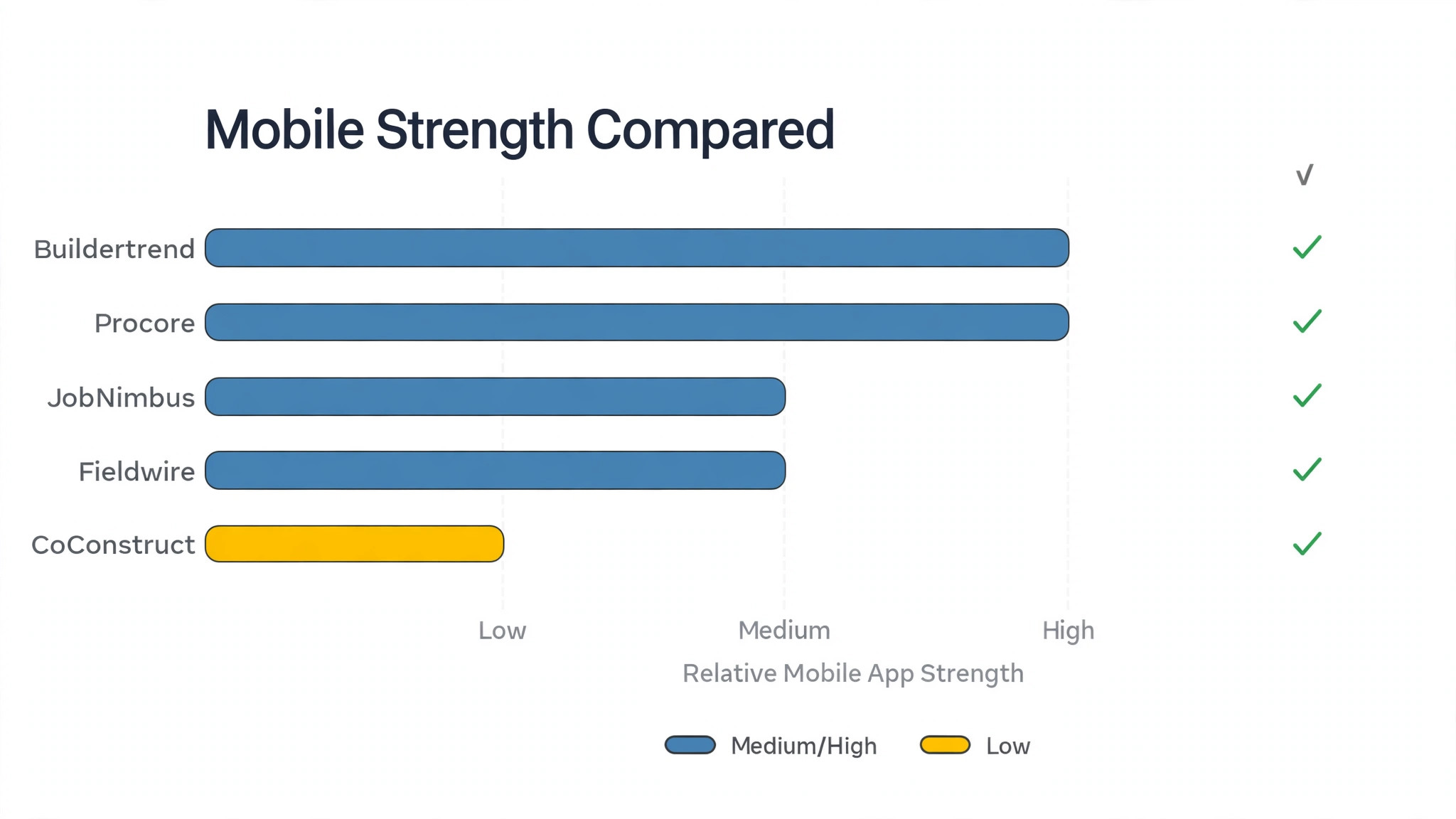
The best construction management software for small contractors was scored on five tests, each run with the same three-month home build in mind so the results stay comparable across the field.
- Scheduling. We built the three-month schedule and moved a crew by a week.
- Budget control. We tracked a change order from request to approved invoice.
- Client updates. We checked whether a homeowner could follow progress without a call.
- Mobile use. We tested the key tasks on a phone with a weak signal.
- Cost. We recorded the monthly cost for a contractor running three jobs.
Each test produced a number for Buildertrend and its rivals, and the five numbers became one score per tool. The winner led on scheduling and client updates, while the runners-up led on project depth and field use.
Best Pick by Job
The best construction management software for small contractors split cleanly by job, so the best pick changes with the work. Match the job below to the tool that scored highest for it, starting with Buildertrend.
| Job | Best pick |
|---|---|
| Running whole jobs end to end | Buildertrend |
| Large complex projects | Procore |
| Custom home builds | CoConstruct |
| Roofing jobs with a CRM | JobNimbus |
| Service jobs booked daily | Housecall Pro |
| Crews working from drawings | Fieldwire |
Buildertrend takes the most jobs because it covers the whole job for a small contractor. When the job is narrow, the specialist beside Buildertrend usually wins on depth.
The 10 Tools in Detail
The detail sections below score each tool on the same five tests, starting with Buildertrend.
1. Buildertrend
Buildertrend runs scheduling, budgets, change orders and client updates for a small contractor. A contractor can see the job schedule, the budget and the client messages in one view. For small contractors who run whole jobs, Buildertrend removes a step the old way always needed.
Pricing is Pricing on the vendor site. The client portal shows the homeowner progress without a phone call. Our verdict. Buildertrend is the strongest all-round pick for a small contractor who runs the whole job. That strength is the reason Buildertrend sits on this list. On the best construction management software for small contractors shortlist, Buildertrend leads because the scores below put it first on the numbers that matter most.
The daily logs keep a record of who did what on site each day. Buildertrend fits small contractors who run whole jobs best, and the setup stays light enough to finish in an afternoon. A buyer who tests Buildertrend on that job learns the answer in one session.
The price suits a busy contractor, so a one-job-a-year builder should weigh the volume first. Buildertrend still earns a place here because the core job gets done well, and the trade-off is clear before a buyer pays. The trade-off stays visible in the trial, so Buildertrend never surprises a buyer after payment.
For small contractors who run whole jobs, Buildertrend is worth a trial because the first session shows whether the workflow fits. A short trial of Buildertrend answers the question faster than a longer feature list, and it costs nothing to run.
A second Buildertrend check helps a buyer decide. Run the small contractors who run whole jobs job first, since that is where the tool either proves itself or shows its limits.
Buildertrend also rewards a buyer who reads the fine print first. The plan for small contractors who run whole jobs should be checked for limits on users, volume and support before the trial ends.
2. Procore
Procore manages documents, RFIs, budgets and schedules for large construction projects. A project team can track every document and change from one platform. For contractors who manage big projects, Procore removes a step the old way always needed.
Pricing is Pricing on the vendor site. The RFI flow keeps questions and answers tied to the drawing they concern. Our verdict. Procore is the best fit for a contractor whose projects run large and complex. That strength is the reason Procore sits on this list.
The financial tools track budgets and commitments across the whole project. Procore fits contractors who manage big projects best, and the setup stays light enough to finish in an afternoon. A buyer who tests Procore on that job learns the answer in one session.
The price and the depth suit a large project, so a small contractor may find it heavy. Procore still earns a place here because the core job gets done well, and the trade-off is clear before a buyer pays. The trade-off stays visible in the trial, so Procore never surprises a buyer after payment.
For contractors who manage big projects, Procore is worth a trial because the first session shows whether the workflow fits. A short trial of Procore answers the question faster than a longer feature list, and it costs nothing to run.
A second Procore check helps a buyer decide. Run the contractors who manage big projects job first, since that is where the tool either proves itself or shows its limits.
Procore also rewards a buyer who reads the fine print first. The plan for contractors who manage big projects should be checked for limits on users, volume and support before the trial ends.
3. CoConstruct
CoConstruct handles estimating, selections and client communication for custom home builders. A builder can price a custom home and let the client pick finishes in one flow. For custom home builders, CoConstruct removes a step the old way always needed.
Pricing is Pricing on the vendor site. The selections tool tracks every finish choice against the budget. Our verdict. CoConstruct is a good pick for a custom home builder who lives on selections. That strength is the reason CoConstruct sits on this list.
The client portal keeps the homeowner updated without daily calls. CoConstruct fits custom home builders best, and the setup stays light enough to finish in an afternoon. A buyer who tests CoConstruct on that job learns the answer in one session.
The tool suits custom homes, and a remodel-only builder may find it broad. CoConstruct still earns a place here because the core job gets done well, and the trade-off is clear before a buyer pays. The trade-off stays visible in the trial, so CoConstruct never surprises a buyer after payment.
For custom home builders, CoConstruct is worth a trial because the first session shows whether the workflow fits. A short trial of CoConstruct answers the question faster than a longer feature list, and it costs nothing to run.
A second CoConstruct check helps a buyer decide. Run the custom home builders job first, since that is where the tool either proves itself or shows its limits.
4. JobProgress
JobProgress tracks jobs, crews, estimates and invoices for contractors. A contractor can see which crew is where and what each job still needs. For contractors who track jobs and crews, JobProgress removes a step the old way always needed.
Pricing is Pricing on the vendor site. The crew scheduling keeps the day planned before the trucks leave. Our verdict. JobProgress is the pick for a contractor whose day runs on crew movement. That strength is the reason JobProgress sits on this list.
The estimates turn into invoices without retyping the line items. JobProgress fits contractors who track jobs and crews best, and the setup stays light enough to finish in an afternoon. A buyer who tests JobProgress on that job learns the answer in one session.
The interface is plain, and the design options are narrower than the leaders. JobProgress still earns a place here because the core job gets done well, and the trade-off is clear before a buyer pays. The trade-off stays visible in the trial, so JobProgress never surprises a buyer after payment.
For contractors who track jobs and crews, JobProgress is worth a trial because the first session shows whether the workflow fits. A short trial of JobProgress answers the question faster than a longer feature list, and it costs nothing to run.
A second JobProgress check helps a buyer decide. Run the contractors who track jobs and crews job first, since that is where the tool either proves itself or shows its limits.
5. JobNimbus
JobNimbus combines a CRM with job management for roofing and exterior work. A roofer can track a lead from the first call to the final invoice. For roofing and exterior contractors, JobNimbus removes a step the old way always needed.
Pricing is Pricing on the vendor site. The photo tools document the roof condition before and after the work. Our verdict. JobNimbus is the best fit for a roofing contractor who needs CRM and jobs together. That strength is the reason JobNimbus sits on this list.
The boards show every job by stage, from lead to paid. JobNimbus fits roofing and exterior contractors best, and the setup stays light enough to finish in an afternoon. A buyer who tests JobNimbus on that job learns the answer in one session.
The tool suits roofing best, and a general contractor may want broader features. JobNimbus still earns a place here because the core job gets done well, and the trade-off is clear before a buyer pays. The trade-off stays visible in the trial, so JobNimbus never surprises a buyer after payment.
For roofing and exterior contractors, JobNimbus is worth a trial because the first session shows whether the workflow fits. A short trial of JobNimbus answers the question faster than a longer feature list, and it costs nothing to run.
A second JobNimbus check helps a buyer decide. Run the roofing and exterior contractors job first, since that is where the tool either proves itself or shows its limits.
6. Housecall Pro
Housecall Pro schedules, dispatches and bills service jobs for small contractors. A service contractor can book a job, send a tech and take payment in one flow. For small service contractors, Housecall Pro removes a step the old way always needed.
Pricing is Pricing on the vendor site. The online booking lets customers pick a time without a phone call. Our verdict. Housecall Pro is the pick for a small service contractor who books jobs daily. That strength is the reason Housecall Pro sits on this list.
The dispatch board shows every tech and every job on one screen. Housecall Pro fits small service contractors best, and the setup stays light enough to finish in an afternoon. A buyer who tests Housecall Pro on that job learns the answer in one session.
The tool suits service work, and a large construction project needs more depth. Housecall Pro still earns a place here because the core job gets done well, and the trade-off is clear before a buyer pays. The trade-off stays visible in the trial, so Housecall Pro never surprises a buyer after payment.
For small service contractors, Housecall Pro is worth a trial because the first session shows whether the workflow fits. A short trial of Housecall Pro answers the question faster than a longer feature list, and it costs nothing to run.
A second Housecall Pro check helps a buyer decide. Run the small service contractors job first, since that is where the tool either proves itself or shows its limits.
7. Fieldwire
Fieldwire puts drawings, tasks and punch lists on the crew phones. A foreman can mark a task complete on the drawing itself. For crews who work from drawings, Fieldwire removes a step the old way always needed.
Pricing is Pricing on the vendor site. The punch lists track the snags until each one is closed. Our verdict. Fieldwire is the best fit for a crew whose day runs on drawings. That strength is the reason Fieldwire sits on this list.
The offline mode keeps the drawings available where the signal fails. Fieldwire fits crews who work from drawings best, and the setup stays light enough to finish in an afternoon. A buyer who tests Fieldwire on that job learns the answer in one session.
The tool manages the field well but leaves budgets and billing to another tool. Fieldwire still earns a place here because the core job gets done well, and the trade-off is clear before a buyer pays. The trade-off stays visible in the trial, so Fieldwire never surprises a buyer after payment.
For crews who work from drawings, Fieldwire is worth a trial because the first session shows whether the workflow fits. A short trial of Fieldwire answers the question faster than a longer feature list, and it costs nothing to run.
A second Fieldwire check helps a buyer decide. Run the crews who work from drawings job first, since that is where the tool either proves itself or shows its limits.
8. Autodesk Build
Autodesk Build manages documents, models and field work for construction teams. A team can share the latest drawing and model with everyone on site. For contractors who need BIM and docs, Autodesk Build removes a step the old way always needed.
Pricing is Pricing on the vendor site. The model viewer shows the build in 3D without a desktop app. Our verdict. Autodesk Build is a good pick for a contractor whose projects use models and BIM. That strength is the reason Autodesk Build sits on this list.
The issue tracking ties each snag to a place on the model. Autodesk Build fits contractors who need BIM and docs best, and the setup stays light enough to finish in an afternoon. A buyer who tests Autodesk Build on that job learns the answer in one session.
The price and the depth suit a larger team, so a small contractor may find it heavy. Autodesk Build still earns a place here because the core job gets done well, and the trade-off is clear before a buyer pays. The trade-off stays visible in the trial, so Autodesk Build never surprises a buyer after payment.
For contractors who need BIM and docs, Autodesk Build is worth a trial because the first session shows whether the workflow fits. A short trial of Autodesk Build answers the question faster than a longer feature list, and it costs nothing to run.
A second Autodesk Build check helps a buyer decide. Run the contractors who need BIM and docs job first, since that is where the tool either proves itself or shows its limits.
9. monday.com
monday.com runs jobs, crews and budgets on flexible boards a contractor shapes freely. A contractor can build a board for jobs, one for crews and one for budgets. For contractors who want flexible boards, monday.com removes a step the old way always needed.
Pricing is Pricing on the vendor site. The automations move a job to the next stage when the work is done. Our verdict. monday.com is the best fit for a contractor who wants to shape the tool to the business. That strength is the reason monday.com sits on this list.
The templates cover the common construction boards without a build. monday.com fits contractors who want flexible boards best, and the setup stays light enough to finish in an afternoon. A buyer who tests monday.com on that job learns the answer in one session.
The tool is general, so a contractor must build the construction logic themselves. monday.com still earns a place here because the core job gets done well, and the trade-off is clear before a buyer pays. The trade-off stays visible in the trial, so monday.com never surprises a buyer after payment.
For contractors who want flexible boards, monday.com is worth a trial because the first session shows whether the workflow fits. A short trial of monday.com answers the question faster than a longer feature list, and it costs nothing to run.
A second monday.com check helps a buyer decide. Run the contractors who want flexible boards job first, since that is where the tool either proves itself or shows its limits.
10. Smartsheet
Smartsheet tracks construction projects in a spreadsheet-style view with Gantt charts. A contractor who thinks in sheets can plan a job without learning a new shape. For contractors who plan in sheets, Smartsheet removes a step the old way always needed.
Pricing is Pricing on the vendor site. The Gantt view shows the schedule and the dependencies at a glance. Our verdict. Smartsheet is the pick for a contractor who plans in sheets and wants more. That strength is the reason Smartsheet sits on this list.
The forms collect site updates from the crew without an app. Smartsheet fits contractors who plan in sheets best, and the setup stays light enough to finish in an afternoon. A buyer who tests Smartsheet on that job learns the answer in one session.
The tool is general, so the construction features need a build. Smartsheet still earns a place here because the core job gets done well, and the trade-off is clear before a buyer pays. The trade-off stays visible in the trial, so Smartsheet never surprises a buyer after payment.
For contractors who plan in sheets, Smartsheet is worth a trial because the first session shows whether the workflow fits. A short trial of Smartsheet answers the question faster than a longer feature list, and it costs nothing to run.
A second Smartsheet check helps a buyer decide. Run the contractors who plan in sheets job first, since that is where the tool either proves itself or shows its limits.
Buildertrend vs Procore: The Head-to-Head That Decides It
Buildertrend wins on fit for a small contractor. It covers scheduling, budgets and client updates at a scale a small team can run, while Procore wins on depth for large projects, since it handles the documents, RFIs and finances of a big build.
The cost picture favours Buildertrend for a contractor running three jobs and Procore for a contractor running one large project with a big team. A small contractor will feel the Buildertrend value in the first month, while a large project team will feel the Procore value in the first week.
Our matrix puts Buildertrend ahead by 0.6 points, with the gap coming from client updates and ease of use. Procore closes the gap for a contractor whose projects are large enough to need its depth.
Choosing Construction Software That Survives the Site
Construction software fails when the crew stops using it on site. Pick for the field first, and let the office features follow.
- List the three site tasks the crew must do on a phone every day.
- Test the app on site with a weak signal before buying anything.
- Check whether a change order can be approved from the field.
- Ask who updates the schedule and how often it actually happens.
- Run a one-job trial with a real crew and count how many days they used it.
A tool the crew uses beats a tool the office loves. Start with the field, then check the budget.
Running Your First Job in Five Steps
The best construction management software for small contractors rewards a short structured first run. Five steps take a contractor from an estimate to a job the client can follow.
- Build the schedule. Enter the job, the phases and the crew, then set the start dates.
- Set the budget. Load the estimate as the budget and lock the margin target.
- Invite the client. Send the client portal link so the homeowner can follow progress.
- Log the first day. Record the first day on site with photos and the crew hours.
- Bill the first milestone. Send the first invoice when the milestone is done and track the payment.
The first job teaches more than any demo. Keep the schedule honest, log the days, and the tool will show which job earns its keep.
Frequently Asked Questions
The best construction management software for small contractors raise the same questions from contractors, and the answers below use the scores from this guide.
Do I need construction software for three jobs a year?
A small contractor with three jobs can still gain from it, since the schedule, budget and client updates all live in one place. The gain is smaller than for a contractor running ten jobs, so the price matters more.
Will my crew actually use an app on site?
They will when the app saves them a phone call or a trip to the office. Test the app with one crew on a real job before rolling it out, and keep the daily tasks to three taps or fewer.
Can the homeowner see progress without calling me?
Yes, and the client portal is the feature that earns the most praise. A homeowner who can see photos and the schedule calls less, which saves the contractor hours every week.
How do change orders work in these tools?
The better tools let a change be priced, sent and approved in the app, with the budget updating at once. Check the approval flow before buying, since a clumsy flow delays the work.
What happens when the signal fails on site?
The field tools keep working offline and sync when the signal returns. Test the offline mode on a real site, since a tool that needs constant signal will frustrate a crew.
Why does Buildertrend lead this guide?
It leads because it covers the whole job for a small contractor, from schedule to client updates, in one place. The large-project tools do more at scale, but the small contractor feels the Buildertrend fit every day.
Our Pick, Stated Plainly — Buildertrend Is the Contractor Default
The best construction management software for small contractors narrow to one default when the scores are added up, and that default is Buildertrend. It wins on scheduling, it keeps the client updated, and it fits a small team without enterprise weight.
Start with Buildertrend, keep Procore beside it when projects grow large, and use Fieldwire when the crew lives on drawings. That order keeps jobs on schedule and clients informed.