The best restaurant tools for food trucks keep the line moving and the money counted, and Square wins this field with an 8.8 out of 10 on our decision matrix. The gap between the top three is less than a point, so the right pick depends on whether a truck wants one system, a kitchen display or commission-free orders.
Across 8 tools we scored ordering speed, payments, inventory, offline use and cost. The all-round tools score well on breadth, while the specialists score better on one job. A truck that serves a lunch rush needs different strengths from one that sells mostly online.
The numbers below show where Square wins and where it falls short. Use the glance table to narrow the field to three, then read the detail sections for Square and its two closest rivals before choosing.
The 8 Tools at a Glance
The best restaurant tools for food trucks differ more on how they sell than on how they take payment. This table puts the price, the best fit and the standout strength of Square and its rivals side by side.
| Tool | Starting price | Best for | Standout strength |
|---|---|---|---|
| Square | Pricing on the vendor site | Food trucks that want one system | Payments, ordering and inventory in one place |
| Toast | Pricing on the vendor site | Trucks that run like a restaurant | Restaurant-grade POS with kitchen display |
| Lightspeed | Pricing on the vendor site | Trucks with several locations | POS with strong inventory and reporting |
| Clover | Pricing on the vendor site | Trucks that want a flexible POS | Flexible POS with an app marketplace |
| SpotOn | Pricing on the vendor site | Trucks that want marketing built in | POS plus marketing and loyalty |
| TouchBistro | Pricing on the vendor site | Trucks that serve tables too | POS built for food service with tables |
| ChowNow | Pricing on the vendor site | Trucks that want commission-free orders | Commission-free online ordering |
| Square Online | Pricing on the vendor site | Trucks that sell online first | Online ordering that matches the Square POS |
Why the Best Restaurant Tools for Food Trucks Shortlist Matters in 2026
A food truck runs on speed, and a slow till loses the lunch rush. The tools that win are the ones that take an order in seconds, keep the kitchen in order and still count the money at the end of the day.
The shortlist below was built to cover the whole job, and Square sets the bar the rest must clear. Each tool was tested with the same truck in mind, a lunch truck serving 100 covers a day, so the scores compare like with like rather than on marketing claims.
How We Tested Every Food Truck Tool
The best restaurant tools for food trucks were scored on five tests, each run with the same 100-cover lunch truck in mind so the results stay comparable across the field.
- Ordering speed. We timed an order from the window to the kitchen screen.
- Payments. We tested card, phone and cash handling at the window.
- Inventory. We checked whether the stock count moved as orders sold.
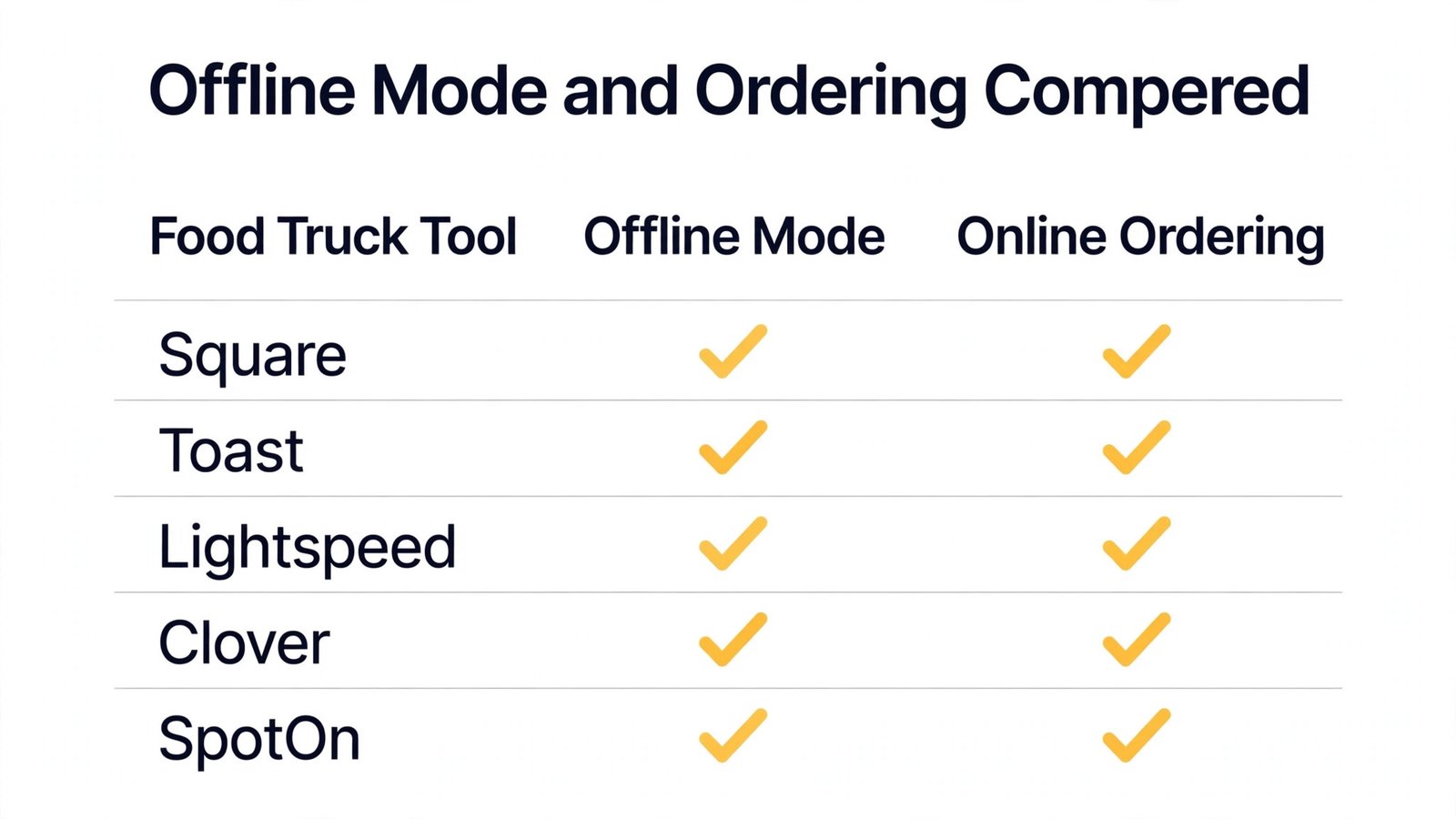
- Offline use. We tested the till with the signal cut during a rush.
- Cost. We recorded the monthly cost for a truck serving 100 covers a day.
Each test produced a number for Square and its rivals, and the five numbers became one score per tool. The winner led on ordering speed and breadth, while the runners-up led on kitchen display and online orders.
Best Pick by Job
The best restaurant tools for food trucks split cleanly by job, so the best pick changes with the service style. Match the job below to the tool that scored highest for it, starting with Square.
| Job | Best pick |
|---|---|
| One system for payments and orders | Square |
| A kitchen display for the rush | Toast |
| Several locations with stock per spot | Lightspeed |
| Marketing and loyalty built in | SpotOn |
| Commission-free online orders | ChowNow |
| Seated guests as well as the window | TouchBistro |
Square takes the most jobs because it covers payments, ordering and inventory in one system. When the job is narrow, the specialist beside Square usually wins on depth.
The 8 Tools in Detail
The detail sections below score each tool on the same five tests, starting with Square.
1. Square
Square handles payments, online ordering and inventory for a food truck. A truck can take a card at the window and an online order from the same menu. For food trucks that want one system, Square removes a step the old way always needed.
Pricing is Pricing on the vendor site. The inventory tracks the stock as each order sells. Our verdict. Square is the strongest all-round pick for a food truck that wants one system. That strength is the reason Square sits on this list. On the best restaurant tools for food trucks shortlist, Square leads because the scores below put it first on the numbers that matter most.
The hardware is simple, with a reader that fits beside the window. Square fits food trucks that want one system best, and the setup stays light enough to finish in an afternoon. A buyer who tests Square on that job learns the answer in one session.
The processing fees add up at volume, so a busy truck should check the rate. Square still earns a place here because the core job gets done well, and the trade-off is clear before a buyer pays. The trade-off stays visible in the trial, so Square never surprises a buyer after payment.
One last Square check matters. Put Square through the real job once, and the answer will be clear before any money moves.
For food trucks that want one system, Square is worth a trial because the first session shows whether the workflow fits. A short trial of Square answers the question faster than a longer feature list, and it costs nothing to run.
A second Square check helps a buyer decide. Run the food trucks that want one system job first, since that is where the tool either proves itself or shows its limits.
Square also rewards a buyer who reads the fine print first. The plan for food trucks that want one system should be checked for limits on users, volume and support before the trial ends.
When the trial ends, judge Square on one question only. Did Square finish the daily work faster than the old way, and would the team miss it if it went away.
2. Toast
Toast runs a restaurant-grade POS with a kitchen display for a food truck. An order from the window lands on the kitchen screen without shouting. For trucks that run like a restaurant, Toast removes a step the old way always needed.
Pricing is Pricing on the vendor site. The kitchen display keeps the queue in order during a lunch rush. Our verdict. Toast is the best fit for a truck that runs like a small restaurant. That strength is the reason Toast sits on this list.
The menu management handles modifiers and specials cleanly. Toast fits trucks that run like a restaurant best, and the setup stays light enough to finish in an afternoon. A buyer who tests Toast on that job learns the answer in one session.
The monthly cost is higher than the simple readers, so a part-time truck should weigh it. Toast still earns a place here because the core job gets done well, and the trade-off is clear before a buyer pays. The trade-off stays visible in the trial, so Toast never surprises a buyer after payment.
One last Toast check matters. Put Toast through the real job once, and the answer will be clear before any money moves.
For trucks that run like a restaurant, Toast is worth a trial because the first session shows whether the workflow fits. A short trial of Toast answers the question faster than a longer feature list, and it costs nothing to run.
A second Toast check helps a buyer decide. Run the trucks that run like a restaurant job first, since that is where the tool either proves itself or shows its limits.
Toast also rewards a buyer who reads the fine print first. The plan for trucks that run like a restaurant should be checked for limits on users, volume and support before the trial ends.
When the trial ends, judge Toast on one question only. Did Toast finish the daily work faster than the old way, and would the team miss it if it went away.
3. Lightspeed
Lightspeed runs POS, inventory and reporting for trucks with several spots. A truck that moves between markets can track stock per location. For trucks with several locations, Lightspeed removes a step the old way always needed.
Pricing is Pricing on the vendor site. The reporting shows which location sells best on which day. Our verdict. Lightspeed is a good pick for a truck that works several locations. That strength is the reason Lightspeed sits on this list.
The purchase orders keep the stock ordered before it runs out. Lightspeed fits trucks with several locations best, and the setup stays light enough to finish in an afternoon. A buyer who tests Lightspeed on that job learns the answer in one session.
The setup takes longer than a simple reader, so a new truck should budget a day. Lightspeed still earns a place here because the core job gets done well, and the trade-off is clear before a buyer pays. The trade-off stays visible in the trial, so Lightspeed never surprises a buyer after payment.
One last Lightspeed check matters. Put Lightspeed through the real job once, and the answer will be clear before any money moves.
For trucks with several locations, Lightspeed is worth a trial because the first session shows whether the workflow fits. A short trial of Lightspeed answers the question faster than a longer feature list, and it costs nothing to run.
A second Lightspeed check helps a buyer decide. Run the trucks with several locations job first, since that is where the tool either proves itself or shows its limits.
Lightspeed also rewards a buyer who reads the fine print first. The plan for trucks with several locations should be checked for limits on users, volume and support before the trial ends.
When the trial ends, judge Lightspeed on one question only. Did Lightspeed finish the daily work faster than the old way, and would the team miss it if it went away.
4. Clover
Clover runs a flexible POS with an app marketplace for a food truck. A truck can add the apps it needs, from loyalty to online ordering. For trucks that want a flexible POS, Clover removes a step the old way always needed.
Pricing is Pricing on the vendor site. The hardware range covers a counter reader and a handheld. Our verdict. Clover is the best fit for a truck that wants to shape its own POS. That strength is the reason Clover sits on this list.
The loyalty app brings repeat customers back to the window. Clover fits trucks that want a flexible POS best, and the setup stays light enough to finish in an afternoon. A buyer who tests Clover on that job learns the answer in one session.
The monthly fees add up with the apps, so a truck should count the total. Clover still earns a place here because the core job gets done well, and the trade-off is clear before a buyer pays. The trade-off stays visible in the trial, so Clover never surprises a buyer after payment.
One last Clover check matters. Put Clover through the real job once, and the answer will be clear before any money moves.
For trucks that want a flexible POS, Clover is worth a trial because the first session shows whether the workflow fits. A short trial of Clover answers the question faster than a longer feature list, and it costs nothing to run.
A second Clover check helps a buyer decide. Run the trucks that want a flexible POS job first, since that is where the tool either proves itself or shows its limits.
Clover also rewards a buyer who reads the fine print first. The plan for trucks that want a flexible POS should be checked for limits on users, volume and support before the trial ends.
When the trial ends, judge Clover on one question only. Did Clover finish the daily work faster than the old way, and would the team miss it if it went away.
5. SpotOn
SpotOn pairs a POS with marketing, loyalty and online ordering. A truck can send a deal to past customers and see them return. For trucks that want marketing built in, SpotOn removes a step the old way always needed.
Pricing is Pricing on the vendor site. The loyalty programme rewards the regulars who keep the truck busy. Our verdict. SpotOn is the pick for a truck that markets as hard as it cooks. That strength is the reason SpotOn sits on this list.
The reporting shows which campaign brought the customers back. SpotOn fits trucks that want marketing built in best, and the setup stays light enough to finish in an afternoon. A buyer who tests SpotOn on that job learns the answer in one session.
The tool carries many features, so a new user needs a few days to settle in. SpotOn still earns a place here because the core job gets done well, and the trade-off is clear before a buyer pays. The trade-off stays visible in the trial, so SpotOn never surprises a buyer after payment.
One last SpotOn check matters. Put SpotOn through the real job once, and the answer will be clear before any money moves.
For trucks that want marketing built in, SpotOn is worth a trial because the first session shows whether the workflow fits. A short trial of SpotOn answers the question faster than a longer feature list, and it costs nothing to run.
A second SpotOn check helps a buyer decide. Run the trucks that want marketing built in job first, since that is where the tool either proves itself or shows its limits.
SpotOn also rewards a buyer who reads the fine print first. The plan for trucks that want marketing built in should be checked for limits on users, volume and support before the trial ends.
When the trial ends, judge SpotOn on one question only. Did SpotOn finish the daily work faster than the old way, and would the team miss it if it went away.
6. TouchBistro
TouchBistro runs a POS built for food service, with tables and coursing. A truck with a seating area can run tables as well as the window. For trucks that serve tables too, TouchBistro removes a step the old way always needed.
Pricing is Pricing on the vendor site. The coursing keeps the orders in the right order for each table. Our verdict. TouchBistro is the best fit for a truck that also serves seated guests. That strength is the reason TouchBistro sits on this list.
The menu tools handle the daily specials without a rebuild. TouchBistro fits trucks that serve tables too best, and the setup stays light enough to finish in an afternoon. A buyer who tests TouchBistro on that job learns the answer in one session.
The tool suits a seated service, and a window-only truck may find it broad. TouchBistro still earns a place here because the core job gets done well, and the trade-off is clear before a buyer pays. The trade-off stays visible in the trial, so TouchBistro never surprises a buyer after payment.
One last TouchBistro check matters. Put TouchBistro through the real job once, and the answer will be clear before any money moves.
For trucks that serve tables too, TouchBistro is worth a trial because the first session shows whether the workflow fits. A short trial of TouchBistro answers the question faster than a longer feature list, and it costs nothing to run.
A second TouchBistro check helps a buyer decide. Run the trucks that serve tables too job first, since that is where the tool either proves itself or shows its limits.
TouchBistro also rewards a buyer who reads the fine print first. The plan for trucks that serve tables too should be checked for limits on users, volume and support before the trial ends.
7. ChowNow
ChowNow takes online orders for a food truck without commission on each order. A truck keeps the full price of every online order. For trucks that want commission-free orders, ChowNow removes a step the old way always needed.
Pricing is Pricing on the vendor site. The ordering page carries the truck branding, not a marketplace logo. Our verdict. ChowNow is the pick for a truck that wants online orders without the marketplace cut. That strength is the reason ChowNow sits on this list.
The marketing tools bring past customers back to order again. ChowNow fits trucks that want commission-free orders best, and the setup stays light enough to finish in an afternoon. A buyer who tests ChowNow on that job learns the answer in one session.
The tool covers ordering well, and the POS itself needs another system. ChowNow still earns a place here because the core job gets done well, and the trade-off is clear before a buyer pays. The trade-off stays visible in the trial, so ChowNow never surprises a buyer after payment.
One last ChowNow check matters. Put ChowNow through the real job once, and the answer will be clear before any money moves.
For trucks that want commission-free orders, ChowNow is worth a trial because the first session shows whether the workflow fits. A short trial of ChowNow answers the question faster than a longer feature list, and it costs nothing to run.
A second ChowNow check helps a buyer decide. Run the trucks that want commission-free orders job first, since that is where the tool either proves itself or shows its limits.
ChowNow also rewards a buyer who reads the fine print first. The plan for trucks that want commission-free orders should be checked for limits on users, volume and support before the trial ends.
8. Square Online
Square Online builds an ordering site that matches the Square POS. A truck can take online orders that land in the same system as window sales. For trucks that sell online first, Square Online removes a step the old way always needed.
Pricing is Pricing on the vendor site. The menu syncs between the site and the POS without retyping. Our verdict. Square Online is a good pick for a truck whose online orders matter most. That strength is the reason Square Online sits on this list.
The pickup and delivery options fit a truck that moves between spots. Square Online fits trucks that sell online first best, and the setup stays light enough to finish in an afternoon. A buyer who tests Square Online on that job learns the answer in one session.
The tool is an add-on, so a truck needs the Square POS beside it. Square Online still earns a place here because the core job gets done well, and the trade-off is clear before a buyer pays. The trade-off stays visible in the trial, so Square Online never surprises a buyer after payment.
One last Square Online check matters. Put Square Online through the real job once, and the answer will be clear before any money moves.
For trucks that sell online first, Square Online is worth a trial because the first session shows whether the workflow fits. A short trial of Square Online answers the question faster than a longer feature list, and it costs nothing to run.
A second Square Online check helps a buyer decide. Run the trucks that sell online first job first, since that is where the tool either proves itself or shows its limits.
Square Online also rewards a buyer who reads the fine print first. The plan for trucks that sell online first should be checked for limits on users, volume and support before the trial ends.
Square vs Toast: The Head-to-Head That Decides It
Square wins on simplicity and breadth. A truck can start with a reader and grow into online ordering and inventory without changing systems, while Toast wins on the kitchen, since its display and menu tools handle a restaurant-style service better.
The cost picture favours Square for a part-time truck and Toast for a truck that runs like a restaurant every day. A truck serving 100 covers will feel the Toast kitchen value at lunch, while a truck serving 40 will feel the Square simplicity more.
Our matrix puts Square ahead by 0.5 points, with the gap coming from ease of use and breadth. Toast closes the gap for a truck whose kitchen needs the display to survive the rush.
Choosing Truck Tools That Survive the Lunch Rush
A food truck tool fails when the line stops moving. Pick for the rush first, and let the reporting follow.
- Time an order from the window to the kitchen during a real rush.
- Test the till with the signal cut, since markets often have weak coverage.
- Check whether the menu can change in a minute when a dish sells out.
- Ask who counts the money at the end of the day and how long it takes.
- Run a one-week trial at a real market and count the lost orders.
A till that survives the rush earns its keep, and a till that stalls loses more than it saves. Start with the rush, then check the cost.
Running Your First Service in Five Steps
The best restaurant tools for food trucks reward a short structured first run. Five steps take a truck from a menu to a service the line can follow.
- Load the menu. Enter the dishes, the prices and the modifiers, then check the till view.
- Test an order. Run a test order from the window to the kitchen and watch it land.
- Open the window. Serve the first ten customers and watch the queue time, not just the sales.
- Watch the stock. Check the stock count at midday and mark any dish that is running low.
- Count the day. Close the till, count the takings and compare them with the stock used.
The first service teaches more than any demo. Keep the menu short, watch the queue time, and the tool will show which truck earns its keep.
Frequently Asked Questions
The best restaurant tools for food trucks raise the same questions from truck owners, and the answers below use the scores from this guide.
Do I need a full POS or just a card reader?
A card reader is enough for a truck that sells a short menu at one market. A full POS earns its keep when the menu is long, the truck moves between spots or online orders matter.
What happens when the signal drops at a market?
The better tools keep taking card payments offline and sync when the signal returns. Test the offline mode at a real market, since a till that stops in a dead spot loses the rush.
Should I take online orders as well as window sales?
Yes when the truck has regulars who order ahead, since it smooths the rush. Keep the online menu short, and pause it when the kitchen queue grows too long.
How much do the fees cost on a busy day?
The processing fee sits on every card sale, so a busy truck should compare the rate across tools. The monthly fee matters less than the rate once the volume passes a hundred covers a day.
Can the tool track my stock as I sell?
The leaders on this list do, and the stock count moves with each order. Check the stock at midday, since a dish that sells out quietly costs the afternoon trade.
Why does Square lead this guide?
It leads on breadth and ease of use, which are the two things a truck owner touches every day. The restaurant tools do more in the kitchen, but the single system keeps the money counted without a second app.
Our Pick, Stated Plainly — Square Is the Food Truck Default
The best restaurant tools for food trucks narrow to one default when the scores are added up, and that default is Square. It wins on breadth, it takes orders fast at the window and online, and it keeps the stock and the money counted.
Start with Square, keep Toast beside it when the kitchen needs a display, and add ChowNow when online orders should carry no commission. That order keeps the line moving and the takings tidy.