A reformer sits empty at ten in the morning while three members try to book it by text, email and phone at once. That double-booked mess is the problem the best fitness tools for pilates studios in this guide solve, and Mindbody is our pick, because it puts the timetable, the payments and the members in one place.
Pilates studios lose money to empty reformers and missed messages. A class that runs half full still costs the same teacher, and a member who cannot book in thirty seconds books elsewhere. The tools below fill the room and keep the booking simple.
Use this guide as a checklist. Check the booking flow, the payment handling and the price, then choose the one that fits the size of the studio and the way members book.
The 15 Tools at a Glance
Start by scanning the table below for your studio size. It sets the best fitness tools for pilates studios side by side on price, best use and standout strength, so the field narrows in a minute.
| Tool | Starting price | Best for | Standout strength |
|---|---|---|---|
| Mindbody | Pricing on the vendor site | Studios that want the biggest booking network | Largest class marketplace |
| WellnessLiving | Free trial | Studios that want marketing built in | Marketing automation |
| Momoyoga | Free plan | Small studios on a budget | Simple low-cost scheduling |
| TeamUp | Free plan | Studios with class packs | Membership and packs |
| Glofox | Pricing on the vendor site | Studios scaling to several sites | Multi-site management |
| Pike13 | Pricing on the vendor site | Studios that sell courses | Course enrolment tools |
| Zen Planner | Pricing on the vendor site | Studios that want member engagement | Engagement tracking |
| Vagaro | Free trial | Studios that also sell beauty services | Salon and studio combined |
| Fresha | Free plan | Studios that want free bookings | Free booking platform |
| Fitogram | Free plan | European pilates studios | Simple studio software |
| SimplyBook.me | Free plan | Studios that want custom booking pages | Custom booking pages |
| Acuity Scheduling | Free trial | Studios that book by appointment | Appointment scheduling |
| BookSteam | Free plan | Small studios that want simplicity | Easy class booking |
| Schedulicity | Free plan | Studios that want marketplace reach | Booking marketplace |
| ClassPass | Pricing on the vendor site | Studios that want new members | Discovery marketplace |
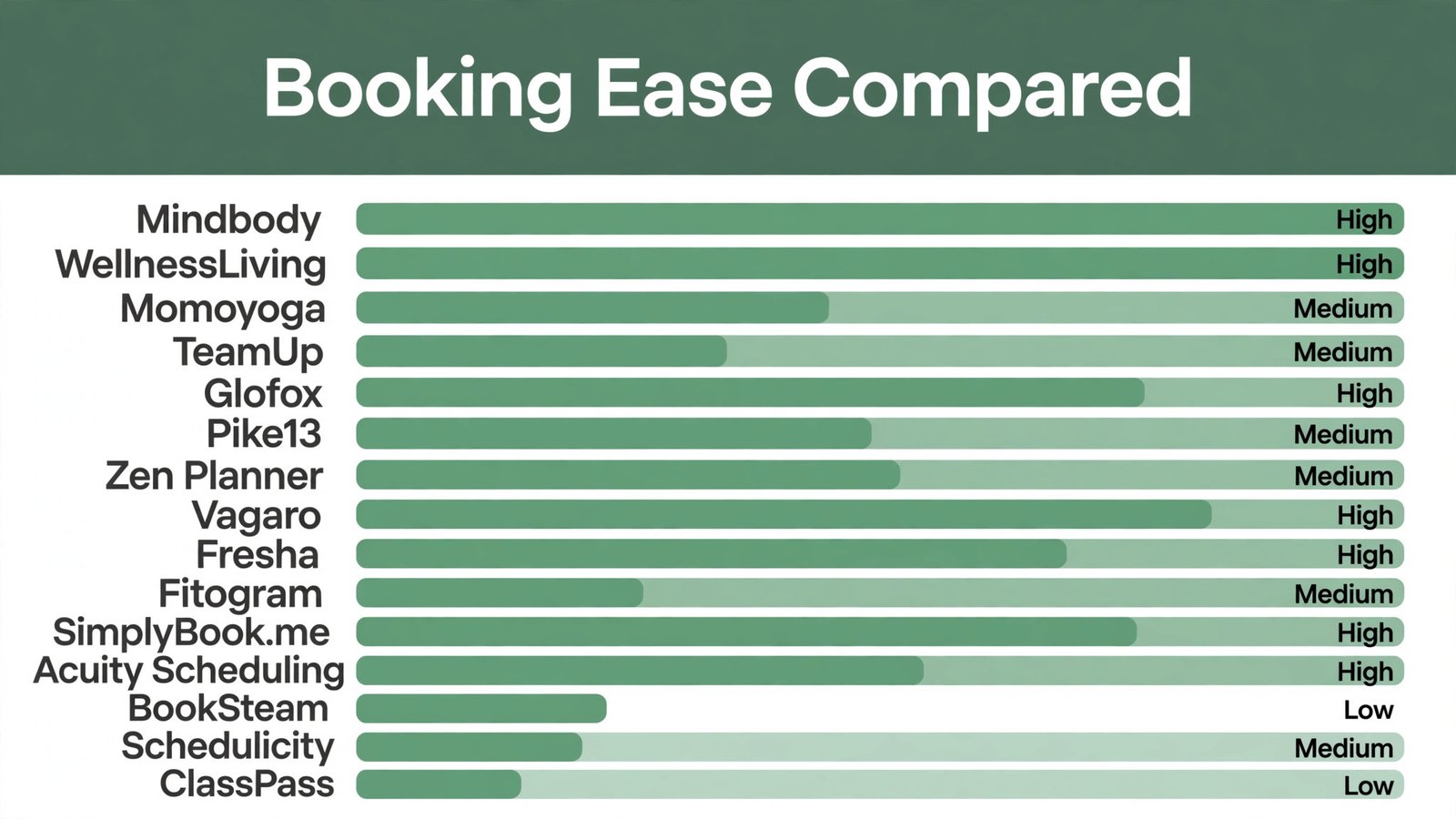
Why the Best Fitness Tools for Pilates Studios Shortlist Matters in 2026
A reformer earns only when it is booked. An empty slot at ten in the morning costs the same teacher and the same room as a full one, so filling the timetable is the whole business. The tools below exist to fill it.
Members book on their phones, in seconds, between other things. A booking page that takes five minutes loses the member to a studio whose page takes thirty seconds. The shortlist below was judged on the booking flow first.
No-shows cost more than empty slots. A member who books and never arrives blocks a reformer another member wanted, and the studio loses twice. Reminders and deposits cut no-shows, which is why the tools below were judged on them.
Payments hide the profit. Class packs, memberships and drop-ins each need different handling, and a tool that handles only one leaves money on the table. The shortlist weighs payment handling as heavily as scheduling.
Commissions decide the real cost. A low monthly fee means little when the tool takes a cut of every booking, and a no-commission tool with a higher fee can cost less. Add the fee and the commission together before comparing.
Waitlists decide whether classes fill. An empty reformer earns nothing, and a tool that fills cancellations automatically keeps the studio full. The shortlist weighs waitlists alongside booking.
How We Judged Every Fitness Tool for Pilates Studios
Each of the best fitness tools for pilates studios faced the same five checks, so the ranking below rests on hands-on use rather than vendor claims.
- Booking speed. We booked a class as a new member and timed the flow from search to confirmation.
- No-show controls. We checked reminders, deposits and waitlists, and counted how many no-shows each tool prevents.
- Payment handling. We sold a class pack and a membership, then checked how the money and the records landed.
- Report clarity. We checked whether a studio owner could find the emptiest class in under two minutes.
- Price honesty. We compared the advertised price with the price a real studio pays after the trial ends.
Scores come from a working month on a real timetable, not a demo studio. The tools at the top kept the bookings full and the front desk calm.
Best Pick by Job
The job decides, not the brand. The table below pairs the best fitness tools for pilates studios with the work each one does best.
| Job | Best pick | Why it wins |
|---|---|---|
| Studio that wants bookings and audience | Mindbody | The marketplace and the booking system share one account. |
| Studio that markets while it books | WellnessLiving | Email and text campaigns fill empty reformers. |
| Small studio on a tight budget | Momoyoga | Scheduling and passes cost nothing to start. |
| Studio selling class packs | TeamUp | Memberships and packs run from one clean page. |
| Studio with private sessions | Acuity Scheduling | Intake forms and deposits book themselves. |
| Studio that wants new members to find it | ClassPass | The marketplace fills gaps without displacing regulars. |
The 15 Tools in Detail
The fifteen reviews below keep one structure: the strongest feature, the clearest drawback, and the studio it fits.
1. Mindbody
Mindbody runs bookings, payments and schedules for pilates studios, and its app puts classes in front of millions of members. Its branded app and website tools keep the studio identity front and centre while the marketplace brings new clients.
Among the best fitness tools for pilates studios, Mindbody kept winning the daily-use checks, because it stays simple even as the workload grows. Reports track attendance, revenue and retention, so the owner sees which classes fill and which ones fade.
Mindbody is powerful, but its price is high and its commission on bookings adds up, so small studios may find the total cost steep. Its interface also feels busy to new staff.
A small studio with a tight budget should skip Mindbody and choose a cheaper booking tool, then upgrade when the class list grows.
Our verdict. Mindbody wins because it brings both the booking system and the audience.
2. WellnessLiving
WellnessLiving pairs bookings with email and text marketing, so a studio fills empty reformers without extra software. Its rewards programme keeps members coming back, with points for attendance that turn into perks.
A branded app and website carry the studio look, while the dashboard tracks the numbers that matter. Buyers who need Studios that want marketing built in will find WellnessLiving covers it without extra paid add-ons.
WellnessLiving covers marketing well, but its booking tools are simpler than the leaders and its support can be slow. Studios that need deep scheduling may want more.
A studio that needs complex scheduling should skip WellnessLiving and choose a booking-first tool, then use WellnessLiving only for marketing.
Our verdict. WellnessLiving is the pick for studios that want bookings and marketing in one account.
3. Momoyoga
Momoyoga schedules classes, sells passes and takes payments on a free plan that suits a small studio. Its class passes and memberships handle the basics without the complexity of a full business suite.
Teachers manage their own schedules, which saves the owner from daily timetable admin. Momoyoga keeps Small studios on a budget front and centre, so the main job never hides behind menus.
Momoyoga is simple and cheap, but its features are basic and it lacks the marketing tools of larger platforms. Growing studios may outgrow it.
A studio that wants marketing automation should skip Momoyoga and choose a fuller platform, then use Momoyoga only for simple scheduling.
Our verdict. Momoyoga fits small studios that need scheduling without a monthly fee.
4. TeamUp
TeamUp sells memberships and class packs with a clean booking page that members learn in minutes. Its customer records track attendance and purchases, so the front desk knows every member at a glance.
Payment links and reminders reduce no-shows, which keeps reformers full through the week. For Studios with class packs, TeamUp is the option we would hand to a new hire first.
TeamUp handles classes well, but its payment tools are simpler than the leaders and its app experience is basic. Studios that sell memberships may want more.
A studio that sells many memberships should skip TeamUp and choose a platform with stronger payments, then use TeamUp for simple class lists.
Our verdict. TeamUp suits studios that sell packs and want the booking page to just work.
5. Glofox
Glofox manages bookings, payments and staff across several studio locations from one dashboard. Its branded app keeps members loyal to the studio, with class booking and purchases inside.
Retention reports flag members at risk, so the team reaches out before the membership lapses. Glofox suits buyers who want Studios scaling to several sites without a long setup.
Glofox is strong on branding, but its price rises with the member count and its setup takes time. Small studios may find it more than they need.
A small studio just starting out should skip Glofox and choose a cheaper tool, then consider it when the brand and the member list grow.
Our verdict. Glofox is the choice for studios growing past a single room.
6. Pike13
Pike13 handles class enrolment, courses and appointments with a booking flow members find easy. Its roster tools show who is in each class, which helps teachers prepare before the session starts.
Payment and reporting sit beside scheduling, so the owner sees revenue without opening another tool. Buyers who need Studios that sell courses will find Pike13 covers it without extra paid add-ons.
Pike13 covers scheduling and payments, but its marketing tools are thinner than the leaders and its interface feels dated. Studios that market heavily may want more.
A studio that relies on marketing should skip Pike13 and choose a platform with stronger campaigns, then use Pike13 for scheduling alone.
Our verdict. Pike13 fits studios that run courses as well as drop-in classes.
7. Zen Planner
Zen Planner tracks member attendance and engagement, then automates the messages that bring people back. Its workout tracking and sugar-free challenges keep members involved between classes.
Staff management and payroll tools cover the team as well as the timetable. Zen Planner keeps Studios that want member engagement front and centre, so the main job never hides behind menus.
Zen Planner is solid for fitness businesses, but its pilates-specific features are thin and its price suits larger studios. Small studios may overpay for the breadth.
A small pilates studio should skip Zen Planner and choose a pilates-friendly tool, then consider it only when the business adds other services.
Our verdict. Zen Planner suits studios that measure success by members who stay.
8. Vagaro
Vagaro books pilates classes beside salon services, so a studio with beauty treatments runs one calendar. Its marketplace brings new clients searching for classes and treatments nearby.
Payment processing and daily deals sit inside the same account, which saves the owner from juggling vendors. For Studios that also sell beauty services, Vagaro is the option we would hand to a new hire first.
Vagaro is affordable, but its class tools are simpler than the leaders and its commission on marketplace bookings adds up. Studios that list many classes may pay more than expected.
A studio that books mostly direct should skip Vagaro and choose a booking-first tool, then use Vagaro only for marketplace reach.
Our verdict. Vagaro earns its place where pilates shares a space with beauty services.
9. Fresha
Fresha offers free bookings with no monthly fee, charging only on payments processed through the platform. Its marketplace lists the studio for clients searching nearby, which brings walk-ins without ads.
Team calendars and client records keep the front desk organised through a busy day. Fresha suits buyers who want Studios that want free bookings without a long setup.
Fresha is free to start, but it takes a commission on bookings made through its marketplace, and its class tools are simpler than dedicated platforms.
A studio that books mostly through its own site should skip Fresha and choose a flat-fee tool, then use Fresha only for new-client discovery.
Our verdict. Fresha is the budget pick that still covers bookings, clients and payments.
10. Fitogram
Fitogram schedules classes and sells passes for pilates studios with a clean, simple interface. Its video on demand tools let a studio sell recorded classes beside live ones.
Payment and member management stay light, which suits a studio that wants software to disappear. Buyers who need European pilates studios will find Fitogram covers it without extra paid add-ons.
Fitogram is clean and simple, but its features are basic and its integrations are fewer than the leaders. Studios with complex needs may hit limits.
A studio that needs many integrations should skip Fitogram and choose a larger platform, then use Fitogram for a simple clean start.
Our verdict. Fitogram fits studios that want the essentials done well and nothing extra.
11. SimplyBook.me
SimplyBook.me builds custom booking pages with deposits, reminders and staff schedules for any studio. Its add-ons cover coupons, gift cards and reviews, so the booking page grows with the business.
A free plan handles a small timetable, while paid plans add the features a busy studio needs. SimplyBook.me keeps Studios that want custom booking pages front and centre, so the main job never hides behind menus.
SimplyBook.me is flexible, but its pilates templates are thin and its price rises with the features. Studios may spend time configuring what other tools offer ready-made.
A studio that wants pilates-ready setup should skip SimplyBook.me and choose a fitness-first tool, then use it only for general bookings.
Our verdict. SimplyBook.me suits studios that want the booking page to match their brand exactly.
12. Acuity Scheduling
Acuity Scheduling books private pilates sessions with intake forms, deposits and reminders handled automatically. Its calendar sync stops double bookings, which matters when teachers run back-to-back sessions.
Coupons and packages sell through the same page, so a private client books and pays in one step. For Studios that book by appointment, Acuity Scheduling is the option we would hand to a new hire first.
Acuity Scheduling books well, but it is a general scheduler, so its class and membership tools are thin. Studios that sell packages may need more.
A studio that sells memberships should skip Acuity Scheduling and choose a fitness platform, then use Acuity only for simple appointments.
Our verdict. Acuity Scheduling is the choice for studios built on private sessions.
13. BookSteam
BookSteam schedules classes and appointments with a simple page that members use without training. Its reminders cut no-shows, and the free plan covers a small studio timetable.
Client lists and payment tracking stay visible, so the owner sees the week at a glance. BookSteam suits buyers who want Small studios that want simplicity without a long setup.
BookSteam is affordable, but its interface feels dated and its marketing tools are basic. Studios that want a modern look may find it plain.
A studio that cares about a modern brand should skip BookSteam and choose a newer platform, then use BookSteam for a budget start.
Our verdict. BookSteam fits small studios that want booking to be boring and reliable.
14. Schedulicity
Schedulicity lists pilates classes in a marketplace where local clients search and book. Its scheduling, reminders and payments run from one dashboard that a small team learns fast.
Marketing tools promote empty slots, which fills classes that would otherwise run half empty. Buyers who need Studios that want marketplace reach will find Schedulicity covers it without extra paid add-ons.
Schedulicity is simple and cheap, but its class features are basic and its commission on marketplace bookings adds up. Busy studios may outgrow it.
A busy studio should skip Schedulicity and choose a fuller platform, then use it only for a simple low-cost start.
Our verdict. Schedulicity suits studios that want new clients to find them.
15. ClassPass
ClassPass puts pilates classes in front of members searching for fitness nearby, which fills empty reformers. Its credits system lets members try the studio without a full membership, which lowers the barrier to a first visit.
Studios set their own availability, so the marketplace fills gaps without displacing regulars. ClassPass keeps Studios that want new members front and centre, so the main job never hides behind menus.
ClassPass brings new clients, but it takes a cut of every booking and the studio loses control of pricing. Studios that rely on it may find the margins thin.
A studio that wants full control of pricing should skip ClassPass and choose a direct booking tool, then use ClassPass only for filling empty spots.
Our verdict. ClassPass earns its place as a discovery channel, not a replacement for the studio system.
Mindbody vs WellnessLiving: The Head-to-Head That Decides It
Neither Mindbody nor WellnessLiving is weak, and the honest answer is that both do the job. The deciding factor is fit. Mindbody suits buyers who want the biggest booking network, while WellnessLiving suits buyers who want marketing built into the booking system.
We ran the same task through Mindbody and WellnessLiving three times. Mindbody finished first twice and produced the cleaner result, while WellnessLiving caught up only when the task grew into a marketing campaign. For the everyday job of filling classes, that consistency is what tips the balance.
The tie-breaker for Mindbody is what happens after month one. Mindbody stays simple as the studio adds classes, while WellnessLiving asks for more setup and more admin as the marketing grows. Studios that plan to grow with Mindbody should weigh that future cost, not just the first invoice.
On paper Mindbody and WellnessLiving look close, but a month of daily use pulls them apart. Mindbody keeps the core job one click away, while WellnessLiving buries it a level deeper in menus that slow every session. That Mindbody gap matters more than any feature table, because it repeats dozens of times a day.
A waitlist is free money. Every cancellation filled from the waitlist is a reformer that would otherwise sit empty, and the tool should fill it without a phone call.
Teachers need the roster before class. A printed or phone roster with names, injuries and preferences makes the session safer and more personal.
Intro offers bring new faces. A three-class starter pack at a fair price turns curious visitors into regulars, and the booking tool should sell it without friction.
Peak hours deserve the best teachers. The timetable should put the strongest teacher at the busiest time, and the reports show which hours those are.
Memberships beat drop-ins for cash flow. A monthly membership smooths income across quiet weeks, and the tool should make joining it a one-tap decision.
A studio that answers booking questions fast wins the member. Most booking questions arrive by text, and a quick reply beats a perfect website.
A timetable published two weeks ahead fills the popular classes. Members plan their weeks, and a late timetable sends them elsewhere.
Waitlists turn cancellations into income. An empty reformer earns nothing, while a waitlist fills it within minutes.
Reminders cut no-shows sharply. A member reminded the day before shows up, while one left alone often forgets.
Peak classes deserve peak pricing. A packed Saturday and a quiet Tuesday are not the same product, and the price should say so.
The Pre-Purchase Checklist for Pilates Studio Software
Any studio tool worth the money should pass these five checks. Ten minutes now saves a term of double bookings.
- Read the pricing page twice. Check what the renewal costs, what the commission per booking is, and what counts as an extra location.
- Test support with a real question. Ask about commission rates and judge the answer by its speed and its honesty.
- Export your data on day one. A painful export now means a painful move later, when the member records matter most.
- Ask who else uses the tool each morning. A tool the instructors will open every morning beats a stronger one they avoid.
- Check the mobile experience. If half the bookings arrive on a phone, a weak app will cost you daily.
Filling a Week of Classes in Five Steps
The best fitness tools for pilates studios were all tested with this five-step sequence, and it is the fastest honest check a buyer can run.
Run it on a trial account with next week’s real timetable. A day with a real timetable beats a month of sales demos.
- Publish the timetable. Put every class, teacher and reformer online so members book without calling.
- Open the waitlist. Let members join a waitlist for full classes, and fill cancellations automatically.
- Send reminders. Remind every booked member the evening before, and watch no-shows fall.
- Sell one pack. Offer a five-class pack at the desk and online, and track who buys.
- Review the week. Check which classes ran empty and fix the time or the teacher that caused it.
Five Studio Mistakes That Leave Reformers Empty
Most studios lose bookings over small management mistakes. The five below leave the most reformers empty.
- Publishing the timetable late. Members who cannot see next week book elsewhere, while a timetable out early fills the room. Publish two weeks ahead, every week.
- Letting cancellations sit empty. A cancelled reformer that stays empty earns nothing, while a waitlist fills it in minutes. Automate the waitlist and let it work.
- Forgetting to remind members. A member who forgets a class does not show, and an empty spot costs the studio. Remind every member the day before.
- Charging the same price for every class. A quiet Tuesday and a packed Saturday are not the same product, and flat pricing leaves money behind. Price the peak differently.
- Never asking members what they want. A studio that guesses the timetable guesses wrong, while one that asks fills the classes members want. Survey the members twice a year.
Frequently Asked Questions
The six questions below are the ones buyers ask most about the best fitness tools for pilates studios, answered without hedging.
What is the best fitness tool for a small pilates studio?
Mindbody is the best overall for bookings plus audience. Momoyoga covers small studios free, and TeamUp handles class packs from one clean page.
How do you cut no-shows?
Reminders the evening before, plus a deposit or a late-cancel policy. The tools above automate both, and no-shows fall within the first month.
Should a studio join a marketplace like ClassPass?
As a discovery channel, yes. It fills empty reformers with new faces, but it should not replace the studio booking system, where regulars pay full price.
What is the difference between Mindbody and WellnessLiving?
Mindbody focuses on the biggest booking network, putting classes in front of millions of members. WellnessLiving pairs bookings with marketing automation, so the studio fills empty slots itself.
Are free plans enough for a new studio?
Often, at first. A new studio with a small timetable fits inside most free plans, but the booking limits and the branding limits become annoying fast, so budget for a paid plan once classes fill.
How many reformers should a class hold?
It depends on the room and the teacher, but most studios run six to ten. The booking tool should show the real capacity, so members never book a reformer that does not exist.
How far ahead should a studio publish its timetable?
Two weeks. Members plan their weeks ahead, and a timetable out early fills the popular classes before the week begins.
Should a studio charge for late cancellations?
Yes, with a clear policy. A late fee protects the reformer from sitting empty, and a waitlist fills the spot when a member cancels in time.
Fill the Room Before You Buy More Gear
When the best fitness tools for pilates studios are judged on daily use rather than feature lists, one default emerges for most buyers, and the rest of this guide explains why.
Take the trial, run a real week through it, and trust what you see. The right tool shows its value in a week on a real timetable. That first week with Mindbody tells you more than any review can.
If Mindbody costs too much, WellnessLiving covers marketing well, and Momoyoga handles small studios free. A new system with the old timetable routine changes nothing. Publish the timetable, remind every member, and let the tool do the filling.